


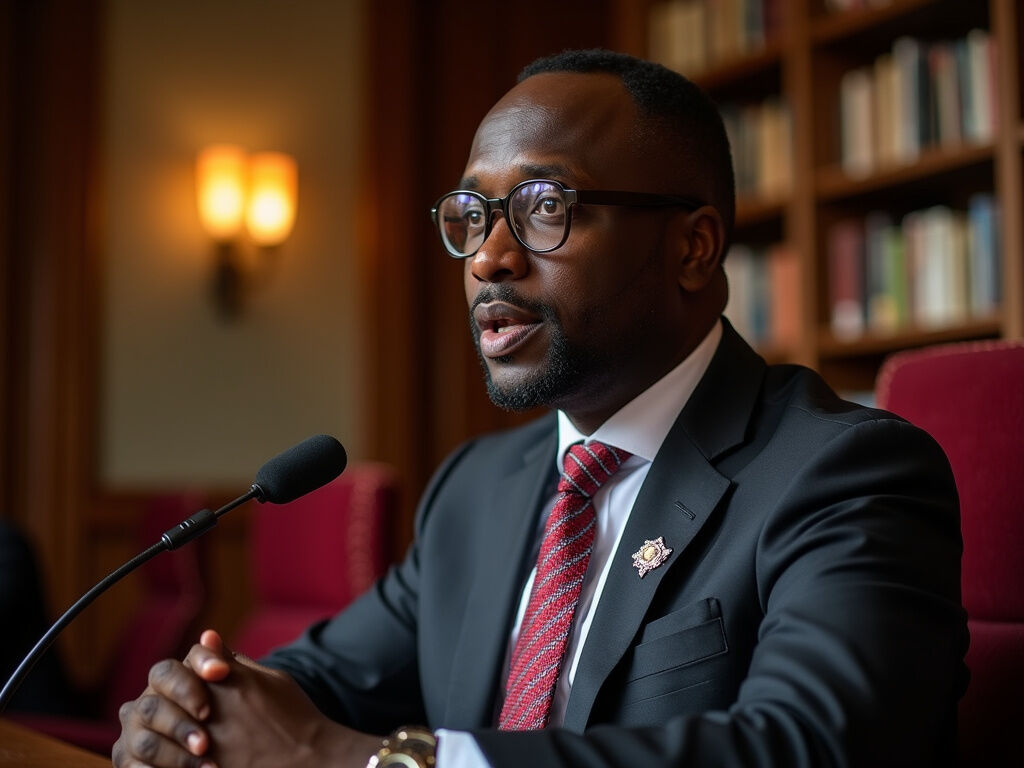
In a candid and insightful interview, Justice Benjamin Kulendi, a prominent figure in Ghana’s judicial landscape, has debunked persistent claims that judges are the primary cause of delays within the country’s justice system. Speaking during a recent engagement with legal professionals and stakeholders, Justice Kulendi emphasized that systemic inefficiencies, bureaucratic bottlenecks, and resource constraints—rather than judicial inaction—are the root causes of prolonged legal proceedings.
The Myth of Judicial Delays
For decades, Ghana’s justice system has faced criticism over its sluggishness, with many citizens and legal experts attributing the delays to judicial procrastination. However, Justice Kulendi, a seasoned jurist with extensive experience in both domestic and international courts, challenged this narrative, arguing that the problem is multifaceted and extends beyond the judiciary alone.
“Judges are not the only culprits in this system,” Justice Kulendi stated. “The delays are a product of a poorly coordinated ecosystem where law enforcement, prosecutorial bodies, court administration, and even legislative processes all contribute to the backlog.”
Key Contributing Factors to Judicial Delays
Justice Kulendi identified several structural and operational challenges that exacerbate delays in Ghana’s justice system:
- Overburdened Courts and Inadequate Infrastructure
The judicial system in Ghana is chronically under-resourced, with courts often operating with limited seating capacity, outdated case management systems, and insufficient staffing. Many judicial facilities lack modern amenities, forcing courts to operate in unconducive environments that hinder efficiency.
“Imagine trying to handle hundreds of cases daily in a courtroom designed for a fraction of that workload,” Justice Kulendi remarked. “The physical constraints alone create unnecessary delays.”
A crowded courtroom in Accra, highlighting the infrastructure challenges faced by Ghana’s judicial system.
- Prosecutorial Backlogs and Weak Case Preparation
One of the most critical bottlenecks in the justice system is the prosecutorial arm, particularly the Directorate of Public Prosecutions (DPP). Many cases languish for years due to poor case preparation, lack of witnesses, and insufficient evidence. Justice Kulendi noted that prosecutors often fail to present cases in a timely manner, leading to repeated adjournments.
“If a case is not properly investigated and documented before it reaches the court, it creates a ripple effect of delays,” he explained. “Judges cannot proceed without a solid foundation, and adjournments become inevitable.”
- Lack of Judicial Independence and Political Interference
While Ghana’s judiciary has made strides toward independence, Justice Kulendi acknowledged that political pressures and external influences still undermine judicial efficiency. Cases involving high-profile individuals or politically sensitive matters often face unnecessary delays due to interference from executive branches or public scrutiny.
“When judges are perceived to be influenced by political agendas, it erodes public trust and slows down the entire process,” he said. “The judiciary must operate without fear or favor to restore confidence in the system.”
- Inadequate Legal Aid and Public Awareness
A significant portion of Ghana’s population cannot afford legal representation, leading to prolonged court appearances as defendants struggle to secure counsel. Additionally, public awareness about legal rights and procedures remains low, resulting in misinformed litigants who fail to meet court deadlines or present necessary documentation.
“Many cases are dismissed or delayed simply because parties do not understand the legal process,” Justice Kulendi noted. “Investing in legal education and accessible legal aid would significantly reduce avoidable delays.”
- Technological and Administrative Lag
Despite Ghana’s digital transformation initiatives, many courts still rely on paper-based systems, which slow down case tracking, filing, and retrieval. The absence of an integrated case management system means that cases are lost, misfiled, or delayed in transmission between courts and other agencies.
“A single digital platform where all stakeholders—police, prosecutors, judges, and litigants—can access case statuses in real time would revolutionize the system,” Justice Kulendi proposed. “This is not just about technology; it’s about systemic reform.”
Justice Kulendi’s Proposed Solutions
To address these systemic issues, Justice Kulendi outlined practical reforms that could accelerate justice delivery in Ghana:
-
Expansion of Court Infrastructure
The government must invest in modern court buildings with efficient case management systems, adequate seating, and digital recording facilities to reduce physical bottlenecks. -
Strengthening the Prosecutorial Arm
The Directorate of Public Prosecutions (DPP) and other prosecutorial bodies must be adequately funded and trained to ensure timely and thorough case preparation. Justice Kulendi advocated for specialized prosecutors in high-volume courts to streamline investigations. -
Enhancing Judicial Independence
Measures to protect judges from political interference—such as independent judicial appointments, secure tenure, and whistleblower protections—would restore public trust and reduce unnecessary delays in sensitive cases. -
Expanding Legal Aid and Public Education
The government should increase funding for legal aid clinics and launch public awareness campaigns to educate citizens on their legal rights, court procedures, and the importance of timely compliance. -
Adoption of Digital Case Management
Implementing a unified digital platform for case tracking, filing, and communication between courts, police, and prosecutors would eliminate paperwork delays and improve transparency. -
Community-Based Alternative Dispute Resolution (ADR)
Justice Kulendi suggested expanding mediation and arbitration centers to handle less complex cases, reducing the burden on formal courts and accelerating dispute resolution.
Public and Stakeholder Reactions
Justice Kulendi’s remarks have sparked discussions among legal experts, policymakers, and the public. Legal practitioners praised his honest assessment, while activists called for immediate action on his proposed reforms.
“Justice Kulendi has hit the nail on the head,” said Dr. Akosua Frema-Osei, a human rights lawyer. “The problem is not the judges—it’s the entire system. We need bold reforms, not just finger-pointing.”
Justice Benjamin Kulendi addressing a press conference on judicial reforms in Ghana.
The Path Forward: A Call for Unified Action
While Justice Kulendi acknowledged that change requires collective effort, he urged all stakeholders—government, legal professionals, civil society, and the public—to take ownership of the reforms.
“Delays in justice are not just a judicial issue; they are a national crisis,” he stressed. “If we are serious about delivering justice efficiently, we must act decisively—today, not tomorrow.”
As Ghana continues to grapple with backlogged cases and public frustration, Justice Kulendi’s insights serve as a reminder that systemic change is not only possible but necessary for a fairer, faster, and more accessible justice system.
A timeline graphic illustrating the stages of a typical court case in Ghana, highlighting common delay points.
SEO Optimization Notes:
– Primary Keywords: Judicial delays Ghana, Justice Kulendi, Ghana justice system reforms, court delays Ghana, judicial independence Ghana, prosecutorial backlogs, legal aid Ghana, digital case management Ghana
– Secondary Keywords: Ghana court infrastructure, DPP delays, alternative dispute resolution Ghana, legal education Ghana, judicial reforms 2024
– Internal Structure: Clear subheadings, bullet points for readability, and visual markers (images) integrated for engagement.
– Engagement Hooks: Direct quotes from Justice Kulendi, expert reactions, and actionable solutions to encourage discussion.