


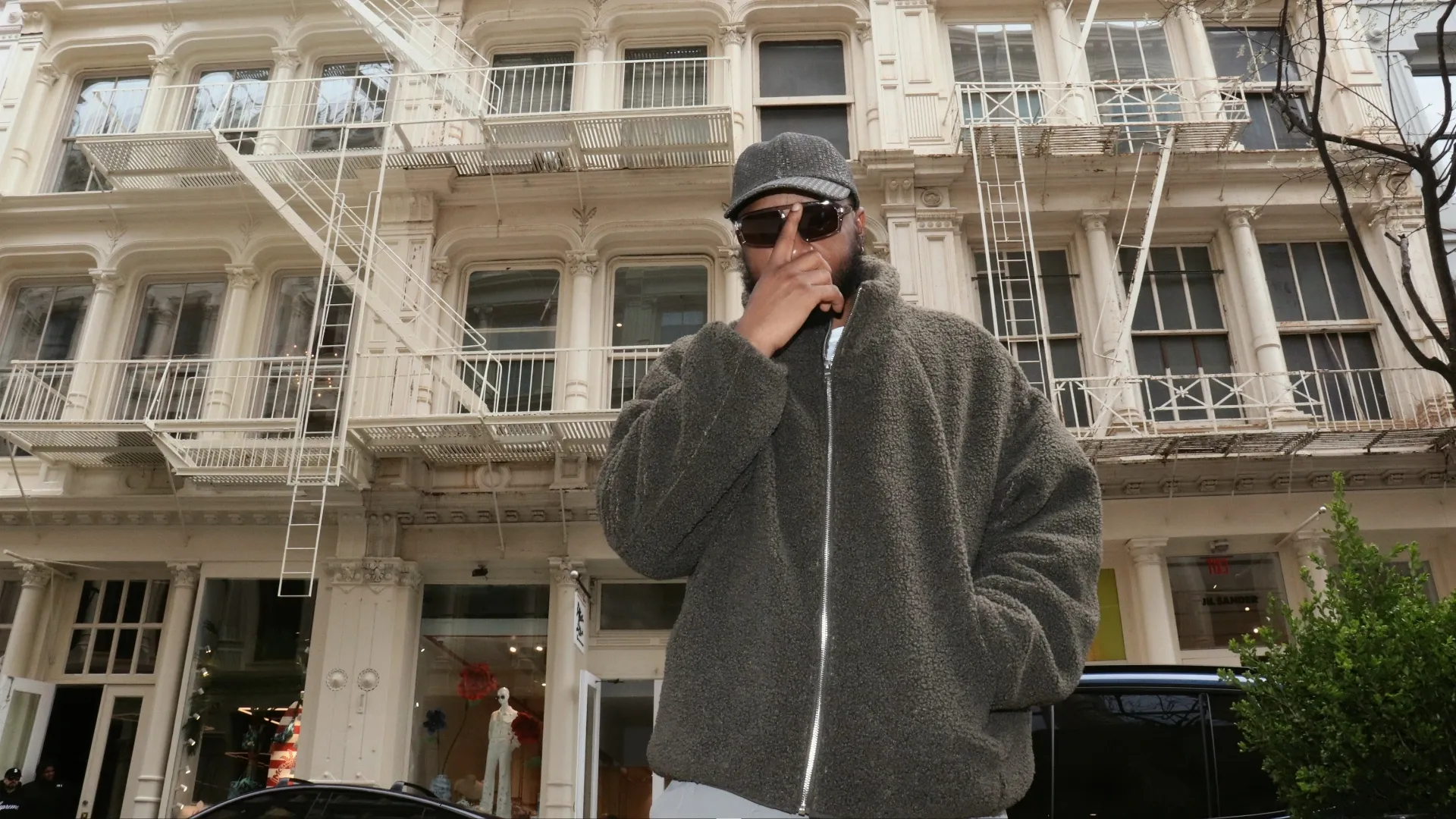
The recent announcement by MoveAndDream, a prominent Nigerian music executive and entrepreneur, that he is expanding into drama production has ignited a broader conversation about the future of Nigeria’s entertainment industry. Known for his socially conscious music projects and collaborations with leading artists, MoveAndDream’s foray into filmmaking—marked by the release of a teaser for his upcoming series, Moves—has challenged traditional perceptions of how entertainers should operate.
While some observers initially questioned whether this shift signaled a departure from music, MoveAndDream clarified that his new venture is not a rejection of his musical roots but rather an organic extension of his creative vision. In an interview, he emphasized that directing and acting have always been integral to his aspirations, stating:
“Directing and acting have always been as much a part of my dreams as music. I am simply following my heart, and I am very grateful to be able to do so. The music will never stop—it’s a part of me.”
His perspective underscores a fundamental shift in Nigeria’s entertainment landscape, where diversification is no longer an anomaly but a strategic necessity for sustained success. This trend extends beyond MoveAndDream, reflecting a broader industry-wide transformation where artists, producers, and entrepreneurs are increasingly exploring multiple revenue streams to remain relevant in an ever-evolving market.
The Rise of the Multi-Hyphenate Entertainer
The phenomenon of entertainers branching into adjacent industries is not new, but its scale and speed in Nigeria have accelerated in recent years. From launching podcast networks and fashion labels to investing in technology startups, film production, and even hospitality, the lines between music, film, and business are blurring.
This shift raises an important question: Is Afrobeats losing momentum, or is this diversification a sign of maturity?
Some analysts argue that the genre’s global dominance is facing new challenges—rising competition from Amapiano, evolving consumer tastes, and the pressures of Nigeria’s creative economy—forcing artists to seek alternative income sources. However, a deeper examination reveals that this trend is less about decline and more about strategic adaptation.
Afrobeats’ Maturity: From Music to Multi-Industry Empires
The global success of Afrobeats has created unprecedented opportunities beyond traditional music revenue. Artists are now recognizing that long-term sustainability requires diversified portfolios, much like their international counterparts—such as Jay-Z, Rihanna, and Dr. Dre, who transitioned from musicians to media moguls, fashion icons, and tech investors.
In Nigeria, this shift is evident in the cross-pollination between music and film, with many artists successfully transitioning into Nollywood. Banky W, for instance, became a household name not just as a musician but as a blockbuster actor, starring in films like The Wedding Party, Up North, and Sugar Rush. Similarly, Falz has built a formidable acting career alongside his music, earning acclaim for roles in Jenifa’s Diary, New Money, and Brotherhood.
Other notable examples include:
– Tiwa Savage, who expanded her creative reach with appearances in MTV Shuga before starring in her own film, Water and Garri.
– Reminisce, whose chilling performance as Makanaki in King of Boys showcased his versatility beyond hip-hop.
– Chike, who demonstrated his range in Gangs of Lagos and the TV drama Battleground.
– Yemi Alade, who brought her charisma to Omo Ghetto: The Saga, and Simi, who made her acting debut in Mokalik.
These artists are not abandoning music—they are leveraging their existing audiences, storytelling skills, and brand equity to explore new creative avenues. This multi-hyphenate approach is not just a trend; it is a necessary evolution in an industry where attention spans are fragmented and consumer engagement spans multiple platforms.
Why Diversification? The Changing Face of Audience Consumption
The modern entertainment landscape is highly fragmented, with audiences consuming content across music, video, podcasts, short-form social media, live streaming, and film. Artists who can operate across these platforms are better positioned to maintain relevance and deepen fan engagement.
MoveAndDream’s move into drama production aligns with this shift. By creating narrative-driven content, he is tapping into a growing demand for storytelling beyond music. Similarly, other artists are exploring:
– Podcasting (e.g., Falz’s The Falz Podcast, Wizkid’s Wizkid Presents).
– Fashion and branding (e.g., Davido’s Davido’s Empire, Burna Boy’s Burna Boy x Nike collabs).
– Tech and digital media (e.g., Wizkid’s Wizkid Presents streaming platform, Burna Boy’s Afrobeats World Tour digital initiatives*).
This multi-platform approach ensures that artists remain top-of-mind while exploring new avenues for monetization.
The Synergy Between Afrobeats and Nollywood
One of the most exciting developments in Nigeria’s entertainment industry is the growing collaboration between Afrobeats and Nollywood. Both sectors are Africa’s most influential cultural exports, and their convergence is creating new opportunities for storytelling, audience growth, and commercial success.
For instance:
– Music videos are increasingly blending with film (e.g., Wizkid’s Come Closer music video, which felt like a mini-film).
– Artists are co-producing films (e.g., Davido’s The Meeting Point, which featured a music video and film crossover).
– Film soundtracks are becoming major music releases (e.g., The Wedding Party’s soundtrack, which included hits like Banky W’s Ojuelegba).
This fusion of industries is not only enriching creative output but also expanding market reach, as Afrobeats fans discover Nollywood and vice versa.
Challenges and the Future of Afrobeats
While diversification presents significant opportunities, it is not without challenges. The Afrobeats market remains highly competitive, with:
– The rise of Amapiano and Afro-house, which are gaining traction globally.
– Streaming economics favoring scale, making it harder for mid-tier artists to sustain themselves solely on music.
– Changing listener habits, as audiences consume content in bite-sized formats (TikTok, YouTube Shorts) rather than traditional albums.
However, these challenges are not insurmountable—they are catalysts for innovation. Artists who diversify their portfolios are better equipped to navigate these shifts while maintaining creative control.
The Bigger Picture: A Creative Economy in Flux
The diversification of Nigeria’s entertainment industry is not just about individual success—it is about strengthening the broader creative economy. When artists move into film production, fashion, tech, or media, they:
– Create jobs for other creatives (actors, writers, designers, producers).
– Encourage knowledge transfer between industries, leading to higher-quality content.
– Attract investment, as successful ventures attract sponsors, partners, and new opportunities.
MoveAndDream’s Moves is just one example of this new wave of ambition. It suggests that Nigerian entertainment is becoming more sophisticated, with artists and producers pushing boundaries in ways that were once unimaginable.
Conclusion: Diversification as a Sign of Strength
The question of whether Afrobeats is losing influence is misplaced. Instead, the genre’s global success has empowered Nigerian creatives to explore new frontiers. Whether through film, fashion, tech, or media, artists are building empires beyond music—not because they are abandoning their roots, but because they are evolving with the times.
MoveAndDream’s move into drama production is not a departure from music—it is a natural progression. It reflects an industry that is growing up, where creativity knows no bounds, and where success is measured not just by chart-topping hits, but by the breadth of influence and innovation.
As Afrobeats continues to dominate the global stage, its maturity is being defined not just by its music, but by the diverse, dynamic, and interconnected** entertainment ecosystem it is helping to build.