


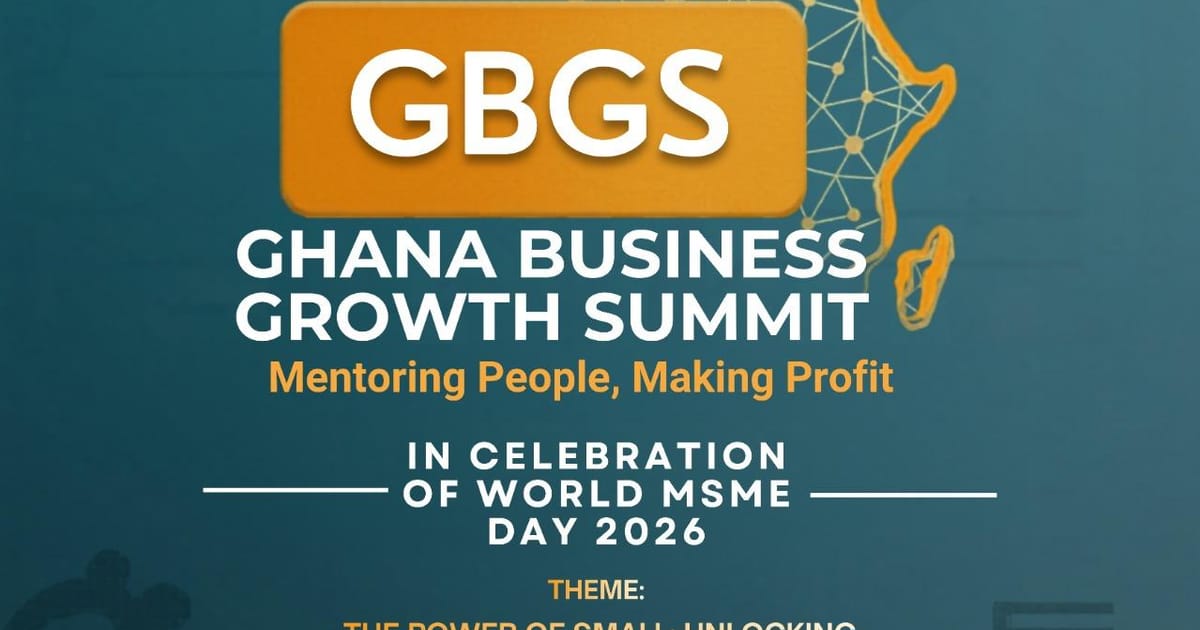
Ghana is poised to take a significant step toward fostering economic resilience and inclusive growth as it prepares to host the Ghana Business Growth Summit, a high-profile event designed to champion the development of Micro, Small, and Medium Enterprises (MSMEs) in alignment with World MSME Day celebrations. Scheduled to attract policymakers, entrepreneurs, investors, and industry experts, the summit aims to provide a strategic platform for addressing the unique challenges faced by Ghana’s MSME sector while exploring innovative solutions to accelerate sustainable growth.
The Significance of MSMEs in Ghana’s Economy
MSMEs form the backbone of Ghana’s economy, contributing significantly to employment generation, innovation, and economic diversification. According to the Ghana Statistical Service (GSS), MSMEs account for over 90% of businesses in the country and employ approximately 60% of the workforce. Despite their critical role, these enterprises often grapple with limited access to financing, inadequate infrastructure, regulatory hurdles, and market competitiveness, which hinder their potential to scale and contribute more robustly to national development.
World MSME Day, observed annually on June 27, serves as a global reminder of the importance of supporting small businesses in driving economic recovery, poverty reduction, and sustainable development. Ghana’s Business Growth Summit aligns with this international observance, positioning the country as a leader in MSME advocacy and policy innovation within the African continent.
Key Objectives of the Ghana Business Growth Summit
The summit is structured to achieve several strategic objectives, including:
-
Policy and Regulatory Reforms
Delegates will engage in policy dialogues aimed at simplifying business registration processes, reducing bureaucratic red tape, and improving access to government-backed financing schemes. Discussions will also focus on tax incentives, digitalization support, and trade facilitation measures to create a more conducive environment for MSME growth. -
Financing and Investment Solutions
A major challenge for Ghanaian MSMEs remains limited access to affordable credit. The summit will feature panel discussions and networking sessions with financial institutions, impact investors, and development partners to explore alternative financing models, such as crowdfunding, microfinance, and venture capital, tailored to the needs of small businesses. -
Capacity Building and Skill Development
To enhance competitiveness, the event will host workshops and training sessions on digital marketing, financial literacy, supply chain management, and export readiness. Partnerships with technical and vocational training institutions will be highlighted to ensure MSME owners and employees acquire market-relevant skills that drive productivity and innovation. -
Market Access and Export Promotion
Ghana’s MSMEs often struggle with limited market reach, particularly in regional and international trade. The summit will feature B2B matchmaking sessions connecting local enterprises with potential buyers, distributors, and export facilitators. Additionally, discussions will center on harmonizing regional trade agreements (such as the AfCFTA) to reduce trade barriers and expand opportunities for Ghanaian exporters. -
Innovation and Technology Adoption
Digital transformation remains a game-changer for MSMEs seeking to improve efficiency and reach broader markets. The summit will showcase case studies of successful tech-adopted businesses, while also promoting low-cost digital tools (e.g., mobile banking, e-commerce platforms) that can be easily integrated by small enterprises. -
Gender and Youth Entrepreneurship
Recognizing the critical role of women and youth in MSME growth, the summit will dedicate sessions to gender-inclusive policies, mentorship programs, and funding initiatives specifically designed to empower female entrepreneurs and young startups. Ghana’s National Entrepreneurship and Innovation Programme (NEIP) and other youth-focused initiatives will be spotlighted to encourage participation in the formal economy.
Expected Outcomes and Long-Term Impact
The Ghana Business Growth Summit is not merely a one-day event but a multi-stakeholder commitment to fostering a sustainable MSME ecosystem. Key expected outcomes include:
- A renewed national MSME policy framework incorporating feedback from stakeholders.
- Increased access to financing, with financial institutions pledging to allocate more resources to small businesses.
- Enhanced digital literacy among MSME owners, enabling them to leverage online platforms for growth.
- Stronger regional and international trade linkages, particularly through AfCFTA and ECOWAS integration.
- A network of supported entrepreneurs, with mentorship and peer-learning opportunities extending beyond the summit.
Who Should Attend?
The summit is designed for a diverse audience, including:
– MSME owners and operators seeking growth strategies and funding opportunities.
– Government officials and policymakers shaping economic policies for small businesses.
– Investors and impact funds looking to deploy capital in high-growth sectors.
– Academics and researchers focused on entrepreneurship, innovation, and economic development.
– Development partners and international organizations supporting Ghana’s MSME sector.
The Road Ahead: A Call to Action
As Ghana celebrates World MSME Day, the Business Growth Summit serves as a call to action for all stakeholders to collaborate, innovate, and invest in the future of small businesses. The event underscores the indispensable role of MSMEs in achieving Ghana’s Vision 2040—a prosperous, industrialized, and middle-income economy.
By fostering inclusive growth, digital transformation, and sustainable financing, the summit aims to unlock the full potential of Ghana’s MSME sector, ensuring that small businesses remain at the forefront of economic dynamism and job creation in the years to come.
Note: The summit’s success will hinge on meaningful commitments from both public and private sectors, ensuring that the discussions translate into actionable policies and support mechanisms for Ghana’s MSMEs.