


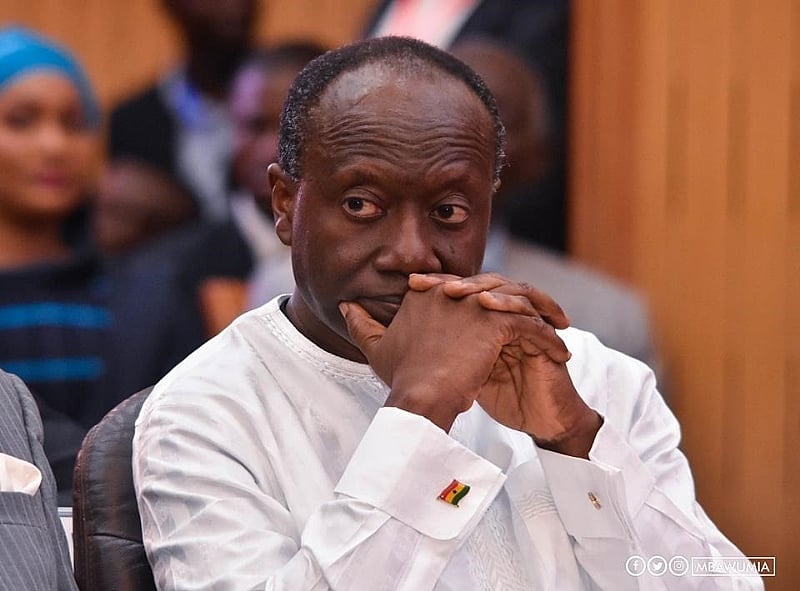

In the fluid landscape of Ghanaian politics, where symbolism often intertwines with substance, the recent public appeal by President John Dramani Mahama for former Finance Minister Ken Ofori-Atta to return home has sparked a deeper conversation—one that transcends humour and political posturing. The President’s lighthearted remark, framed as a fatherly plea from his children, was met with laughter in the moment but has since ignited a more profound debate: Can reassurances of safety and due process alone erase the lingering shadows of past controversies?
The incident underscores a broader tension in Ghana’s democratic framework: how to reconcile the need for accountability with the protection of constitutional rights, especially when high-profile figures are involved. While Mahama’s words may have been intended to ease tensions, they have instead reignited public skepticism about the government’s commitment to fairness and transparency.
A Controversial Raid and Its Aftermath
The controversy surrounding Ofori-Atta’s case began earlier this year when reports emerged of a high-profile raid on his residence while he was abroad. The operation, allegedly conducted by security personnel, was met with immediate backlash from civil society groups, legal experts, and even some government officials. Critics argued that the raid violated due process, raising questions about the legality of the action and the motives behind it.
In response to widespread condemnation, government officials, including Majority Leader Mahama Ayariga, publicly apologized for the mishandling of the situation, acknowledging that the operation was executed without proper legal safeguards. Yet, the damage to public trust had already been done. For many Ghanaians, the raid symbolized a disregard for constitutional protections, particularly for individuals facing allegations of wrongdoing.
The incident remains a raw wound in public memory, making it difficult for assurances of security and legal recourse to immediately restore confidence. Trust, once eroded, requires more than words to rebuild.
The President’s Humorous Appeal: A Double-Edged Sword
Mahama’s recent remarks, delivered during a public engagement, framed the issue in a seemingly fatherly and reassuring tone. He cited Ofori-Atta’s own words—his declaration as a father who would never abandon his children—before extending an open invitation for the former minister to return.
“If you believe you have done nothing wrong, come back,” Mahama reportedly said, adding that the government would ensure his safety and uphold due process. While the tone was light, the subtext was clear: Ghana’s legal system is open, fair, and capable of handling such cases without political interference.
However, the irony of the situation cannot be ignored. The President, who once served as a key figure in Ofori-Atta’s political journey, now finds himself in a position where his words carry both comfort and contradiction. For many, the raid—regardless of its eventual resolution—undermines the very assurances now being offered.
The Broader Implications: Justice, Perception, and Democratic Accountability
This case is not merely about one individual’s return but a test of Ghana’s democratic resilience. The challenge lies in balancing accountability with fairness, ensuring that investigations are conducted without undue influence or bias.
Key questions arise:
– Can Ghana’s judicial system be perceived as impartial when high-profile figures are involved?
– How can public confidence be restored when past actions—such as the controversial raid—raise doubts about procedural fairness?
– What mechanisms exist to ensure that legal processes are transparent, and that political interference is minimized?
The answer lies in strengthening institutional credibility. A strong democracy is not measured by how it treats its allies but by how fairly it treats those under scrutiny. If Ghana’s legal system is to command respect, it must demonstrate consistency, transparency, and adherence to the rule of law—regardless of political affiliations.
Legal Recourse and International Considerations
Currently, Ofori-Atta is residing in the United States under legal authorization. His decision to return—or not—will depend on legal advice, personal considerations, and the perceived fairness of Ghana’s judicial process.
If Ghanaian authorities believe there is sufficient evidence to proceed with legal action, they have constitutionally recognized pathways to do so, including:
– Domestic judicial processes governed by Ghana’s legal framework.
– International legal cooperation, where applicable, to ensure fair proceedings.
However, the burden of proof must rest with the courts, not political rhetoric. Justice must be seen to be done, not merely declared.
The Path Forward: Restoring Public Trust
The ultimate question is not whether Ofori-Atta will return, but whether Ghana’s institutions can inspire confidence in all citizens—government officials, opposition figures, and former leaders alike.
A democracy’s strength is tested not in moments of agreement but in how it handles dissent and scrutiny. If Ghana’s legal system operates without fear or favor, if investigations are conducted with transparency and professionalism, then public trust will gradually be restored.
Yet, words alone are insufficient. The government must demonstrate through action that:
✔ Due process is sacrosanct, even for those in power.
✔ Legal proceedings are free from political interference.
✔ Transparency is prioritized in all investigations.
In the end, Ghana’s democratic future will not be shaped by political jokes or public appeals, but by whether its institutions consistently uphold the rule of law.
The conversation around Ofori-Atta’s potential return, therefore, is not just about one man’s fate—it is a litmus test for the soul of Ghana’s democracy.