


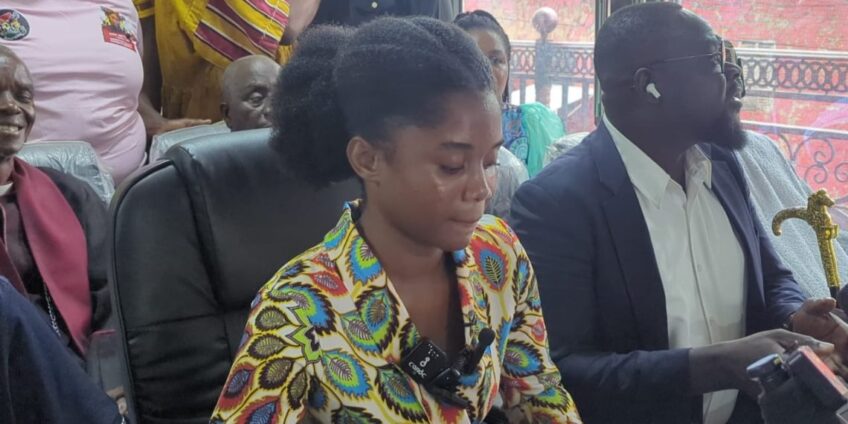
A bold new voice has emerged in Ghana’s political landscape as Nana Agyeiwaa Baffoe-Bonnie Michaels, a 22-year-old law student affectionately known as Okordie, officially declared her candidacy for the Manhyia South parliamentary seat in the 2028 general elections. Her announcement, made at a high-profile press conference held at the Base Movement Ghana’s Ashanti Regional Office in Kumasi, signals a generational shift in the constituency’s political trajectory, with a focus on youth empowerment, accountability, and transformative leadership.
A Fresh Perspective Born from Firsthand Experience
Ms. Michaels’ decision to contest the seat was not made lightly. She articulated her motivation during the press conference, emphasizing her deep connection to the struggles faced by residents of Manhyia South—a constituency grappling with decades of unmet challenges.
“I understand the struggles of the people because I have lived through them,” she stated. “It is time for a new kind of leadership—one that listens, serves, and delivers tangible results for the people.”
Her candid admission underscores a growing disillusionment among Ghanaian youth with traditional political narratives, driving a wave of young, reform-minded candidates to step into leadership roles. Unlike many of her predecessors, Ms. Michaels brings direct experience of the constituency’s realities, having observed persistent systemic failures in governance, infrastructure, and social services.
12 Critical Priority Areas for Immediate Action
In her comprehensive manifesto, Ms. Michaels outlined 12 key issues she intends to address if elected, reflecting a holistic and people-centered approach to governance:
- Youth Unemployment – A persistent crisis in Manhyia South, where many graduates and skilled workers remain jobless despite their qualifications.
- Support for Small and Medium-Sized Enterprises (SMEs) – Many local businesses struggle due to limited access to funding, market opportunities, and regulatory hurdles.
- Vocational and Skills Training Gaps – The constituency lacks adequate technical and vocational education (TVET) institutions, leaving many young people ill-prepared for the job market.
- Poor Educational Infrastructure – Overcrowded classrooms, dilapidated school buildings, and inadequate teaching resources continue to hinder academic progress.
- Healthcare Delivery Challenges – Understaffed health facilities, long wait times, and limited medical supplies remain major concerns for residents.
- Deteriorating Roads and Drainage Systems – Frequent flooding, potholes, and poor urban planning disrupt daily life and economic activities.
- Sanitation and Environmental Degradation – Open defecation, improper waste management, and pollution pose serious health risks.
- Rising Insecurity – Increased petty crimes, youth violence, and lack of community policing have heightened fears among residents.
- Insufficient Support for Women and Girls – Gender-based violence, limited economic opportunities, and poor representation in leadership remain systemic issues.
- Lack of Sports and Recreational Facilities – Youth engagement in positive extracurricular activities is limited due to few sports grounds, clubs, and cultural centers.
- Digital Exclusion – Many residents, particularly in rural areas, lack access to reliable internet, digital literacy training, and e-governance platforms.
- Weak Constituency Engagement – Lack of transparency, poor communication, and disconnection between elected officials and citizens have eroded trust in governance.
Ms. Michaels attributed these longstanding issues to political leaders prioritizing party agendas over the welfare of constituents, a trend she vows to challenge.
A Vision for Manhyia South: Innovation, Accountability, and Inclusive Growth
Unlike traditional political campaigns that rely on rhetoric and empty promises, Ms. Michaels’ strategy is data-driven, participatory, and results-oriented. She pledged to:
- Prioritize Youth Employment and Entrepreneurship – By collaborating with local universities, vocational training centers, and private sector stakeholders to create job-ready programs and startup incubators.
- Empower Women Economically – Through microfinance schemes, women-led business support, and policy advocacy to ensure gender parity in economic participation.
- Revitalize Education and Healthcare – By partnering with traditional leaders, religious organizations, and civil society to upgrade school facilities, hire more teachers, and improve healthcare access.
- Boost Local Businesses and Attract Investment – By simplifying bureaucratic processes, providing tax incentives, and creating a business-friendly environment** to retain and attract investors.
- Strengthen Transparency and Accountability – Implementing digital governance tools, citizen feedback mechanisms, and anti-corruption initiatives to ensure responsible use of public funds.
- Foster Peaceful and Respectful Leadership – Her campaign will be issue-based, non-partisan (where possible), and centered on dialogue, rejecting divisive rhetoric in favor of unity and progress.
Base Movement Ghana: A Platform for Change
Ms. Michaels’ alignment with Base Movement Ghana—a relatively new political force—reflects her belief in a fresh political paradigm. She highlighted the party’s core principles:
- Putting Ghana First – Prioritizing national development over partisan interests.
- Citizen Empowerment – Strengthening grassroots democracy through inclusive governance.
- Accountability and Transparency – Holding leaders accountable to the people they serve.
- Equitable Opportunities – Ensuring no Ghanaian is left behind in the nation’s progress.
“Ghana’s politics must move beyond campaign slogans and focus on practical solutions, innovation, and measurable development,” she declared. “Base Movement Ghana represents that shift—an opportunity to build a stronger Manhyia South and, by extension, a stronger Ghana.”
Collaborative Governance: A Multi-Stakeholder Approach
Recognizing that no single entity can solve complex challenges alone, Ms. Michaels emphasized the need for partnerships with:
- Traditional Authorities – Leveraging cultural leadership to drive community development initiatives.
- Religious Organizations – Using faith-based platforms to promote social cohesion and moral governance.
- Civil Society Groups – Monitoring progress, advocating for rights, and holding the government accountable.
- The Private Sector – Encouraging corporate social responsibility (CSR) and public-private partnerships (PPPs) to accelerate development.
A New Generation of Leadership
Ms. Michaels’ candidacy is not just a personal ambition—it is a call to action for a new generation of leaders who are young, dynamic, and deeply connected to their communities. Her message resonates with many Ghanaians who feel disenfranchised by the status quo:
“The time has come for a new generation of leadership that listens, serves, and delivers,” she said. “Together, we can transform Manhyia South into a model constituency—one where youth are employed, women thrive, infrastructure is world-class, and governance is transparent.”
Early Political Activity Intensifies Ahead of 2028 Elections
Ms. Michaels’ declaration joins a growing list of aspiring candidates across Ghana who are early movers in the 2028 political race. As the country prepares for another general election, the emergence of young, reformist voices signals a potential shift in political dynamics, with constituencies like Manhyia South becoming battlegrounds for progressive change.
Her campaign, if successful, could set a precedent for youth-led governance, proving that innovation and grassroots engagement are viable alternatives to traditional political leadership.
As Ghana stands at a crossroads, Ms. Michaels’ candidacy offers a glimpse of hope—one where leadership is measured not by age or party loyalty, but by impact, accountability, and a genuine commitment to the people’s welfare.