


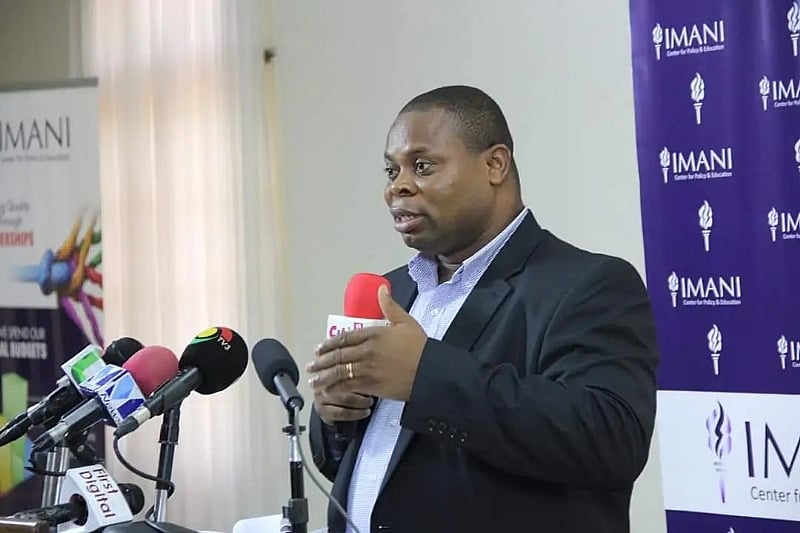
Ghana’s digital political landscape is undergoing a significant transformation, with conversations increasingly dominated by personalities rather than substantive policy discussions, according to the latest IMANI Pulse Report for June 2026. The report, which analysed 1,797 political mentions across Ghana’s digital information ecosystem over a 30-day period, reveals a troubling trend: while Ghanaians remain highly engaged in national affairs, discussions on governance, economic reforms, foreign policy, infrastructure, and elections are frequently overshadowed by partisan narratives, political posturing, and personality-centric debates.
Unlike previous editions that merely gauged sentiment—whether political discourse was positive or negative—the June 2026 report delves deeper, examining the substance of public engagement. It introduces the Substance Index, a novel metric designed to measure whether digital political discussions are policy-driven (focusing on legislation, institutional reforms, public programmes, and governance outcomes) or personality-driven (centred on political leaders, partisan identity, credibility battles, and leadership symbolism).
The Substance Index: Measuring the Quality of Digital Political Debates
The Substance Index serves as a critical tool for assessing whether Ghana’s digital political discourse is constructive and policy-focused or superficial and personality-driven. According to IMANI, the index evaluates two primary dimensions:
- Policy-Focused Discussions – These include debates on:
- Legislative proposals and their implications
- Institutional reforms and their effectiveness
- Public policy outcomes (e.g., economic growth, healthcare access, education reforms)
- Governance systems and accountability mechanisms
-
Technical and structural solutions to national challenges
-
Personality-Driven Discussions – These revolve around:
- Political leaders’ actions, rhetoric, and perceived credibility
- Partisan identity and factionalism within political parties
- Symbolic political gestures rather than substantive policy changes
- Media narratives that amplify personal conflicts over systemic issues
The report’s findings indicate that while policy-related discussions still exist, they are overshadowed by personality-driven debates, particularly in high-stakes areas such as foreign policy, infrastructure, and electoral politics.
Foreign Policy: High Engagement, But Low Policy Substance
Foreign policy emerged as the most discussed topic in June 2026, with 321 mentions across digital platforms. However, a deep dive into these conversations revealed a disheartening reality: only 102 mentions (31%) focused on actual foreign policy issues, such as:
– Diplomatic relations with regional and global partners
– Economic cooperation and trade agreements
– Security alliances and their impact on national stability
– Cultural and educational exchanges with other nations
The remaining 219 mentions (69%) were personality-driven, with discussions centred on:
– Political leaders’ foreign policy decisions and their perceived motives
– Partisan criticism of government foreign policy stances
– Media narratives framing foreign policy as a zero-sum game between political rivals
This trend suggests that while Ghanaians are highly aware of foreign policy developments, the substance of the debate is often diluted by political posturing rather than strategic national interests.
Infrastructure Debates: From Technical Solutions to Political Battles
Infrastructure—critical for Ghana’s economic growth—should logically be a policy-centric discussion. However, IMANI’s analysis found that infrastructure debates frequently devolve into personality-driven conflicts, with technical and logistical discussions taking a backseat.
Instead of focusing on:
– Engineering solutions for road, rail, and energy projects
– Procurement transparency and corruption risks
– Sustainable financing models for large-scale infrastructure
– Maintenance strategies to ensure long-term functionality
Public discourse often shifts to:
– Blame games between political leaders and opposition parties
– Historical grievances (e.g., past infrastructure failures)
– Accountability debates rather than forward-looking solutions
This shift from substance to symbolism risks undermining Ghana’s infrastructure development, as meaningful policy discussions are replaced by partisan rhetoric.

[A visual representation of digital political engagement trends in Ghana, highlighting the dominance of personality-driven narratives over policy discussions.]
Case Study: The ‘Bawumia Ba’ Arrest – A Symbolic Battle, Not a Policy Debate
One of the most highly engaged political events in June 2026 was the arrest and subsequent bail of “Bawumia Ba,” a prominent NPP-affiliated TikTok commentator. The incident generated 28,947 engagements, making it one of the most discussed political events across all monitored themes.
While the case did raise legitimate questions about:
– Due process in law enforcement
– Freedom of expression in digital public discourse
– Political interference in judicial matters
IMANI’s analysis revealed that the debate quickly became a symbolic battle rather than a policy-focused discussion. Instead of examining:
– Reforms to law enforcement protocols
– Digital media regulations and their impact on free speech
– Institutional accountability in handling such cases
The conversation primarily revolved around:
– Partisan loyalty and political symbolism
– Media framing of the incident as a political vendetta
– Personal attacks on the commentator rather than systemic issues
This case exemplifies how highly charged political moments often distract from substantive governance debates, reinforcing the trend of personality-driven politics over policy substance.
The Broader Trend: A Digital Political Space Shaped by Personalities
IMANI’s report concludes that Ghana’s digital political space remains highly active and contested, but increasingly shaped by personalities rather than policy-driven discourse. The data reveals that while citizens remain engaged with governance, public policies, and national developments, these discussions are frequently filtered through:
– Partisan identity (NPP vs. NDC, for example)
– Leadership narratives (perceptions of competence, trustworthiness)
– Political competition rather than collective problem-solving
This shift has several concerning implications:
1. Policy Paralysis – When discussions are dominated by personal attacks rather than evidence-based policy debates, meaningful reforms become difficult to implement.
2. Erosion of Trust – If citizens perceive that political engagement is more about posturing than progress, trust in institutions declines.
3. Distraction from Critical Issues – High-profile personality conflicts overshadow urgent national challenges, such as economic instability, healthcare crises, and education reforms.
The Way Forward: Restoring Substance to Digital Political Discourse
While the IMANI Pulse Report paints a concerning picture, it also highlights opportunities for revitalising policy-focused discussions in Ghana’s digital political space. Some potential solutions include:
- Promoting Policy Literacy – Encouraging fact-based discussions on governance, economics, and public policy through educational campaigns and media literacy programmes.
- Encouraging Cross-Partisan Policy Debates – Platforms where political leaders and experts engage in substantive discussions on key issues, rather than personal attacks.
- Strengthening Digital Media Regulations – Ensuring that social media and digital platforms do not amplify misinformation or personality-driven narratives at the expense of policy substance.
- Citizen-Led Policy Engagement – Empowering grassroots organisations and civil society groups to drive policy discussions rather than leaving digital spaces dominated by political elites.
CONCLUSION:
Ghana’s digital political landscape is at a crossroads. While personality-driven debates may generate short-term engagement, they risk undermining long-term progress by sidelining policy substance. The IMANI Pulse Report serves as a wake-up call, urging stakeholders—politicians, media outlets, civil society, and citizens—to shift the narrative from personal politics to policy-driven governance. Only then can Ghana’s digital political discourse truly reflect the needs of the people and drive meaningful national development.