


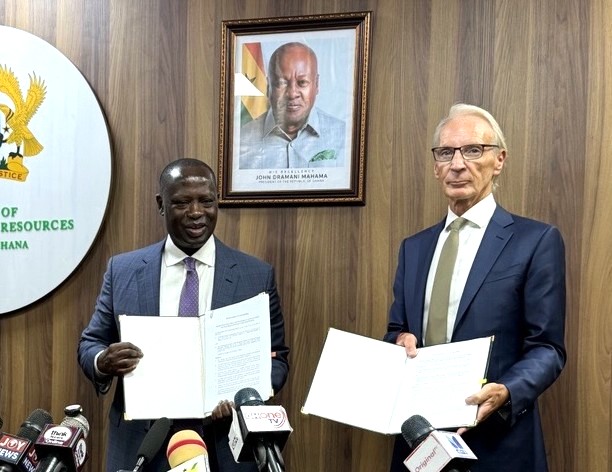
Ghana’s government has taken a monumental step toward transforming its artisanal and small-scale gold mining (ASGM) sector by formalising a strategic partnership with the World Gold Council (WGC). The collaboration, formalised through a Memorandum of Understanding (MoU), aims to address long-standing challenges in the sector—including supply chain transparency, illicit gold flows, and financial irregularities—while unlocking the sector’s vast economic and social potential.
A Vision for Responsible and Formalised Gold Mining
The MoU underscores a shared commitment between Ghana and the WGC to establish a national network of high-standard processing facilities that are accessible, trusted, and aligned with global responsible sourcing benchmarks. By doing so, the partnership seeks to incentivise artisanal miners to transition from informal to formal operations, ensuring their contributions enter the legitimate gold supply chain.
Key objectives of the partnership include:
– Policy and regulatory alignment to strengthen governance frameworks for ASGM.
– Capacity building for miners, communities, and stakeholders to adopt best practices.
– Traceability and origin verification through advanced technology solutions to combat illegal gold trade.
– Skills and educational initiatives to empower miners with sustainable livelihood opportunities.
Initial Investments and Long-Term Impact
As a first major step, the WGC has pledged an initial development grant of $250,000 to support Ghana’s rCOMSDEP (Responsible Cooperative Mining Scheme Development Programme), a flagship initiative aimed at formalising artisanal mining cooperatives. This financial backing will facilitate cooperative registration, infrastructure development, and compliance training, ensuring miners operate under legally recognised and environmentally responsible frameworks.
Beyond financial support, the partnership is designed to enhance community welfare, protect ecosystems, and fortify Ghana’s position in the global gold market. By integrating ASGM into the formal economy, the government and WGC aim to maximise economic benefits for local communities while mitigating the sector’s environmental and social risks.
Government and Industry Leaders Highlight Strategic Importance
Speaking at the announcement, Emmanuel Armah Kofi Buah, Minister for Lands and Natural Resources, emphasised the partnership’s role in modernising Ghana’s mining sector:
“This collaboration demonstrates Ghana’s dedication to turning artisanal and small-scale gold mining into a responsible, regulated, and economically empowering industry. By partnering with the World Gold Council, we are reinforcing our efforts to formalise ASGM, eliminate harmful practices, and ensure that the nation’s gold wealth benefits our people and nation.”
The Minister’s remarks underscore Ghana’s broader agenda to reduce illegal mining, improve worker safety, and enhance revenue generation from the sector, which remains a critical but often overlooked economic driver for rural communities.
Global Leadership in Responsible Mining
David Tait, Chief Executive Officer of the World Gold Council, praised Ghana’s leadership in addressing ASGM challenges:
“Ghana is a global benchmark in gold production, and its proactive approach to managing artisanal and small-scale mining sets a precedent for responsible practices worldwide. This MoU provides a unified platform where government expertise, international standards, and industry innovation converge to create a transparent, sustainable, and miner-friendly ASGM value chain.”
Tait’s statement reflects the WGC’s broader mission to promote ethical gold sourcing while supporting developing nations in formalising their mining sectors. Ghana’s partnership with the WGC aligns with global efforts to combat conflict minerals, human rights abuses, and environmental degradation in the gold supply chain.
Broader Implications for Ghana’s Economy and Sustainability
The ASGM sector employs millions of Ghanaians, many of whom operate in informal, unregulated conditions. This partnership could formalise thousands of miners, providing them with legal recognition, fair wages, and access to financial services—thereby reducing poverty and improving livelihoods.
Additionally, the initiative aligns with Ghana’s national sustainability goals, including:
– Reducing mercury use in gold extraction, a major environmental concern.
– Strengthening land rights for mining communities.
– Enhancing transparency in gold exports to prevent illicit financial flows.
A Blueprint for Regional and Global Replication
Ghana’s collaboration with the WGC could serve as a model for other African nations grappling with similar challenges in ASGM. Countries like Burkina Faso, Mali, and the Democratic Republic of the Congo—where artisanal mining plays a significant economic role—may look to Ghana’s approach for policy reforms, technological adoption, and international partnerships.
Conclusion: A New Era for Ghana’s Gold Sector
The Ghana-WGC strategic partnership marks a pivotal moment in the nation’s mining history. By combining government policy, industry expertise, and technological innovation, the collaboration aims to transform ASGM from a largely informal, unregulated activity into a formal, sustainable, and economically beneficial sector****.
As implementation progresses, the partnership could boost Ghana’s gold production credibility, improve miner livelihoods, and position the country as a leader in responsible global mining practices**—setting a standard for other nations to follow.
This initiative not only secures economic gains but also protects ecosystems, empowers communities, and strengthens Ghana’s standing in the international gold market. The success of this partnership will depend on consistent policy enforcement, stakeholder engagement, and sustained international support—ensuring that the benefits of responsible ASGM are realised for generations to come.