


Ghana’s political landscape has historically been shaped by a deep-rooted respect for tradition, spirituality, and the wisdom of its elders. From the revered Asantehene to the Okyenhene and other esteemed traditional and religious leaders, these figures have long served as pillars of stability, moral guidance, and national cohesion. However, recent incidents of verbal abuse, disrespect, and outright insults directed at these leaders by political activists have sparked widespread concern. These actions not only violate Ghana’s cultural ethos but also threaten the very foundations of social harmony and national unity.
This article underscores the urgency of reclaiming the dignity of Ghana’s traditional and religious institutions—a duty that falls on every citizen, political leader, and institution of authority.
A Cultural and Spiritual Abomination
In Ghanaian society, age is not merely a biological marker but a symbol of accumulated wisdom, experience, and moral authority. Traditional stools, religious institutions, and the offices of chieftaincy are deeply embedded in the national psyche, representing the collective soul of the nation. Attacking these custodians of culture and faith is not just an affront to individuals but a direct assault on the nation’s spiritual and social fabric.
Historically, Ghanaian politics has been characterized by debates rooted in reason, dialogue, and mutual respect—never by the weaponization of insults. Political disagreements have always been settled through intellectual discourse, not through the degradation of those who embody the nation’s heritage. This tradition reflects the core values of Ghanaian society, where elders are held in the highest regard, and their wisdom is sought in times of crisis.
Both Christianity and Islam, the dominant faiths in Ghana, unequivocally condemn the disrespect of elders and authority figures. The Bible, in particular, places a premium on honoring leadership and reverencing age:
- Leviticus 19:32 commands: “Stand up in the presence of the aged, show respect for the elderly, and revere your God.”
- Romans 13:7 instructs: “Give to everyone what you owe them: if you owe taxes, pay taxes; if revenue, then revenue; if respect, then respect; if honor, then honor.”
Similarly, Islamic teachings emphasize the sacred duty of respecting elders as an act of devotion to Allah. The Quran (17:23) states:
“And your Lord has decreed that you not worship anyone except Him and, to parents, good treatment. Whether one or both of them reach old age [while] with you, say not to them [so much as] ‘Uff,’ and do not repel them, but speak to them noble words.”
This divine mandate is further reinforced by the teachings of the Prophet Muhammad (Peace Be Upon Him), who declared in the Hadith:
“He is not one of us who does not show mercy to our young ones and esteem to our elderly.” —Sunan At-Tirmidhi.
These religious and cultural imperatives are not mere suggestions but fundamental principles that must guide all interactions, especially in the political sphere.
The Perils of Normalizing Disrespect
The increasing normalization of political insults directed at traditional and religious leaders poses a grave threat to Ghana’s stability and social cohesion. The consequences of such behavior extend far beyond mere verbal exchanges—they undermine the very structures that have kept the nation united for decades.
1. Erosion of Mediation Structures
Traditional and religious leaders have long served as neutral arbiters in times of national crisis, election disputes, and civil unrest. Their moral authority is what allows them to mediate conflicts and restore peace when political tensions escalate. When these leaders are subjected to public humiliation or abuse, their credibility is irreparably damaged. Without their mediation, Ghana risks descending into prolonged conflicts with no trusted intermediaries to broker peace.
2. Threat to National Cohesion
Chieftaincy institutions, in particular, command immense loyalty from millions of Ghanaians across ethnic lines. Insulting a revered figure like the Asantehene or the Okyenhene is not just an attack on the individual but on the entire traditional area they represent. Such actions can ignite tribal tensions, deepening divisions that could destabilize the nation. In a country as diverse as Ghana, where ethnic and regional identities are deeply intertwined with national identity, such disrespect can have catastrophic consequences.
3. Decay of Youth Morality
When young political activists witness leaders being insulted without consequence, they are sent a dangerous message: that disrespect is acceptable, even encouraged, in the pursuit of political gain. This normalizes toxic behavior and erodes the mentorship structures that are essential for nurturing responsible civic leaders. Without role models who uphold respect and decorum, the next generation of political leaders may lack the moral compass necessary to govern with integrity.
4. Stifling National Development
Investors and international partners look to Ghana as a stable and predictable nation—a beacon of democracy and progress in West Africa. A political climate marked by insults, disrespect, and polarization sends a clear signal: Ghana is not a safe or reliable partner for long-term development. The erosion of social harmony slows down policy implementation, deters foreign investment, and undermines Ghana’s reputation as a leader in regional affairs.
A Call to Action: Restoring Dignity and Accountability
The responsibility to halt this decline lies squarely on the shoulders of Ghana’s political leadership. Political parties and government officials must recognize that their tolerance of such behavior reflects poorly on their commitment to national unity and cultural preservation. Leadership is defined not just by what it says but by what it tolerates.
To restore respect and accountability, the following measures must be implemented immediately:
1. Publicly Distance Themselves from Offenders
Political party executives and government officials must issue unambiguous statements condemning any member or activist who engages in disrespectful behavior toward traditional or religious leaders. Silence or vague press releases will not suffice—strong, decisive action is required to signal that such behavior is unacceptable.
2. Enforce Strict Party Sanctions
Political parties must implement immediate suspensions and revocations of party roles for any member found guilty of insulting elders or traditional institutions. This includes activists, communicators, and even elected officials who engage in such behavior. The sanctions should be publicly announced to deter others from following suit.
3. Blacklist Persistent Offenders
Activists and communicators known for weaponizing disrespect should be denied media representation duties. No platform—whether in traditional media, social media, or political rallies—should be allowed to amplify their voices. This will send a clear message that Ghanaian society will not tolerate such behavior.
4. Strengthen Civic Education on Respect and Decorum
Political parties and civil society organizations must collaborate to launch nationwide campaigns emphasizing the importance of respect for elders, traditional institutions, and religious leaders. Schools, universities, and community centers should integrate these values into curricula to ensure that future generations understand their role in preserving Ghana’s cultural heritage.
5. Establish a National Task Force on Cultural Integrity
A high-level task force, comprising traditional leaders, religious figures, and political representatives, should be established to monitor and address incidents of disrespect. This body should have the authority to investigate complaints, recommend sanctions, and propose long-term solutions to safeguard Ghana’s cultural values.
Preserving Ghana’s Legacy of Unity and Respect
Ghana has long been celebrated as a model of democracy, cultural richness, and social cohesion in Africa. However, this reputation is under threat by the rising tide of disrespect and insults directed at the nation’s elders and traditional institutions. To preserve Ghana’s legacy, every citizen must take responsibility for upholding its cultural values.
Political leaders, in particular, must lead by example—rejecting the use of insults as a political tactic and instead fostering a culture of dialogue, respect, and mutual understanding. Only through collective action can Ghana reclaim its rightful place as a nation where wisdom is revered, elders are honored, and unity is prioritized above all else.
The time to act is now. The dignity of Ghana’s traditional and religious leaders must be protected, not just for their sake, but for the sake of the nation’s future.
God bless our homeland Ghana and make her greater and stronger.
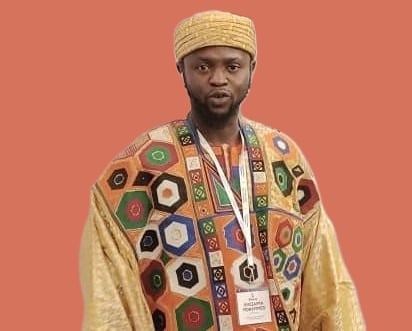
By Alhaji Khuzaima Mohammed Osman Tafidan
Hausa for Africa and Europe
Executive Director of African Security and Development Forum (ASDEF)
Eminent Member and Chairman of the Finance and Fundraising Committee, GARPC – The National Peace Council of Ghana