


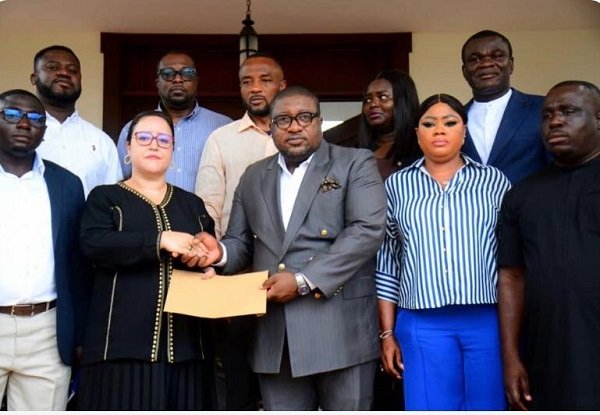
The New Patriotic Party (NPP) has escalated its concerns over what it describes as a systematic campaign of political persecution in Ghana, formally petitioning members of the diplomatic corps to intervene in what it terms a dangerous erosion of democratic freedoms. In a comprehensive statement issued in Accra, the opposition party has accused President John Dramani Mahama’s government of suppressing dissent, undermining judicial independence, and weaponising state institutions to silence critics, journalists, and opposition figures.
A Culture of Intimidation and the Criminalisation of Free Speech
The NPP’s petition paints a disturbing picture of a Ghana where political opposition is met with arbitrary arrests, prolonged detentions, and legal harassment. The party argues that the government has gradually dismantled democratic safeguards, fostering an environment where citizens hesitate to voice dissent due to fear of retaliation, prosecution, or physical harm.
“This is not just about individual cases—it is a deliberate strategy to instil fear and silence opposition,” the statement reads. “Ghana’s reputation as a beacon of democracy in West Africa is being tarnished by actions that prioritise political survival over constitutional principles.”
The party explicitly condemns the weaponisation of the legal system, citing selective enforcement of laws to target political opponents while ruling-party-aligned individuals often face no consequences for similar offences. This, the NPP asserts, undermines the rule of law and erodes public trust in state institutions.
High-Profile Cases of Political Persecution
Among the most egregious examples cited in the petition is the recent arrest and detention of Kwame Baffoe, popularly known as Abronye DC, the NPP’s Northern Regional Chairman. Baffoe was detained and charged after making public remarks critical of a judge, a case the party describes as “a blatant attempt to criminalise free speech.”
The NPP highlights that Baffoe was denied bail, a decision the party argues was politically motivated rather than based on legal merit. “This is not justice—it is punishment for dissent,” the statement asserts. “The government is using the courts to silence voices that challenge its authority.”
Beyond Baffoe’s case, the petition documents a pattern of harassment against opposition figures, including unwarranted raids, prolonged interrogations, and baseless prosecutions. The party warns that such tactics discourage political participation and chill democratic debate, fundamental pillars of any functioning democracy.
The Repeal of Criminal Libel and Its Undermining
Ghana’s 2001 repeal of criminal libel laws under former President John Agyekum Kufuor was hailed as a landmark reform that strengthened press freedom and protected free expression. However, the NPP argues that the current administration has found alternative means to penalise critics, effectively reversing decades of progress.
“Instead of criminal libel, we now see the misuse of defamation laws, sedition charges, and even trumped-up economic crimes to target journalists and opposition leaders,” the statement claims. “The government is not just silencing dissent—it is rewriting the rules to ensure no one can challenge it without fear.”
State Security Agencies: Tools of Political Repression
A central concern raised by the NPP is the increasing militarisation of state security agencies, particularly the police and intelligence services, which it alleges are being used for partisan purposes. The party describes dramatic, night-time raids on opposition figures’ homes and offices, followed by prolonged detentions without charge, as standard operating procedure under the Mahama government.
“These are not investigations—they are show trials designed to intimidate,” the petition states. “Opposition leaders are being treated as criminals rather than political adversaries, and this has a chilling effect on Ghanaian democracy.”
Judicial Independence Under Threat
The NPP’s concerns extend to the judiciary, particularly following the removal of Chief Justice Gertrude Araba Esaaba Sackey Torkornoo. The party argues that this high-profile dismissal has undermined public confidence in judicial impartiality, with many now believing that political pressure can influence court decisions.
“When judges are seen as vulnerable to political interference, the rule of law collapses,” the statement warns. “This is not just about one chief justice—it is about a systemic erosion of trust in Ghana’s justice system.”
A Call for International Intervention
In light of these deepening concerns, the NPP has urged the diplomatic community, human rights organisations, and development partners to actively monitor developments in Ghana. The party is seeking international pressure to halt the persecution of dissenters and restore democratic norms.
“We cannot solve this problem alone,” the petition concludes. “The world must recognise that Ghana’s democracy is under siege, and silence is no longer an option. We call on our international partners to speak out, engage the government, and ensure that free speech and the rule of law are protected.”
The NPP’s petition serves as a stark warning—one that suggests Ghana’s democratic backsliding may have reached a critical juncture, requiring urgent intervention to prevent further deterioration.