


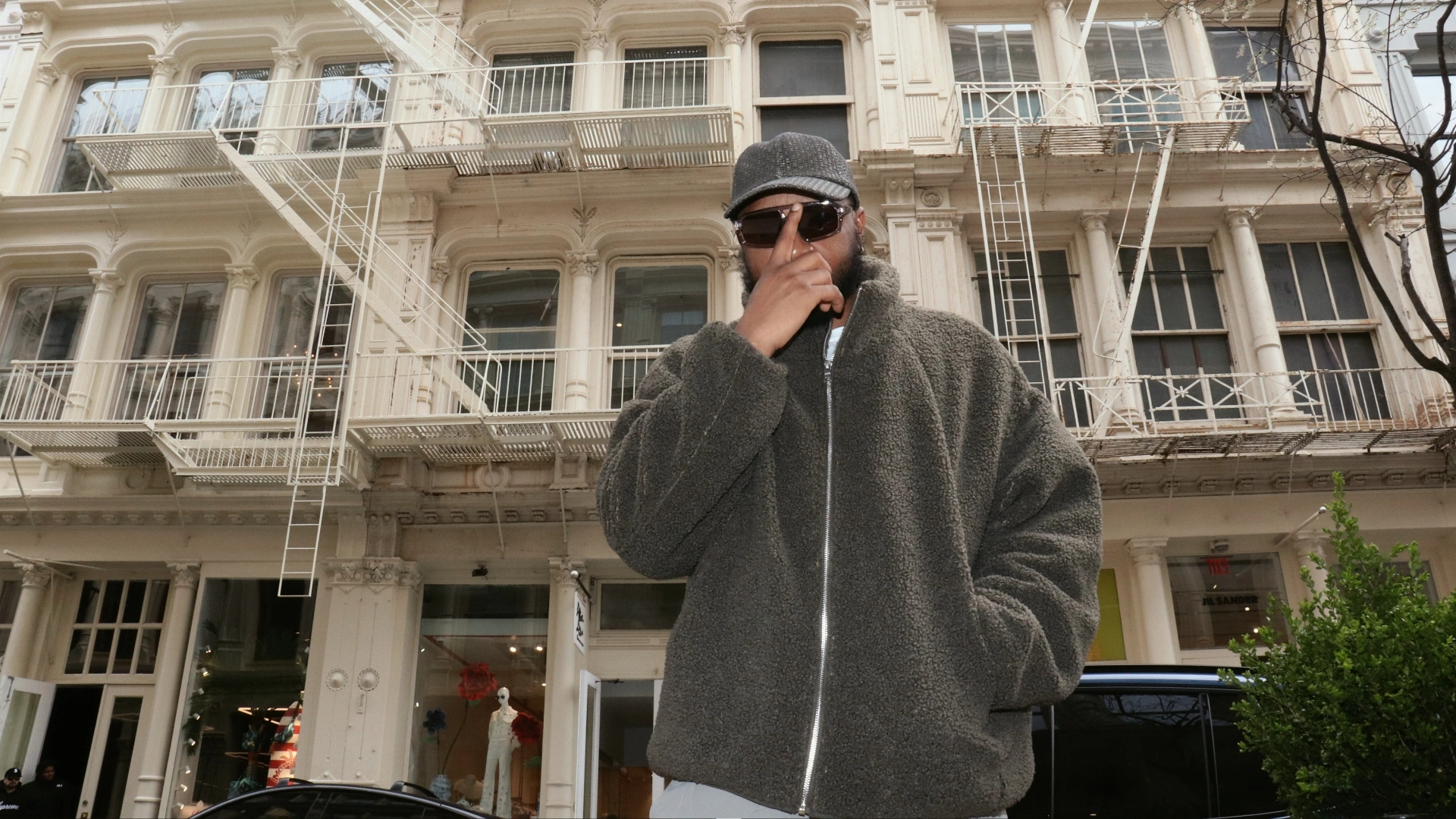
The recent announcement by MoveAndDream, a prominent Nigerian music executive and entrepreneur, that he is venturing into drama production has sparked widespread discussion across social and professional circles. Known for his socially conscious music projects and collaborations with leading artists, MoveAndDream’s foray into film and television with his upcoming series, “Moves”, has challenged conventional perceptions of the entertainment industry’s boundaries. The teaser for “Chapter Zero”—released on YouTube—signals a bold expansion beyond music, prompting questions about whether Nigeria’s entertainment elite are increasingly diversifying their creative portfolios to explore new opportunities.
When The Guardian reached out to MoveAndDream for clarity, he clarified that his new venture was not a departure from music but rather a natural progression of his artistic vision. “Directing and acting have always been as much a part of my dreams as music. I am simply following my heart and I am very grateful to be able to do so. Also, the music will never stop. It’s a part of me,” he stated. His perspective underscores a broader industry-wide trend where entertainment figures are no longer confined to traditional roles but are actively exploring film, television, fashion, technology, and even hospitality to expand their creative and commercial influence.
This shift is not isolated to Nigeria. Globally, artists and entertainers are increasingly diversifying their careers to build multi-faceted brands that transcend their original disciplines. From Jay-Z’s ventures into fashion and technology with Roc Nation and D’Ussé, to Rihanna’s foray into beauty and retail with Fenty Beauty and Savage X Fenty, and Dr. Dre’s investments in Beats Electronics, the entertainment industry is witnessing a paradigm shift where creativity is no longer limited to a single medium.
The Maturity of Afrobeats and the Rise of Cross-Industry Ventures
The diversification of Nigerian artists and entertainment moguls is often interpreted as a response to challenges within the Afrobeats ecosystem. Critics argue that the genre’s global dominance is facing new competition, with movements like Amapiano (South Africa), Afro-house, and Afro-fusion gaining traction. Additionally, streaming algorithms, which favor scale over niche content, have made it increasingly difficult for artists to sustain revenue solely through music. Changing consumer habits—where audiences now engage with podcasts, short-form video, live streaming, and interactive content—have further complicated the landscape.
However, rather than signaling a decline in Afrobeats, this diversification reflects the genre’s maturity and adaptability. The global success of Afrobeats has not only expanded its reach but has also empowered artists to explore adjacent industries where they can leverage their brand equity, storytelling skills, and audience loyalty. By building multi-revenue streams, artists are ensuring long-term sustainability in an era where attention spans are fragmented and consumption patterns are evolving.
Nollywood and Afrobeats: A Synergistic Relationship
One of the most notable trends in Nigeria’s entertainment sector is the blurring of lines between music and film. Nollywood, Africa’s largest film industry, and Afrobeats—one of the continent’s most influential music genres—are increasingly collaborating to create hybrid storytelling experiences. This convergence has led to a new wave of crossover artists who excel in both music and acting, further proving that creativity is no longer siloed.
Prominent Examples of Artists Bridging Music and Film
Several Nigerian music stars have successfully transitioned into acting, demonstrating that diversification is often a natural evolution rather than a forced pivot:
- Banky W – One of Nigeria’s most celebrated actors, Banky W has starred in blockbuster films like The Wedding Party, Up North, and Sugar Rush, solidifying his status as a versatile entertainer who commands respect in both industries.
- Falz – Beyond his critically acclaimed music, Falz has delivered powerful performances in films such as Jenifa’s Diary, New Money, and Brotherhood, earning acclaim for his raw storytelling and comedic timing.
- Tiwa Savage – The Afrobeats sensation made her acting debut in the MTV series Shuga before taking on a leading role in her own film, Water and Garri, showcasing her ability to command both musical and cinematic narratives.
- Reminisce – Known for his intense hip-hop anthems, Reminisce stunned audiences with his chilling portrayal of Makanaki in King of Boys, proving that his theatrical prowess extends beyond the studio.
- Chike – The actor has delivered compelling performances in Gangs of Lagos and the TV drama Battleground, demonstrating his range as a storyteller.
- Yemi Alade – Beyond her chart-topping hits, Yemi has brought her charisma and energy to Omo Ghetto: The Saga, further expanding her entertainment brand.
- Simi – The music icon made her acting debut in Kunle Afolayan’s Mokalik, earning praise for her natural talent in front of the camera.
These examples illustrate that diversification is not about abandoning music but rather expanding creative horizons while maintaining a strong connection to their core audience.
Why Artists Are Diversifying: Beyond Music Revenue
The decision to explore film, television, fashion, and digital media is driven by several key factors:
- Fragmented Audience Attention – Younger consumers now consume content across multiple platforms, from TikTok and Instagram Reels to YouTube and Netflix. Artists who can adapt to these platforms are better positioned to maintain relevance.
- Streaming Challenges – While Afrobeats has seen massive growth on platforms like Spotify and Apple Music, the algorithm-driven nature of streaming favors large-scale acts, making it harder for mid-tier artists to thrive.
- Brand Building – In today’s entertainment economy, artists are treated as brands. Those who can extend their influence into fashion, technology, or media (e.g., Wizkid’s fashion line, Davido’s tech investments) create additional revenue streams and long-term value.
- Collaborative Opportunities – The synergy between Nollywood and Afrobeats opens doors for co-productions, soundtracks, and cross-promotional campaigns that benefit both industries.
- Creative Fulfillment – Many artists, like MoveAndDream, aspire to tell stories beyond lyrics. Film and television provide new avenues for expression, allowing them to explore deeper narratives and engage audiences in fresh ways.
The Future of Nigerian Entertainment: A Multidisciplinary Ecosystem
The emergence of projects like “Moves” suggests that Nigeria’s entertainment industry is becoming more ambitious, interconnected, and commercially sophisticated. Rather than seeing diversification as a sign of decline, it should be viewed as proof of an industry maturing.
As Afrobeats continues to dominate globally, Nigerian artists are leveraging their influence to explore new frontiers—whether in film production, fashion design, or digital media. This expansion is not just about financial sustainability but also about creating a dynamic creative ecosystem where knowledge transfer, innovation, and collaboration thrive.
Conclusion: Diversification as Proof of Industry Growth
The story of MoveAndDream is not about leaving music behind but about embracing the full spectrum of creative possibilities available in today’s entertainment landscape. Similarly, the success of artists like Banky W, Falz, and Tiwa Savage in both music and film demonstrates that diversification is a sign of strength, not weakness.
As Nigeria’s entertainment industry continues to evolve, the question is no longer whether Afrobeats is losing influence—but rather whether its success has given artists the confidence, audience, and capital to explore entirely new frontiers. In this light, diversification is not a sign of decline—it is evidence of an industry growing up.