


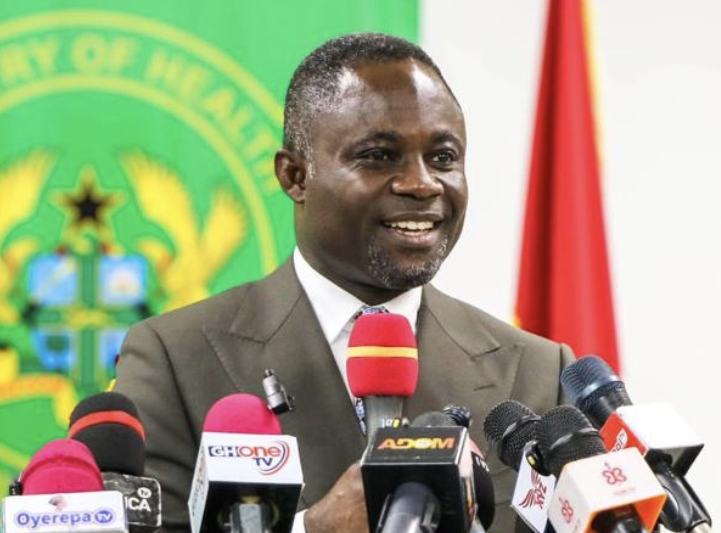
Ghana’s Minister of Health, Kwabena Minta Akandoh, has delivered a powerful call to African nations to reduce reliance on external funding and mobilise domestic resources to sustainably finance their health systems. Speaking at the African Union’s 25th Extraordinary Summit on Health in Accra, the Minister underscored the urgency of health sovereignty—a concept that emphasises self-sufficiency in healthcare to ensure resilience against global crises.
The summit, attended by health, finance, and foreign affairs ministers from across the African Union (AU), focused on reviewing the AU Roadmap to 2030 and beyond. The primary objective was to strengthen Africa’s health infrastructure while advancing the continent’s ability to control its own health destiny.
The Case for Domestic Health Financing
Mr. Akandoh emphasised that predictable and sustainable domestic financing is critical to achieving universal health coverage (UHC). He referenced the Abuja Declaration (2001), which called on African nations to allocate at least 15% of their national budgets to health. However, he noted that many countries still fall short, leaving populations vulnerable to health emergencies.
“A continent that finances its own health secures its own future. It cannot be held hostage to changing priorities beyond its shores,” he declared. The Minister warned that overdependence on foreign aid leaves Africa reactive rather than proactive in health crises, particularly when global priorities shift or funding dries up.
Local Production: A Critical Step Toward Self-Reliance
One of the most pressing vulnerabilities highlighted by Mr. Akandoh was Africa’s heavy reliance on imported medical supplies. The COVID-19 pandemic exposed how supply chain disruptions and geopolitical tensions could leave the continent ill-prepared and underserved.
“The next emergency must never again find Africa waiting at the back of the queue,” he stated. To address this, he called for expanded local production of medicines, vaccines, and health technologies. Strengthening pharmaceutical manufacturing and medical device production would not only reduce costs but also boost job creation and economic growth within the continent.
Primary Healthcare: The Foundation of a Strong Health System
The Minister stressed the indispensable role of primary healthcare (PHC) in building resilient health systems. He urged governments to invest heavily in community clinics, health workers, and frontline professionals—including nurses, midwives, and community health workers.
“Primary healthcare is the backbone of any robust health system,” he noted. “Without it, even the most advanced hospitals will struggle to serve the most vulnerable populations.”
Progress and Persisting Challenges in African Health
While acknowledging significant progress in combating HIV/AIDS, Mr. Akandoh pointed to declining infection rates by nearly 60% in eastern and southern Africa and a 50% reduction in AIDS-related deaths. However, he warned that other critical health challenges remain unresolved.
Maternal Mortality: A Persistent Crisis
Africa continues to bear the brunt of global maternal deaths, accounting for nearly 70% of all cases worldwide. Approximately 200,000 women die annually from pregnancy-related complications—many of which are preventable with modern medical interventions.
“This is an unacceptable tragedy,” the Minister stated. “Every death is a failure of our systems, and we must act decisively to reverse this trend.”
Universal Health Coverage: A Continent Lagging Behind
The global Universal Health Coverage (UHC) Service Coverage Index stands at 71%, but Africa’s regional average remains stagnant at 44%—the lowest in the world. This disparity means that millions of Africans still lack access to essential healthcare services, often forced to choose between medical treatment and basic survival needs due to high out-of-pocket costs.
“Many families in Africa continue to face a cruel choice: purchasing life-saving medicines or feeding their children,” Mr. Akandoh lamented. “This is not just a health issue—it is a matter of dignity and equity.”
Ghana’s Vision for a Healthier, Self-Reliant Africa
Closing his address, the Minister reaffirmed Ghana’s commitment to collaborative leadership in Africa’s health transformation. “Ghana welcomes you today not as a host, but as a partner in a cause greater than our borders—the pursuit of a healthier, more dignified, and more self-reliant Africa.”
His remarks underscored a clear strategy:
1. Increase domestic health financing to reduce reliance on external aid.
2. Boost local medical production to ensure supply chain resilience.
3. Strengthen primary healthcare to improve access and equity.
4. Prioritise maternal and child health to reduce preventable deaths.
The 25th Extraordinary Summit on Health serves as a critical milestone in Africa’s journey toward health sovereignty, with Ghana leading the charge in advocating for sustainable, people-centred healthcare solutions. The path forward demands unified action, bold investment, and unwavering commitment from African leaders to ensure that no continent is left behind in the next global health crisis.