


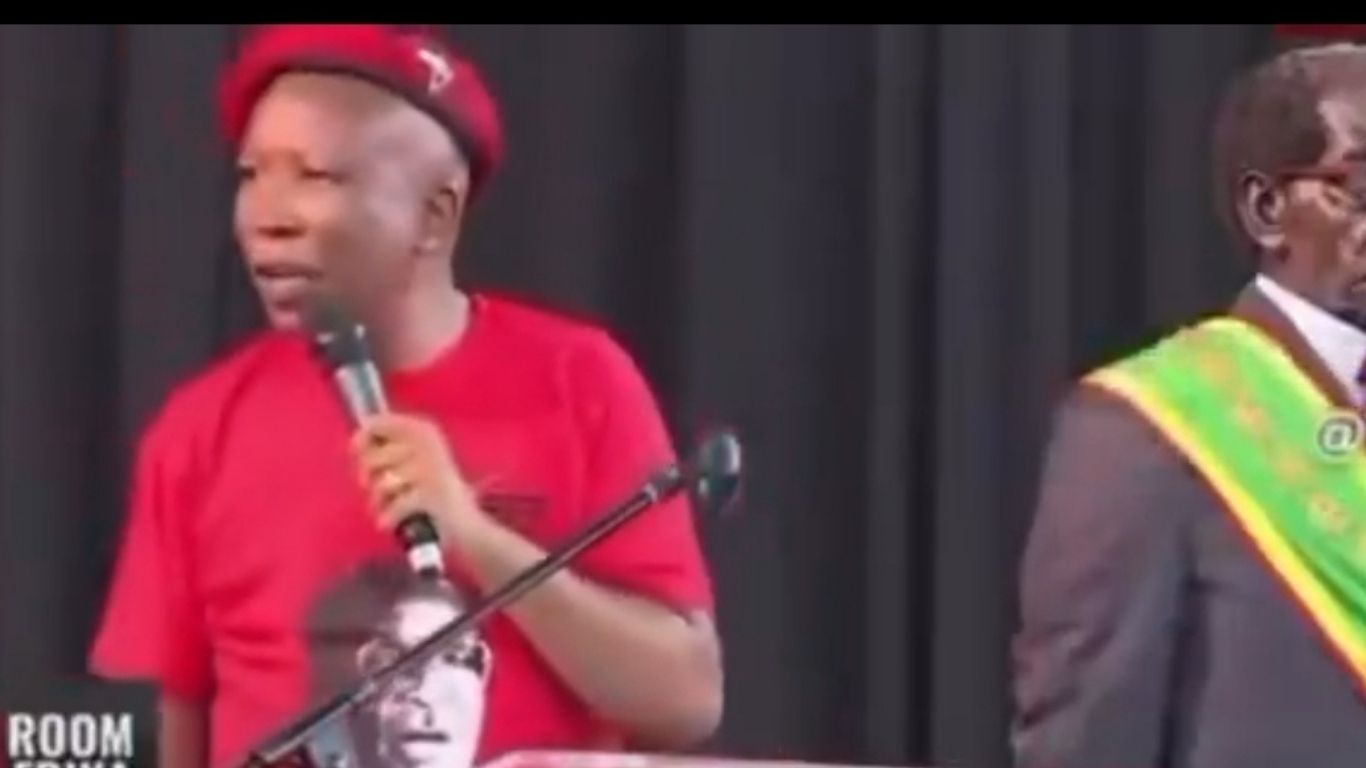
South African politician and former leader of the Economic Freedom Fighters (EFF), Julius Malema, has once again sparked a continent-wide conversation with his latest remarks, this time lauding Nigeria’s banking sector and Afrobeats music as models for other African nations to emulate. During a recent public appearance, Malema urged African leaders to “learn from Nigerians” and abandon outdated practices, including the controversial use of “pangas”—a reference to machetes—symbolizing violence and instability.
His comments, which have since gone viral across social media platforms, have reignited debates about economic progress, cultural influence, and political leadership across the continent. While some African leaders and commentators have praised Nigeria’s strides in financial innovation and global music dominance, others have questioned whether such praise overshadows the country’s persistent socio-economic challenges.
Nigeria’s Banking Sector: A Model for Africa?
Malema’s praise for Nigeria’s banking sector is not without merit. Over the past decade, Nigeria has emerged as a financial powerhouse in Africa, with its banks leading the charge in digital transformation, fintech adoption, and financial inclusion. The country’s Central Bank of Nigeria (CBN) has been instrumental in implementing policies that have expanded access to banking services, particularly in rural areas, through initiatives like USSD-based mobile banking and agent banking.
Key achievements include:
– Rapid Growth of Fintech Startups: Nigeria is home to some of the most innovative fintech companies in Africa, such as Flutterwave, Paystack (acquired by Stripe), and PiggyVest, which have revolutionized digital payments, peer-to-peer lending, and savings platforms.
– High Mobile Money Penetration: With over 150 million mobile money users, Nigeria’s mobile banking ecosystem is one of the most advanced on the continent, facilitating transactions for millions of unbanked individuals.
– Global Recognition: Nigerian banks like Access Bank, GTBank, and FirstBank have been ranked among the best in Africa by global financial institutions, earning accolades for their stability, innovation, and customer service.
Malema’s observation that other African nations should “learn from Nigerians” in this regard highlights Nigeria’s role as a regional economic leader, particularly in sectors where traditional banking systems have struggled to keep pace with technological advancements.
Afrobeats: Africa’s Cultural Export to the World
Beyond finance, Malema also celebrated Nigeria’s Afrobeats industry, which has become a global cultural phenomenon. The genre, characterized by its infectious rhythms, fusion of African sounds with Western influences, and massive international appeal, has put Nigeria on the world music map.
Notable contributions include:
– Global Superstars: Artists like Burna Boy, Wizkid, and Davido have achieved multi-platinum status worldwide, collaborating with international stars such as Beyoncé, Drake, and The Weeknd. Burna Boy, for instance, became the first African artist to perform at the Grammy Awards in 2020.
– Streaming Dominance: Afrobeats tracks consistently top Spotify’s global charts, with Nigeria contributing significantly to Africa’s $1.5 billion annual music revenue.
– Cultural Diplomacy: The genre has played a crucial role in soft power diplomacy, promoting African narratives and fostering cross-cultural exchange, much like K-pop has done for South Korea.
Malema’s endorsement of Afrobeats as a cultural export that other African nations should leverage underscores the industry’s potential to boost tourism, attract investment, and enhance Africa’s global image.
The Pangas Controversy: Symbol of Instability or Necessity?
Malema’s call to “stop wielding pangas” has drawn sharp reactions, particularly in countries where machetes are symbols of resistance against oppressive regimes. In some African nations, pangas are used by militia groups, farmers, or security forces in conflicts, often due to the unavailability of modern weapons.
Critics argue that Malema’s remark:
– Ignores Contextual Realities: In countries like DR Congo, Mali, and parts of Nigeria, where armed conflicts are rampant, pangas remain a practical tool for self-defense and agriculture.
– Overgeneralizes: The term “pangas” is often stigmatized without acknowledging the historical and practical uses of machetes in African societies.
– Misses the Bigger Picture: While financial and cultural progress are commendable, Malema’s comment risks overshadowing Nigeria’s own internal challenges, such as corruption, insecurity, and economic inequality.
Supporters, however, view Malema’s statement as a necessary push for progress, arguing that Africa must transition from reliance on traditional tools to modern, sustainable solutions in both economic and security sectors.
Pan-African Reactions: Praise and Criticism
Malema’s remarks have elicited diverse responses across Africa:
- Nigeria: Many Nigerians have embraced the praise, using it as national pride, while others have criticized the lack of infrastructure that still plagues the country despite its financial and cultural achievements.
- South Africa: While some South Africans see Nigeria as a model for economic innovation, others argue that South Africa’s financial sector is more mature, with stronger regulatory frameworks.
- West Africa: Countries like Ghana and Senegal have praised Nigeria’s fintech success, seeing it as a blueprint for their own digital banking initiatives.
- East Africa: Some leaders in Kenya and Rwanda have acknowledged Nigeria’s cultural influence but have also highlighted their own rapid digital transformations, such as M-Pesa in Kenya and Irembo in Rwanda.
- Central and Southern Africa: There has been mixed sentiment, with some nations admiring Nigeria’s global reach while others pointing to instability in regions like the Sahel and Lake Chad Basin.
The Broader Debate: Can Nigeria Be Africa’s Role Model?
Malema’s comments have reignited a long-standing debate about whether Nigeria can truly serve as a pan-African role model. While the country leads in GDP, population, and cultural influence, it also faces significant challenges:
– Economic Inequality: Despite its wealth, Nigeria has one of the highest poverty rates in the world, with over 90 million people living in extreme poverty.
– Security Crises: Insurgencies in the Northeast (Boko Haram), Southeast (IPOB), and Northwest (banditry) continue to destabilize the nation.
– Corruption and Governance: Despite efforts, corruption remains rampant, with petrodollar mismanagement and weak institutions undermining progress.
– Infrastructure Deficits: Power shortages, poor road networks, and unreliable healthcare remain major hurdles for sustainable development.
Yet, Nigeria’s resilience and adaptability—particularly in fintech and music—offer valuable lessons for other African nations. The question remains: Can Nigeria balance its global ambitions with domestic stability?
Conclusion: A Call for Balanced Progress
Julius Malema’s remarks, while provocative and thought-provoking, highlight a critical truth: Africa’s future depends on learning from each other’s successes while addressing systemic challenges. Nigeria’s financial innovation and cultural dominance are undeniable, but they must be complemented by stronger governance, security, and equitable development to truly set a pan-African benchmark.
As the continent continues to evolve, the Nigeria model—whether in banking, music, or entrepreneurship—offers valuable insights, but it must also acknowledge its flaws and work toward inclusive growth. Malema’s call to “learn from Nigerians” is not just about emulating success but also about fostering a collective African progress that leaves no nation behind.