



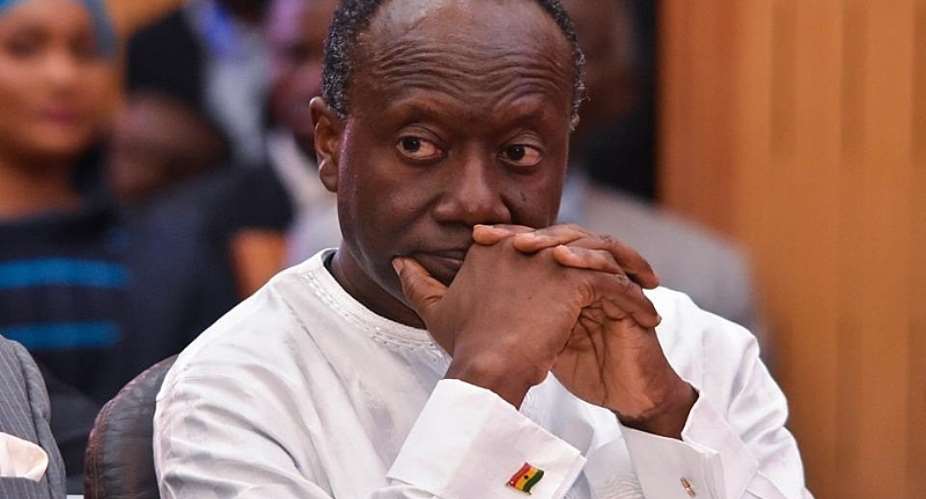
In the intricate dance of Ghanaian politics, where symbolism often eclipses substance, one question lingers like an unanswered riddle: Can a president’s lighthearted appeal erase the shadow of past controversies? The case of former Finance Minister Ken Ofori-Atta, now residing abroad amid investigations, has reignited a national conversation about trust, due process, and the delicate balance between political rhetoric and constitutional integrity.
The President’s Humorous Appeal: A Double-Edged Sword
During a recent public engagement, President John Mahama delivered a remark that, on the surface, seemed designed to lighten the mood. Quipping that Ofori-Atta’s children were calling for their father’s return—echoing his own past declaration that he would never abandon them—Mahama framed the issue as one of familial duty. He assured Ofori-Atta that if he believed he had done nothing wrong, Ghana would welcome him back, promising security and adherence to due process.
The laughter that followed was expected. Mahama’s knack for blending humor with political messaging is well-documented, and the remark was no different in that regard. Yet, beneath the jest lay a tension that transcended comedy. For many Ghanaians, the words carried the weight of unresolved skepticism.
The Raid That Haunts: A Flashpoint of Public Distrust
The incident that continues to cast a long shadow is the controversial raid on Ofori-Atta’s residence earlier this year. Reports indicated that security forces executed the operation while he was overseas, a move that sparked immediate outrage. Critics argued that the lack of prior notice and the manner of the raid—described by some as heavy-handed—raised serious questions about procedural fairness.
In response, government officials, including Majority Leader Mahama Ayariga, publicly apologized, acknowledging the operation’s shortcomings. Yet, the damage to public perception had already been done. The raid was not just an administrative oversight; it symbolized a broader perception of impunity—where powerful figures, even those in opposition, are subject to arbitrary state actions without clear legal justification.
The Trust Deficit: Can Assurances Bridge the Gap?
For many Ghanaians, the president’s remarks felt like a performative gesture rather than a genuine effort to rebuild trust. The question remains: How much can assurances of due process and security compensate for the erosion of faith in state institutions?
This dilemma is not unique to Ofori-Atta. It reflects a deeper challenge facing Ghana’s democracy: how to reconcile the need for accountability with the protection of constitutional rights. Public officials, regardless of their political affiliation, must be held to the same legal standards as any citizen. Yet, when investigations are perceived as politically motivated or conducted with a lack of transparency, the very foundations of democratic legitimacy are undermined.
The Legal Path Forward: Due Process vs. Political Pressure
Ofori-Atta, currently residing in the United States under legal authorization, has not yet indicated whether he will return voluntarily. If Ghanaian authorities possess credible evidence to pursue legal action, the country’s judicial system provides mechanisms for addressing such matters—including international cooperation where necessary.
However, the critical factor here is how these proceedings are conducted. For public confidence to be restored, investigations must be:
– Independent: Free from political interference.
– Transparent: With clear disclosure of evidence and processes.
– Fair: Ensuring the accused’s rights under the Constitution are upheld.
The ultimate arbiter of guilt or innocence should remain the courts, not political rhetoric or public opinion. Yet, in a climate where trust is fragile, even the appearance of bias can deepen divisions.
A Broader Democratic Imperative
This case is not merely about one individual. It is a test of Ghana’s commitment to the rule of law—a principle that must apply equally to allies and adversaries alike. Strong democracies are measured not by how they treat those who agree with them, but by how fairly they handle those facing scrutiny.
If Ghana’s institutions are to inspire confidence—among citizens, opposition figures, and former leaders—justice must be seen to be impartial, professional, and free from political manipulation. Only then can the nation move beyond the spectacle of political jokes and toward a system where due process is not just a promise, but a reality.
The Road Ahead: Rhetoric vs. Reality
President Mahama’s remarks may have provided temporary relief, but the underlying issues remain. The real question is whether Ghana’s democratic institutions can weather this test without further erosion of public trust.
In the end, the future of Ghana’s democracy will not be decided by the next political joke or the next high-profile return. It will be shaped by whether the country can consistently uphold the Constitution, respect due process, and ensure that justice is not just administered, but perceived as fair by all.
The Ofori-Atta saga, therefore, is not just about his potential return—it is a mirror reflecting the health of Ghana’s democratic values. And the reflection, for now, remains uncertain.