


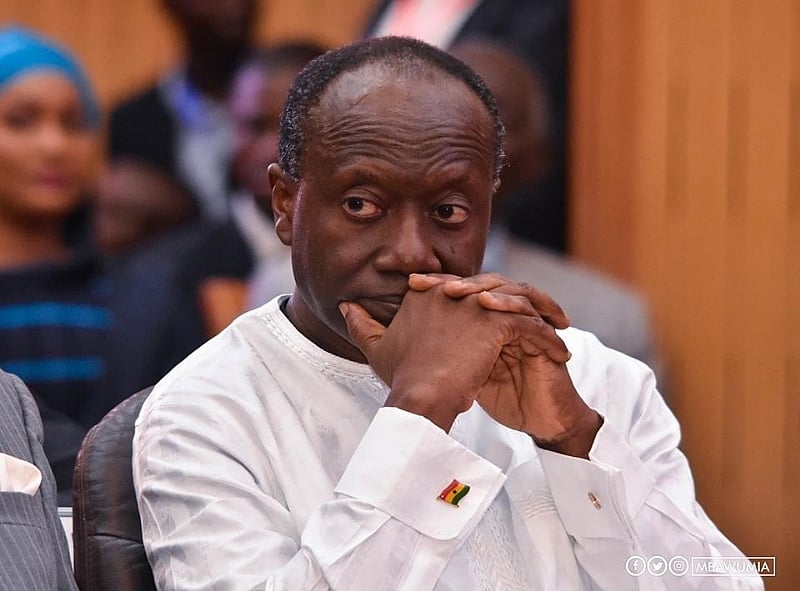
In the fluid landscape of Ghanaian politics, where symbolism often intertwines with substance, the recent public appeal by President John Mahama to former Finance Minister Ken Ofori-Atta has reignited a national conversation—one that transcends humor and touches on the fragile trust between the state and its citizens. The President’s lighthearted remark, delivered during a public engagement, framed Ofori-Atta’s potential return as a family matter, with his children reportedly urging him to return home. Yet beneath the laughter lies a complex web of legal scrutiny, institutional credibility, and the broader question: Can assurances of safety and due process alone erase the scars of past controversies?
A President’s Joke and the Weight of Memory
President Mahama’s statement, while intended to be reassuring, carried the weight of historical context. He recalled Ofori-Atta’s earlier declaration as a “father” who would never abandon his children, even amid political turbulence—referencing the internal party pressures that led to his resignation. The President’s assurance—that the government would guarantee Ofori-Atta’s security and uphold due process if he chose to return—was met with mixed reactions.
On one hand, the remark reflected Mahama’s signature blend of wit and political strategy, designed to appeal to both supporters and undecided voters. On the other, it underscored a deeper tension: How does a nation reconcile the need for accountability with the preservation of dignity for those under investigation?
For many Ghanaians, however, the President’s words fell short of addressing the lingering questions surrounding Ofori-Atta’s abrupt departure from Ghana. Chief among these was the controversial raid on his residence earlier this year, conducted while he was abroad. Reports at the time described a high-profile operation that sparked widespread debate over whether legal procedures were followed, whether the timing was politically motivated, and whether the raid itself violated constitutional protections against arbitrary state actions.
The Raid and Its Aftermath: A Test of Institutional Credibility
The incident remains a defining moment for Ghana’s democratic institutions. Officials, including Majority Leader Mahama Ayariga, later acknowledged the operation’s shortcomings, describing it as an unfortunate misstep. Yet, the damage to public trust was already done. Critics argued that the raid—conducted without Ofori-Atta’s presence—set a precedent for selective enforcement of the law, where political figures face different standards than ordinary citizens.
This perception is not isolated. Across Africa and beyond, high-profile raids on opposition figures or former officials often raise suspicions of political targeting rather than genuine legal pursuit. In Ghana’s case, the raid on Ofori-Atta’s home, coupled with the government’s subsequent assurances, has left many questioning: Is justice being served, or is it being weaponized?
The Broader Implications: Due Process vs. Political Pressure
The Ofori-Atta saga is more than a personal drama—it is a microcosm of Ghana’s struggle to balance accountability with fairness. The country’s legal framework, while robust on paper, has often been tested by political interference. The question now is whether Ghana’s institutions can navigate this tension without further eroding public confidence.
Legal experts argue that due process is non-negotiable, even for former officials. If allegations of wrongdoing exist, they must be investigated impartially, with all evidence presented in a court of law—not in the halls of power. The alternative—a system where political figures face arbitrary scrutiny—risks undermining the rule of law itself.
Yet, the challenge is real. Ghana, like many democracies, grapples with the tension between transparency and political expediency. When investigations are perceived as politically motivated, even well-intentioned legal processes can backfire, fueling cynicism rather than justice.
Ofori-Atta’s Dilemma: Exile or Return?
Currently residing in the United States under legal authorization, Ofori-Atta’s decision to return—or not—hinges on more than just security guarantees. His legal team, if consulted, would weigh factors such as:
– The strength of the evidence against him.
– The credibility of Ghana’s judicial system in handling politically sensitive cases.
– The potential for political retaliation, even if legally justified.
For many observers, the most critical factor is whether Ghana’s institutions can demonstrate impartiality. If the legal process is seen as fair, Ofori-Atta may eventually return. If, however, perceptions of bias persist, his absence could become a symbol of Ghana’s democratic shortcomings.
The Larger Picture: Strengthening Democratic Institutions
The Ofori-Atta case is a litmus test for Ghana’s democracy. A strong democracy is not measured by how it treats its allies but by how it treats those under scrutiny. If the government can conduct investigations transparently, present evidence without political interference, and allow courts to deliver verdicts free from influence, public trust will be restored.
Conversely, if the process is seen as selective, rushed, or politically motivated, the damage to Ghana’s democratic reputation will be long-lasting. The country’s progress in recent years—from its peaceful transitions of power to its growing economic stability—could be undermined by a perception that justice is not blind, but partisan.
Conclusion: The Path Forward
President Mahama’s joke may have provided temporary relief, but the real work lies in rebuilding trust through action. The Ofori-Atta case is not just about one man’s return—it is about whether Ghana’s institutions can withstand the test of fairness.
The future of Ghana’s democracy will not be decided by political rhetoric, but by whether the rule of law is upheld consistently, regardless of political affiliation. If the government can demonstrate that no one is above the law—and no one is below it—then the nation’s democratic foundations will remain unshaken.
For now, the question remains: Will Ken Ofori-Atta return? The answer may depend less on his personal decision and more on whether Ghana’s institutions can prove they are worthy of his trust.