


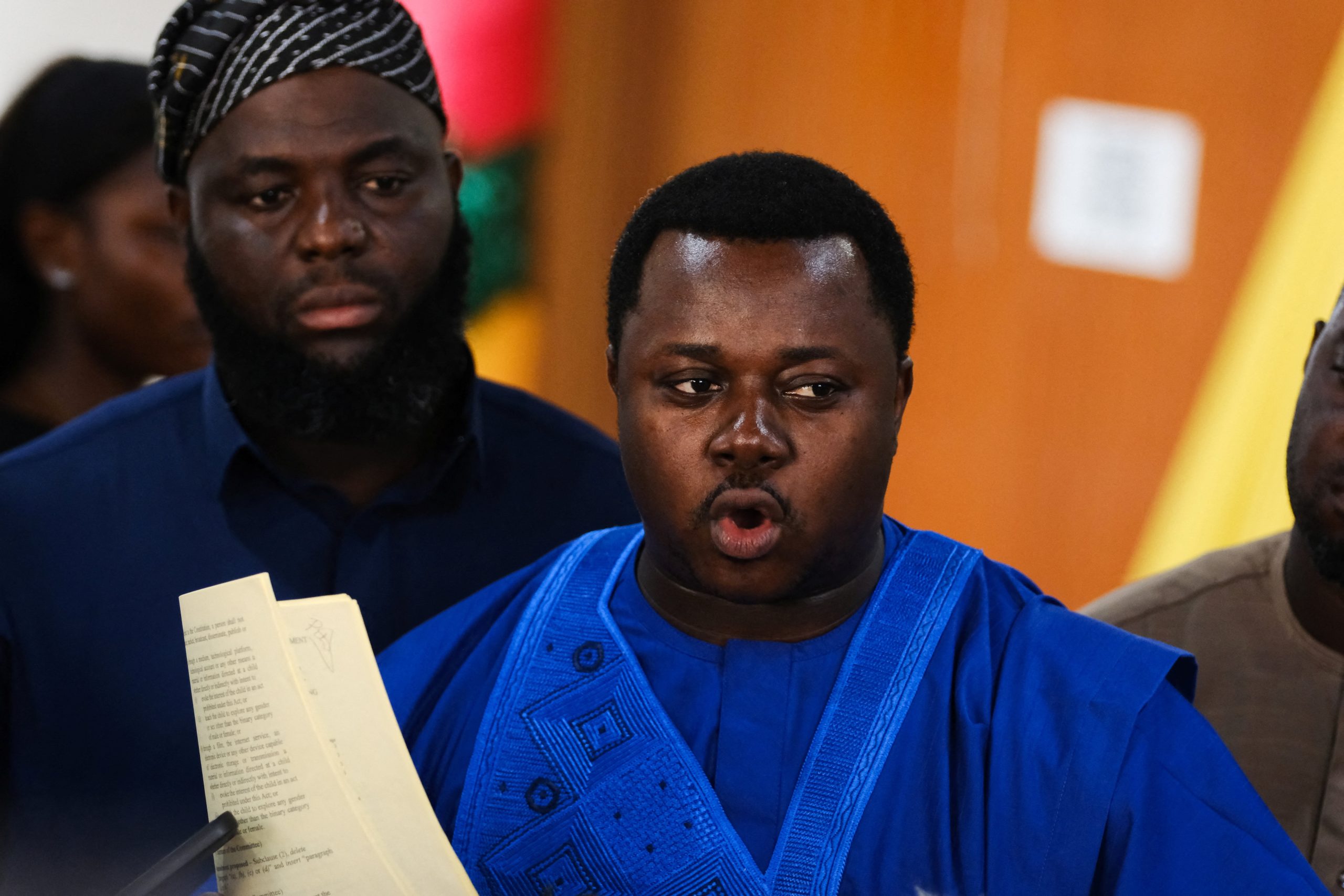
For nearly two decades, Ghana’s political landscape has been deeply divided over the issue of LGBTQ+ rights, with the Human Sexual Rights and Family Values Bill emerging as one of the most contentious legislative proposals in recent memory. Initially presented as a unifying cause—backed by both ruling and opposition parties, endorsed by influential religious institutions, and championed by segments of the public—the bill was widely expected to become a landmark social law in Ghana’s democratic history. However, as the legislation nears finalisation, it has instead exposed deep fissures within the political class, pitting government officials against their own supporters while highlighting the tension between domestic political imperatives and Ghana’s reliance on international financial and diplomatic support.
A Bill That Divided Before It Was Passed
The original version of the bill, introduced in 2021, was a product of broad consensus. It was co-sponsored by lawmakers from the National Democratic Congress (NDC) and the New Patriotic Party (NPP), Ghana’s two dominant political parties. Religious leaders, including prominent Christian and Muslim organisations, rallied behind the legislation, framing it as a moral imperative to protect Ghana’s cultural and familial values. Public opinion polls at the time suggested strong support, with many Ghanaians viewing LGBTQ+ advocacy as a foreign imposition undermining traditional Ghanaian norms.
Yet, despite this apparent unity, the bill’s passage in its revised form on 29 May 2024 has since unravelled the fragile political coalition that once supported it. Opposition Members of Parliament (MPs), including John Ntim Fordjour, a key architect of the original legislation, have vehemently criticised the government’s amendments, arguing that the revised version gut the bill’s deterrent power and introduces loopholes that undermine its intended impact.
The Core of the Dispute: Exemptions That Weakened the Law
The most contentious changes were introduced in Clause 9, which now includes exemptions for:
– Legal practitioners representing accused persons in LGBTQ+ related cases.
– Academics conducting scientific research on sexual orientation and gender identity.
– Journalists reporting on LGBTQ+ issues as part of their professional duties.
– Public health institutions and individuals making submissions in legal or judicial proceedings.
Fordjour and other critics argue that these exemptions undermine the bill’s core purpose by creating legal pathways for advocacy and promotion of LGBTQ+ rights under the guise of professional or academic freedom. The original bill, they contend, was meticulously crafted to close such loopholes, ensuring that any form of LGBTQ+ advocacy—whether through law, media, or research—would be strictly regulated or criminalised.
“The old bill had the teeth to bite,” Fordjour told The Africa Report. “What parliament has passed introduces dangerous deletions and insertions that create loopholes. We cannot spend years building consensus around a strong bill only to end up with a weakened version that can easily be circumvented. We want the original bill restored.”
Government Under Fire: Balancing Domestic Politics and International Realities
The NDC’s predicament is acute. Many of its lawmakers, including Fordjour, previously championed the bill while in opposition, making the party’s sudden shift to softening the legislation politically uncomfortable. However, the government now faces a far more complex reality: Ghana’s economy is highly dependent on international financial support, with IMF and World Bank loans playing a critical role in stabilising the country amid economic challenges.
Economist Daniel Amateye Anim-Prempeh of Policy Initiatives for Economic Development (PIED Africa) explains that the government’s approach is now dictated by governance responsibility rather than opposition rhetoric.
“The Mahama administration is approaching this issue from a position of governing responsibility rather than opposition politics,” Anim-Prempeh stated. “Government officials understand that Ghana operates within a global financial ecosystem. They are conscious of the potential consequences of sanctions, aid restrictions, investor uncertainty, and reputational risks. That explains why there appears to be an effort to soften provisions perceived internationally as overly punitive.”
International Backlash and the Threat of Economic Consequences
The original version of the bill sparked widespread condemnation from Western governments, international human rights organisations, and development partners. Countries like the United States, United Kingdom, and Canada issued strong statements warning of potential repercussions, including aid cuts, visa restrictions, and reduced foreign investment. Human rights groups, such as Amnesty International and Human Rights Watch, argued that the legislation would violate Ghana’s international human rights obligations, particularly under the African Charter on Human and Peoples’ Rights.
Given Ghana’s $3 billion IMF bailout and ongoing negotiations with other lenders, the government is under pressure to avoid policies that could jeopardise financial assistance. The revised bill, with its exemptions for legal, academic, and media professionals, may be seen as an attempt to mitigate international backlash while still addressing domestic concerns.
President Mahama’s Stance: A Bill in Limbo
President John Mahama, who has been a vocal advocate for the bill in the past, has introduced uncertainty over its future. Speaking at Chatham House in London, Mahama suggested that the legislation would not automatically become law upon passage.
“Once the president gets it, you go through it because you’re not part of the discussion in parliament,” Mahama said. “The legal representative, the legal counsel in the presidency, and the Attorney General would sit on it… and make sure that everything is in order before the president is advised to assent.”
He also raised procedural concerns, including quorum issues and potential legal challenges, indicating that the bill could be returned to parliament for further review.
“If there are issues, substantial issues that are raised, the president would return the bill to parliament, indicating exactly what the issues are,” Mahama added.
Parliamentary Confusion and Civil Society Calls for Caution
The Speaker of Parliament, Alban Bagbin, was reportedly surprised by the speed of the bill’s passage, admitting that he was unaware of the final amendments before the vote.
“When it was passed on Friday, it was even a surprise to me, because I knew that they were going to start the consideration of the bill, and that was the instruction I left before I went to attend to other meetings,” Bagbin stated.
Meanwhile, civil society groups that initially supported the bill have called for greater deliberation. Edem Senanu, leader of Advocates for Christ Ghana, urged patience and consensus-building, warning against rushing the process.
“There is no need to rush this bill,” Senanu said. “It’s a good thing that they are taking a second look at it. I also think the president might have to send it back to parliament to take a second look at it. We need to achieve a consensus.”
Senanu, however, expressed concerns about the exemptions, suggesting that if they remain, the bill may lose its intended impact.
“Looking at the bill, if the version I have and the exemptions are right, I do also have some concerns,” he admitted.
A Bill That May Never Become Law
The Human Sexual Rights and Family Values Bill now stands at a crossroads. While it retains strong support from religious leaders, conservative politicians, and portions of the public, the government’s amendments have alienated key allies, including opposition MPs who helped draft the original legislation. Meanwhile, international pressure and economic realities may force further modifications—or even scuttle the bill entirely.
If the president signs the bill into law, it could deeply polarise Ghana’s society, potentially leading to legal challenges, protests, and further diplomatic tensions. If, however, the government returns it to parliament for revisions—or abandons it altogether—it may damage the credibility of both ruling and opposition parties, who have spent years positioning themselves as defenders of “traditional values.”
One thing is certain: Ghana’s political landscape is more divided than ever, and the fate of this bill will further define the country’s stance on human rights, religious freedom, and its relationship with the international community in the years ahead.