


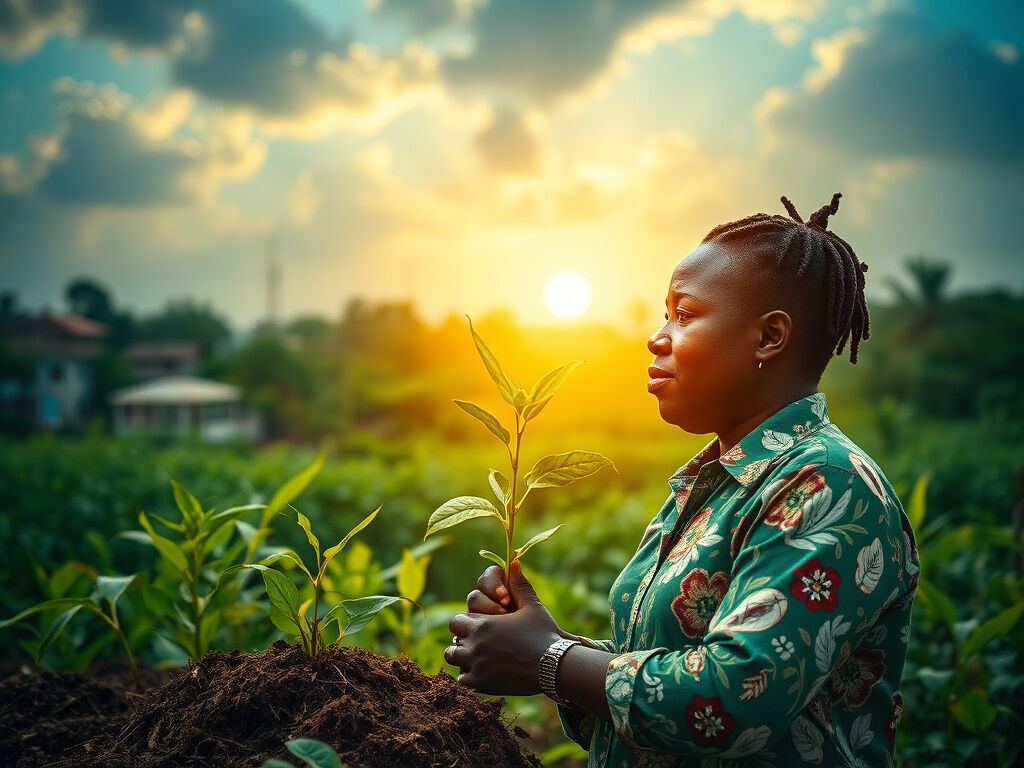
In an era where environmental consciousness is reshaping global industries, Ghana is emerging as a key player in the green business revolution. With its rich natural resources, strategic location, and growing economic ambitions, the West African nation is increasingly adopting sustainable business practices to drive innovation, attract investment, and ensure long-term prosperity. But what exactly fuels the push for green business in Ghana? Let’s explore the critical reasons behind this transformative shift, from environmental imperatives to economic opportunities and global recognition.
1. Environmental Degradation and the Urgency for Sustainability
Ghana’s stunning landscapes—from the Atewa Range Forest Reserve to the Volta Lake—are under severe threat due to deforestation, pollution, and unsustainable agricultural practices. The country’s forest cover has declined by nearly 20% over the past two decades, primarily due to illegal logging, charcoal production, and land-use changes for agriculture. This environmental degradation not only disrupts ecosystems but also exacerbates climate change, which Ghana is already experiencing in the form of increased flooding, droughts, and erratic rainfall patterns.
The government, recognizing these challenges, has made sustainability a national priority. Initiatives like the National Climate Change Policy (2013) and the National Green Economy Strategy (2020) aim to reduce carbon emissions, promote renewable energy, and foster circular economy principles. Businesses that embrace green practices are not just mitigating harm—they are future-proofing their operations in a climate-sensitive region.
2. Economic Growth Through Green Innovation
Green business is no longer a niche—it is a growth engine. Ghana’s economy, heavily reliant on sectors like mining, agriculture, and manufacturing, stands to benefit immensely from sustainable practices. Here’s how:
-
Renewable Energy Expansion: Ghana has vast potential in solar, wind, and hydropower. The government’s National Renewable Energy Policy (2011) and recent investments in off-grid solar projects (such as the Kpone Solar Power Plant) are creating jobs and reducing reliance on fossil fuels. Companies adopting green energy technologies are cutting operational costs while positioning themselves as leaders in Africa’s energy transition.
-
Agribusiness and Sustainable Farming: Ghana is Africa’s second-largest cocoa producer, but unsustainable farming practices threaten food security. The adoption of precision agriculture, agroforestry, and organic farming is not only enhancing yields but also reducing soil degradation and water pollution. Businesses like Olam Ghana and Cocoa Processing Company (CPC) are pioneering sustainable supply chains, ensuring long-term profitability while meeting global demand for ethically sourced products.
-
Waste Management and Circular Economy: Ghana generates over 20,000 tons of waste daily, much of which ends up in landfills or pollutes waterways. The rise of waste-to-energy plants (e.g., the Accra Waste-to-Energy Project) and recycling initiatives (such as Ghana Recycling Company) are turning waste into revenue. Companies that integrate circular economy principles—whereby waste is minimized and resources are reused—are unlocking new revenue streams while reducing environmental liabilities.
3. Attracting Foreign Direct Investment (FDI) and Global Partnerships
Investors are increasingly prioritizing sustainability when choosing business partners. Ghana’s commitment to green business is opening doors to international collaborations, particularly from Europe, China, and the United States. Key drivers include:
-
Green Bonds and Climate Finance: Ghana has issued green bonds to fund sustainable infrastructure, such as the Accra Coastal Highway’s eco-friendly design and low-carbon public transport systems. These financial instruments attract climate-conscious investors, including the African Development Bank (AfDB) and the World Bank, which are channeling billions into green projects across Africa.
-
Export Opportunities in Green Markets: Ghana’s cocoa, timber, and textiles are in high demand globally, but only if produced sustainably. Certifications like Rainforest Alliance, Fair Trade, and ISO 14001 are becoming mandatory for international buyers. Businesses that comply with these standards gain premium pricing and access to lucrative markets in the EU, US, and Asia.
-
Corporate Social Responsibility (CSR) and Brand Reputation: Multinational corporations (MNCs) are scrutinizing their supply chains more than ever. Ghanaian firms that adopt ethical and sustainable practices are enhancing their global brand reputation. For example, Volta River Authority’s push for hydropower efficiency has earned international praise, attracting partnerships with Siemens and Schneider Electric for smart grid technologies.
4. Job Creation and Skills Development in the Green Sector
The transition to green business is not just about profits—it’s about people. Ghana’s youth unemployment rate stands at over 20%, and the green economy is emerging as a major employer. Key opportunities include:
-
Technical Jobs in Renewable Energy: The solar and wind energy sectors are creating roles for engineers, technicians, and project managers. Training programs, such as those by Ghana’s Energy Commission and the Volta River Authority, are upskilling locals to meet industry demands.
-
Agro-Entrepreneurship: Sustainable farming requires innovative skills, from drip irrigation technology to organic certification. Initiatives like Ghana’s National Youth Employment Agency (NYES) are funding green startups, helping young entrepreneurs launch businesses in urban farming, beekeeping, and waste recycling.
-
Green Construction and Urban Planning: As cities like Accra and Kumasi expand, there is a growing demand for eco-friendly buildings that use solar panels, rainwater harvesting, and recycled materials. This sector is boosting employment while reducing the carbon footprint of urban development.
5. Policy Support and Government Incentives
Ghana’s government is actively incentivizing green business through legislation and financial support:
-
Tax Incentives for Green Businesses: Companies investing in renewable energy, energy efficiency, and sustainable agriculture receive tax breaks and grants. For instance, the Ghana Investment Promotion Centre (GIPC) offers tax holidays for green startups in designated zones.
-
Regulatory Frameworks: The Environmental Protection Agency (EPA) enforces strict pollution controls, while the Ministry of Environment, Science, Technology and Innovation (MESTI) promotes green technology adoption. Businesses that comply with these regulations avoid costly fines and gain a competitive edge.
-
Public-Private Partnerships (PPPs): The government is collaborating with private sector players to develop green infrastructure. For example, the Accra Metropolitan Assembly’s partnership with Veolia Water to improve wastewater treatment is a model for sustainable urban development.
6. Climate Resilience and Future-Proofing the Economy
Ghana is not just reacting to climate change—it’s preparing for it. Rising sea levels threaten coastal cities like Tema and Sekondi, while droughts in the northern regions are reducing agricultural productivity. Green business strategies, such as:
- Climate-Smart Agriculture: Farmers are adopting drought-resistant crops and conservation agriculture to increase resilience.
- Disaster-Resilient Infrastructure: Projects like the Kumasi Metropolitan Area’s flood mitigation systems are reducing economic losses from extreme weather.
- Carbon Offsetting Programs: Companies like Ghana’s National Petroleum Authority (NPA) are investing in reforestation and afforestation to offset carbon emissions, aligning with global Paris Agreement commitments.
By integrating these practices, Ghana is securing its economic stability in the face of climate uncertainties.
7. Case Studies: Ghanaian Businesses Leading the Green Charge
Several Ghanaian enterprises are setting industry benchmarks in sustainability:
-
[Example: Olam Ghana’s Sustainable Cocoa Supply Chain]
Olam Ghana has implemented Fair Trade and Rainforest Alliance-certified farming, ensuring ethical labor practices and environmental conservation. This has not only boosted cocoa quality but also secured premium export markets, increasing revenue by 30% over five years. -
[Example: Volta River Authority’s Hydropower Efficiency]
The VRA has invested in smart grid technologies to reduce energy losses and integrate solar microgrids in rural areas. This has cut costs by 15% while improving access to electricity for over 500,000 off-grid households. -
[Example: Ghana Recycling Company’s Waste-to-Wealth Model]
By converting plastic and metal waste into raw materials, the company has diverted over 20,000 tons of waste from landfills annually, creating 1,200+ jobs in the process.
8. Challenges and the Path Forward
Despite Ghana’s progress, key challenges remain:
- Limited Access to Green Finance: Many SMEs struggle to secure funding for sustainable projects due to high interest rates and lack of green credit programs.
- Weak Enforcement of Environmental Laws: Some industries ignore regulations, leading to illegal logging, pollution, and waste dumping.
- Skill Gaps in Green Technologies: There is a shortage of trained professionals in renewable energy, circular economy, and climate adaptation.
To overcome these hurdles, Ghana must:
✅ Expand green financing options through blended finance models (public + private investment).
✅ Strengthen EPA enforcement with real-time monitoring and penalties for violators.
✅ Invest in STEM education to develop a skilled green workforce.
✅ Promote knowledge-sharing between local businesses and global green leaders.
Conclusion: A Sustainable Future for Ghana’s Economy
The shift toward green business in Ghana is not just a trend—it’s a necessity. From environmental preservation to economic growth, job creation, and global competitiveness, sustainability is the cornerstone of Ghana’s future prosperity. As the nation continues to innovate, invest, and collaborate, green business will drive Ghana’s economic transformation, ensuring that its natural wealth is preserved for generations to come.
For businesses, the message is clear: embracing sustainability is not an option—it’s a strategic imperative. Those that lead the charge today will reap the rewards tomorrow.
Final Note: The green economy is not a distant dream—it’s happening now. Ghana’s journey is a testament to how vision, policy, and private sector collaboration can turn environmental challenges into economic opportunities. The question is no longer whether Ghana will go green—but how fast and how far.