


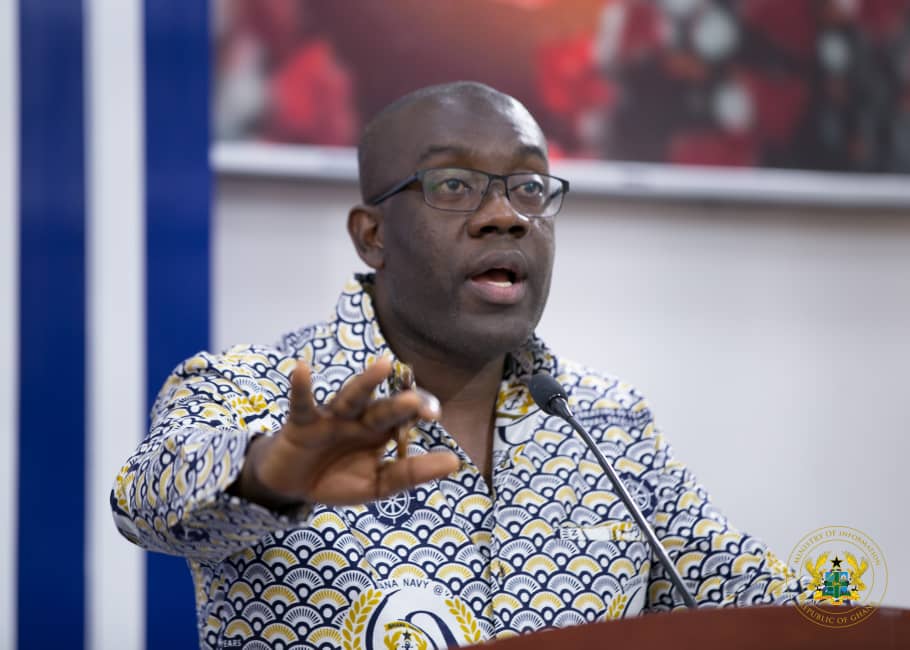
The New Patriotic Party (NPP) Minority Caucus in Ghana’s Parliament has walked out of a scheduled briefing with Bank of Ghana (BoG) Governor over concerns regarding media exclusion and unanswered questions about a $2.2 billion drop in the country’s gross international reserves. The decision follows a leadership directive to prevent media coverage of the session, which the opposition argues undermines transparency and accountability in public financial management.
Demands for Clarity on Foreign Exchange Reserves
During a press statement at Parliament House, Mr. Kojo Oppong Nkrumah, the Ranking Member of the Economic and Development Committee and NPP Member of Parliament (MP) for Ofoase/Ayirebi, vehemently criticized the decision to exclude media from the engagement. He highlighted that the Minority Caucus had submitted three critical questions to the BoG Governor regarding the use of foreign exchange reserves to stabilize the Ghanaian cedi.
The key questions raised included:
1. The source of foreign exchange being utilized for market intervention.
2. The framework currently employed for forex market stabilization and the total amount injected into the market.
3. Confirmation from the Governor on whether the $2 billion decline in reserves (from $14.2 billion in Q1 2026 to $12 billion by June 2026) was due to market interventions.
Oppong Nkrumah cited official data from the National Petroleum Corporation (NPC) report for May 2026, which indicated that gross international reserves had dropped significantly within a five-month period. He demanded a direct response from the Governor, stating:
“We want the Governor—or we are asking you to confirm whether you used the $2 billion for market interventions. That’s a simple question.”
The MP emphasized the importance of transparency, arguing that the Governor’s written response—which claimed that no direct market interventions had occurred since August 2024—was inconsistent with the observed decline. Instead, the BoG had relied on the Domestic Gold Purchase Programme to mobilize foreign exchange.
“Why is it that the Majority is preventing the Governor from saying this to the entire country? Is it because the Governor is here to admit on record that it is because of the Domestic Gold Purchase Programme that they can mobilize these forex resources?”
Media Exclusion and Parliamentary Accountability
Oppong Nkrumah criticized the decision to hold the session in camera, stating that previous Committees of the Whole—including appearances by the Electoral Commission and the BoG Governor in 2025—had been open to media coverage. He questioned the motivation behind the sudden restriction, asking:
“Today, as we advertise the practice of an open Parliament, why do you want to close questions that have been advertised and answers advertised to the public? What is it that they are afraid of that now they don’t want you to cover?”
The MP stressed the fundamental principle of accountability, declaring:
“This is the House of accountability. This is the people’s house. This is where the people are here for the answers to all these questions.”
Majority Leader’s Justification for Closed Session
In response, Mr. Mahama Ayariga, the Majority Leader, defended the decision to exclude media from the session. He clarified that such Committees of the Whole—where the entire Parliament sits as a single body—are standardly held in camera when discussing sensitive economic or security matters.
Ayariga explained that heads of state institutions (such as the BoG Governor) traditionally appear before Parliament without media coverage to protect confidential financial discussions. While formal parliamentary sittings are open to the public, Committees of the Whole often operate behind closed doors when dealing with highly sensitive economic data.
Minority’s Decision to Withdraw
Due to the media blackout, the NPP Minority Caucus has suspended its participation in the briefing. Oppong Nkrumah reiterated that the leadership would continue engaging to ensure future sessions are open to the media, asserting:
“We are not giving up. We will keep pushing for transparency, and we expect the Governor to provide clear, verifiable answers to the public.”
The $2.2 billion decline in reserves remains a contentious issue, with opposition lawmakers accusing the government of failing to provide sufficient explanations for the sharp reduction in foreign currency holdings. The Domestic Gold Purchase Programme, while partially addressing forex liquidity, has raised questions about its long-term sustainability and impact on the cedi’s stability.
As the economic situation continues to evolve, the demand for clarity from both the BoG and Parliament is expected to intensify, with opposition parties vowing to hold the government accountable for its foreign exchange management strategies.