


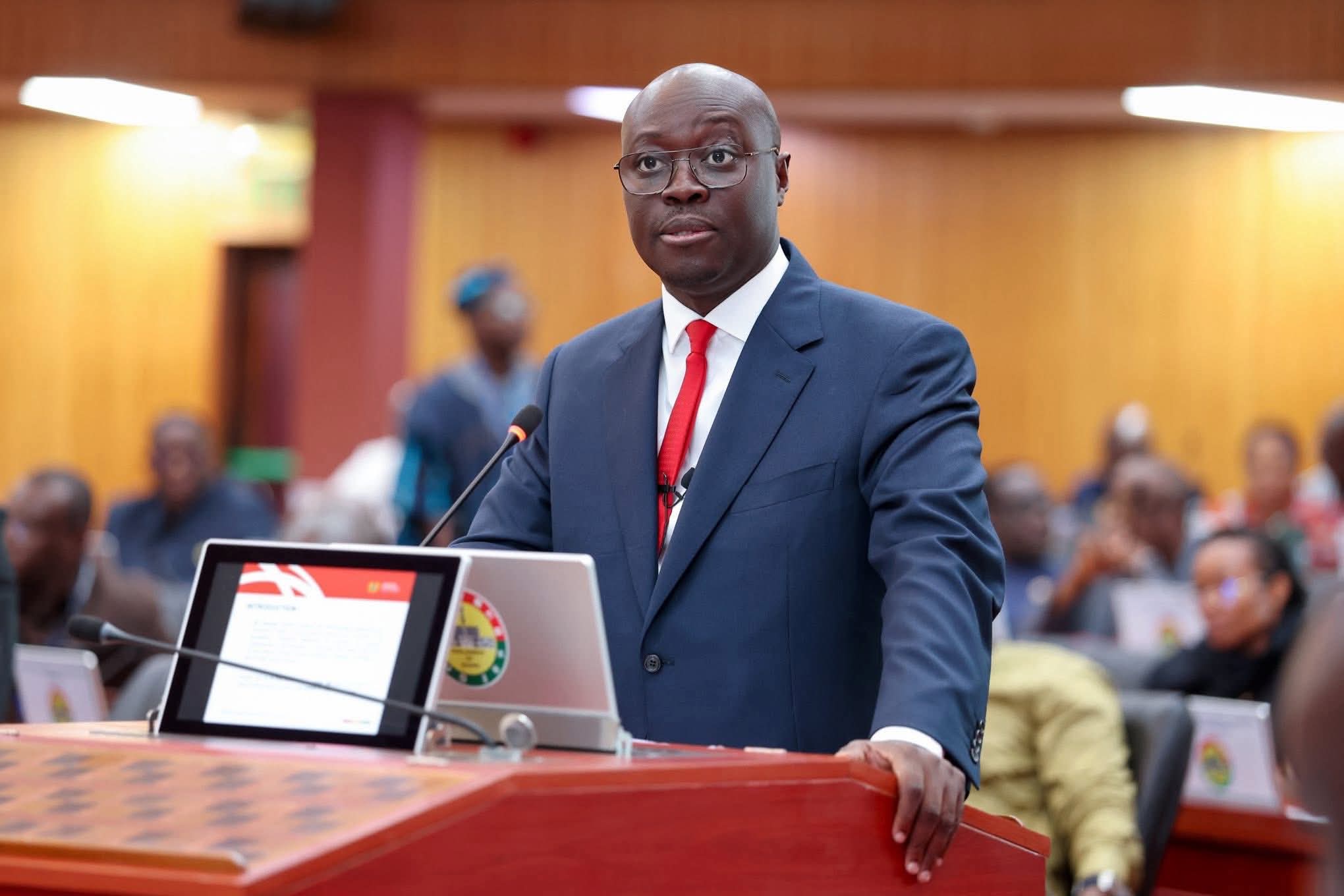
In a detailed rebuttal to persistent claims of underspending, the Ghanaian government has forcefully defended its fiscal discipline, asserting that it has met critical spending commitments while steering the nation toward economic recovery. During the 2026 Mid-Year Budget Review presented to Parliament on Thursday, Dr. Cassiel Ato Forson, Minister for Finance, outlined a comprehensive breakdown of expenditures across key sectors, emphasizing transparency, accountability, and strategic resource allocation.
The government’s stance underscores a deliberate approach to fiscal responsibility, ensuring that every cedi spent contributes to national stability, social protection, and long-term economic growth. Contrary to public perceptions, Dr. Forson revealed that substantial resources have been directed toward priority areas, including compensation, debt servicing, education, healthcare, agriculture, infrastructure, and social welfare programs—all in alignment with the 2026 Budget Framework.
A Detailed Breakdown of Government Expenditures
1. Compensation and Social Security Obligations
One of the most contentious yet critical areas of government spending is public sector compensation. Dr. Forson disclosed that GH¢48.8 billion has been allocated and disbursed to public workers, including:
– GH¢4 billion contributed to the Social Security and National Insurance Trust (SSNIT), ensuring long-term pension security for retirees.
– GH¢1.7 billion directed toward the Tier Two Pension Scheme, further bolstering retirement savings for civil servants.
This allocation reflects the government’s commitment to honoring contractual obligations while preventing potential labor unrest that could disrupt national productivity.
2. Debt Servicing and Fiscal Stability
Ghana’s debt burden remains a major economic concern, but the government has prioritized debt servicing to maintain investor confidence. Key figures include:
– GH¢21.5 billion paid in domestic interest to creditors.
– $700 million (approximately GH¢12.5 billion) allocated toward Eurobond debt servicing and interest payments.
– GH¢10 billion disbursed to domestic bondholders, ensuring timely repayment and preserving Ghana’s creditworthiness.
These payments, while heavy on the national budget, are essential for avoiding a debt default, which could trigger economic collapse and capital flight.
3. Capital Expenditure: Infrastructure and Economic Growth
To stimulate economic activity, the government has injected GH¢11.5 billion into capital projects, including:
– GH¢6.5 billion under the Big Push Infrastructure Programme, aimed at accelerating road, rail, and energy infrastructure development.
– GH¢1.7 billion allocated to the Road Maintenance Trust Fund, ensuring sustainable transportation networks that support trade and commerce.
– GH¢7.1 billion directed toward stable electricity supply, addressing frequent power outages that have plagued businesses and households.
Additionally, GH¢4.4 billion was transferred to the District Assemblies Common Fund, empowering local governments to deliver essential services at the grassroots level.
4. Healthcare and Social Protection
The healthcare sector received significant funding, with GH¢4.5 billion released to the National Health Insurance Scheme (NHIS), ensuring universal healthcare access for Ghanaians. The government also allocated:
– GH¢1.1 billion to the MahamaCares programme, providing direct cash transfers to vulnerable populations.
– GH¢485 million to Livelihood Empowerment Against Poverty (LEAP) beneficiaries, supporting poverty alleviation efforts.
– GH¢877 million to the Ghana School Feeding Programme, ensuring nutritional support for schoolchildren.
These allocations reflect the government’s commitment to social welfare, particularly in reducing inequality and improving living standards.
5. Education: Investing in Human Capital
Education remains a cornerstone of Ghana’s development strategy, with GH¢4.2 billion transferred to the Ghana Education Trust Fund (GETFund). Key education-related expenditures include:
– GH¢1.8 billion for the Free Secondary Education Programme, ensuring access to secondary education for all Ghanaian students.
– GH¢915 million allocated for goods and services, including sanitary pads for female students, addressing gender-specific challenges in education.
– GH¢76 million as Capitation Grant, providing direct financial support to schools.
– GH¢46 million for BECE (Basic Education Certificate Examination) registration fees, reducing financial barriers for students.
– GH¢537 million under the No Fees Stress Policy, eliminating school fees for primary and junior high school students.
– GH¢104 million as Teacher Trainee Allowance and GH¢144 million for Nursing Trainee Allowance, ensuring skilled workforce development.
These investments strengthen Ghana’s human capital, laying the foundation for long-term economic competitiveness.
6. Agriculture: Boosting Food Security and Rural Development
Agriculture is critical for Ghana’s economic diversification, with GH¢1.1 billion allocated to flagship programs, including:
– National Food Buffer Stock Company initiatives to stabilize food prices.
– Fertilizer and certified seed distribution, enhancing agricultural productivity.
– Feed Ghana and irrigation projects, supporting sustainable farming practices.
An additional GH¢551 million was placed in an escrow account to establish a letter of credit for Farmer Service Centres, ensuring access to credit and agricultural inputs for smallholder farmers.
7. Resource Mobilization and Sector-Specific Investments
The government has also strategically allocated funds to key economic sectors:
– GH¢961 million to the Ghana National Petroleum Corporation (GNPC), supporting oil and gas exploration.
– GH¢458 million to the Mineral Development Fund, promoting responsible mining and revenue generation.
– GH¢477.4 million to the Integrated Recycling and Compost Plant (IRECOP) initiative, advancing waste management and environmental sustainability.
8. Special Allocations for National Priorities
Beyond core sectors, the government has directed funds toward national priorities, including:
– GH¢58 million for Ghana’s participation in the 2026 FIFA World Cup, boosting national pride and tourism.
– GH¢16 million to the National Anti-Illegal Mining Operations Secretariat, combating environmental degradation and illegal mining activities.
9. Operational Expenditures and Legacy Arrears Clearance
To ensure smooth government operations, GH¢7.9 billion was spent on goods and services, covering administrative costs, procurement, and essential services. Additionally, GH¢5.3 billion was allocated to clear legacy arrears inherited from previous administrations, restoring financial stability and preventing future budgetary strains.
Economic Recovery: A Prudent Fiscal Strategy
Dr. Forson highlighted that before the current administration took office, Ghana faced severe economic challenges, including:
– Rapid cedi depreciation, threatening import stability.
– Inflation exceeding 50%, eroding purchasing power.
– A junk sovereign credit rating, limiting access to international capital.
– Loss of investor confidence, leading to capital flight.
In response, the government has adopted a disciplined fiscal approach, focusing on:
✅ Consolidating economic recovery through balanced spending.
✅ Protecting vulnerable households via social protection programs.
✅ Laying a foundation for sustainable growth by investing in infrastructure and human capital.
By prioritizing transparency and accountability, the government aims to restore investor trust, stabilize the economy, and position Ghana for long-term prosperity.
Conclusion:
The 2026 Mid-Year Budget Review demonstrates that Ghana’s government is not underspending but rather strategically allocating resources to critical sectors that drive economic stability and social welfare. While debt servicing remains a significant burden, the focus on infrastructure, education, healthcare, and agriculture ensures that every cedi spent contributes to national development. As Ghana navigates post-pandemic recovery and global economic uncertainties, this prudent fiscal management remains essential for sustainable growth.