


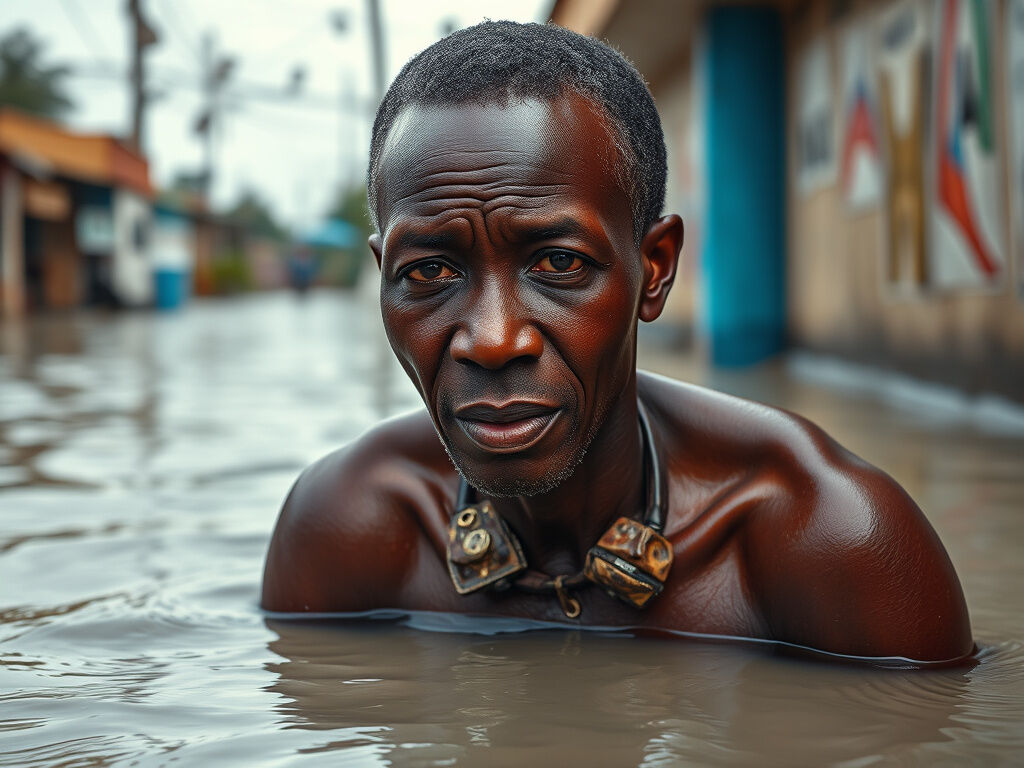
For decades, Accra has grappled with one of Africa’s most persistent urban crises: devastating floods that claim lives, destroy livelihoods, and leave entire neighborhoods submerged. Despite nearly $1 billion invested in drainage improvements, flood mitigation projects, and sanitation campaigns, the city continues to drown in its own failures. The problem is not merely one of engineering deficiencies—it is a systemic breakdown rooted in poor governance, fragmented institutional responsibility, and the irreversible degradation of natural water systems.
The Scale of Investment and Its Limitations
Accra’s flood crisis has been a priority for successive governments, with interventions ranging from large-scale dredging operations to comprehensive metropolitan sanitation projects. The Greater Accra Metropolitan Area Sanitation and Water Project (GAMSWP) focused on reinforcing drainage infrastructure in high-risk communities through culvert installations, stormwater management, and sanitation upgrades. Meanwhile, the Greater Accra Resilient and Integrated Development (GARID) Project represents a broader, multi-faceted approach, integrating flood management, solid waste reduction, and community resilience across the Odaw Basin—a critical water catchment area.
Yet, despite these significant financial commitments, the results remain disappointingly incremental. The core issue is that infrastructure alone cannot reverse ecological collapse. While dredging temporarily increases water flow capacity, it does little to address the root causes of flooding: uncontrolled urban sprawl, illegal encroachments into wetlands, industrial and domestic pollution, and the disappearance of natural floodplains.
The Institutional Paradox: Why Fragmented Governance Fails
One of the most critical yet overlooked challenges is institutional fragmentation. Accra’s water management is governed by a patchwork of agencies, including:
– Ministries of Works & Housing (responsible for drainage and road infrastructure)
– Environmental Protection Agency (EPA) (overseeing pollution control)
– Water Resources Commission (WRC) (managing water supply and basin protection)
– Metropolitan, Municipal, and District Assemblies (MMDAs) (local governance of land use and sanitation)
– Hydrological Services Department (flood forecasting and early warning systems)
The problem? No single entity has comprehensive oversight of an entire river basin. The Odaw River, for example, cuts through multiple assemblies before emptying into the Korle Lagoon. Pollution generated in Kotobabi may directly impact flooding in La—yet no unified authority coordinates responses. Similarly, development approvals in one area (such as illegal housing projects in floodplains) can exacerbate risks downstream, yet no mechanism ensures accountability across jurisdictions.
Environmental scientists and urban planners have long warned that watershed management—not piecemeal infrastructure projects—is the only sustainable solution. This requires cross-sectoral coordination on:
– Land use planning (preventing encroachment into wetlands)
– Sanitation and waste management (reducing plastic and industrial pollution)
– Riparian protection (preserving vegetation along riverbanks)
– Climate-resilient infrastructure (designing drains that mimic natural water flow)
Yet, political will and institutional cooperation remain elusive.
The Collapse of Nature’s Safety Nets
For much of the 20th century, Accra’s wetlands, lagoons, and natural waterways acted as buffer zones, absorbing excess rainfall and filtering pollutants. But decades of unchecked urbanization, corruption, and weak enforcement have eroded these systems beyond recovery.
- Wetlands have been drained or filled to make way for residential and commercial developments, reducing their flood absorption capacity.
- Lagoons like the Korle and Tema have become open sewers, choked with plastic waste, industrial effluents, and untreated sewage.
- Riparian vegetation—once dense along riverbanks—has been cleared for construction, increasing erosion and sediment buildup in drains.
- Climate change has intensified heavy rainfall events, but Accra’s infrastructure remains unprepared for extreme hydrological stress.
The result? Floods that were once manageable have become catastrophic, with annual damages exceeding millions of cedis in property loss, public health crises, and economic disruption.
Lessons from Cities That Turned the Tide
Accra’s struggles are not unique. Other global cities have faced similar crises—and some have succeeded in reversing them.
- London’s Thames River, once biologically dead from industrial pollution, now hosts seals, salmon, and over 100 fish species thanks to decades of strict pollution controls, riverbank restoration, and ecological rehabilitation.
- Singapore’s Singapore River, which was once an open sewer, was transformed into a clean, navigable waterway through relocation of polluting industries, wastewater treatment upgrades, and public awareness campaigns.
- Seoul’s Cheonggyecheon Stream was dismantled from an elevated highway and restored as a vibrant green-blue corridor, improving urban aesthetics, biodiversity, and flood resilience.
These successes prove one critical truth: Rivers are not just drains—they are living ecosystems that must be protected, not exploited.
The Economic and Environmental Cost of Inaction
The economic burden of Accra’s floods is staggering. Each major flood event disrupts commerce, forces evacuations, and strains public resources. The 2022 floods alone caused over GH₵100 million in damages, with thousands displaced and businesses forced to shut down.
Beyond immediate costs, long-term environmental degradation imposes even greater expenses:
– Polluted water sources require expensive treatment before they can be used for drinking or irrigation.
– Degraded wetlands reduce carbon sequestration, worsening climate change impacts.
– Frequent infrastructure damage from flooding accelerates urban decay, increasing maintenance costs.
A 2021 World Bank study estimated that every GH₵1 spent on preventive flood management saves GH₵5 in disaster recovery costs. Yet, Accra continues to prioritize reactive measures (like dredging) over proactive restoration.
The Path Forward: A Blue-Green City Vision
To truly solve Accra’s flood crisis, the city must shift from a concrete-centric approach to a nature-inclusive one. This means:
- Restoring Natural Waterways
- Reconnecting rivers to their floodplains to allow natural water spread.
- Replanting riparian vegetation to reduce erosion and improve water filtration.
-
Creating green-blue infrastructure, such as rain gardens and permeable pavements, to absorb stormwater before it enters drains.
-
Enforcing Strict Land Use Regulations
- Banning all development in designated floodplains.
- Protecting wetlands as critical ecological buffers.
-
Imposing penalties for illegal encroachments and industrial pollution.
-
Decentralizing Governance for Watershed Management
- Establishing a single, unified Greater Accra Water Basin Authority to coordinate drainage, sanitation, and environmental protection**.
-
Mandating cross-agency collaboration in flood risk assessments and mitigation planning.
-
Empowering Community Participation
- Involving local residents in clean-up drives, wetland restoration, and pollution monitoring.
-
Promoting public awareness campaigns on sustainable waste disposal and responsible land use.
-
Investing in Climate-Resilient Infrastructure
- Designing drains with natural flow patterns (rather than rigid concrete channels).
- Upgrading early warning systems to reduce flood-related fatalities.
- Integrating renewable energy solutions to reduce industrial water pollution.
The Time for Action Is Now
Accra’s rivers and lagoons are not just environmental assets—they are the lifeblood of the city. Their degradation is not inevitable, but it will accelerate unless decisive action is taken.
The Densu Basin, which still retains some ecological integrity, serves as a warning and an opportunity. If unchecked development continues, it will follow the Odaw’s path—from a vital water source to a polluted, flood-prone drain.
The choice is clear:
– Continue with business-as-usual, accepting increasing floods, higher costs, and a degraded environment—or
– Adopt a holistic, nature-based approach, investing in long-term restoration, governance reform, and public engagement.
The next generation of Accra’s residents will inherit the consequences of today’s decisions. Will they find a city where rivers are concrete channels—or one where they are living, breathing ecosystems that sustain life?
The pen is in the city’s hands. The question is: Will Accra finally listen to its waters before it’s too late?