


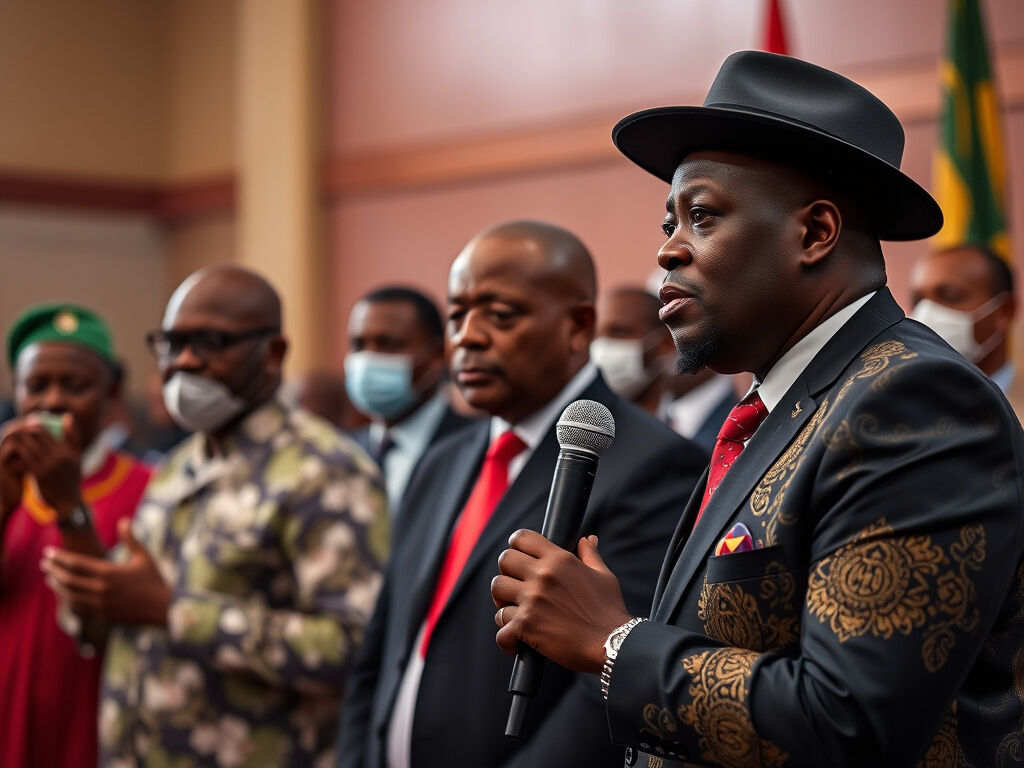
The New Patriotic Party (NPP) has formally escalated its concerns over alleged political persecution in Ghana, formally petitioning members of the diplomatic community to intervene in what it describes as a systematic erosion of democratic freedoms under President John Dramani Mahama’s administration. In a comprehensive statement issued in Accra, the opposition party has accused the government of suppressing dissent, undermining judicial independence, and weaponising state institutions to target political opponents, journalists, and critics.
A Culture of Silence and the Criminalisation of Free Speech
The NPP’s petition paints a grim picture of Ghana’s democratic landscape, warning that the country’s long-standing reputation as a stable and democratic nation is being irreversibly damaged by a rising tide of intimidation and repression. The party argues that citizens now face severe consequences for voicing dissent, with arbitrary arrests, baseless prosecutions, and relentless intimidation becoming the norm.
“This is not merely a pattern of isolated incidents but a deliberate strategy to instil fear and silence opposition voices,” the statement reads. “Ghana is witnessing a dangerous shift toward a culture of silence, where free expression is no longer a right but a risk.”
The NPP contends that the government has systematically undermined democratic institutions, including the judiciary, security forces, and media freedom, to consolidate power at the expense of constitutional protections. By weaponising state agencies, the administration is accused of targeting political adversaries with impunity, a tactic that erodes public trust in governance and justice.
High-Profile Cases and the Targeting of Opposition Figures
The petition cites multiple high-profile cases to illustrate its claims, beginning with the recent arrest of Kwame Baffoe, popularly known as Abronye DC, the NPP’s Regional Chairman for the Ashanti Region. Baffoe was detained and charged following comments he made criticising a judge, a move the party describes as “a blatant attempt to criminalise free speech.”
According to the NPP, Baffoe was denied bail, a decision the party argues undermines the presumption of innocence and demonstrates the government’s willingness to use the legal system as a tool of political repression. The party warns that such actions violate Ghana’s constitutional guarantees and set a dangerous precedent for future dissenters.
Beyond Baffoe’s case, the NPP highlights a broader trend of selective prosecution, where opposition figures are swiftly arrested and prosecuted, while government-aligned individuals often face no consequences for similar offences. This double standard, the party argues, undermines the rule of law and fuels public distrust in the justice system.
The Repeal of Criminal Libel and the Erosion of Press Freedom
The NPP’s petition also revisits Ghana’s 2001 repeal of criminal libel laws, a reform under former President John Agyekum Kufuor that was hailed as a landmark victory for press freedom. However, the current administration is accused of circumventing these protections by employing alternative legal mechanisms—such as defamation suits, harassment charges, and arbitrary detentions—to silence critics and journalists.
“While the repeal of criminal libel was a step forward, the government has now found new ways to penalise dissent,” the statement asserts. “The gains of the past two decades are being systematically undermined, leaving journalists and activists vulnerable to legal harassment.”
Judicial Independence Under Threat
A central concern raised by the NPP is the removal of Chief Justice Gertrude Araba Esaaba Sackey Torkornoo, an action the party claims has further weakened judicial independence. The petition argues that the sudden departure of the Chief Justice, coupled with allegations of political interference in judicial appointments, has deepened public skepticism about the impartiality of the courts.
“When judges are perceived to be under pressure, politically sensitive cases become a battleground rather than a forum for justice,” the NPP warns. “This risks turning the judiciary into a tool of political control rather than a guardian of the constitution.”
State Security Agencies as Instruments of Political Repression
The party’s petition accuses security agencies—particularly the police and intelligence services—of being deployed for partisan purposes. Opposition figures, the NPP alleges, are often arrested in dramatic, high-profile operations, detained under harsh conditions, and subjected to unnecessary legal delays to weaken their political influence.
“These agencies are no longer serving the public but acting as enforcers of a political agenda,” the statement declares. “The line between law enforcement and political persecution has been dangerously blurred.”
A Call for International Intervention
In light of these systematic abuses, the NPP has urged the diplomatic community, development partners, and human rights organisations to closely monitor Ghana’s democratic backsliding. The party is seeking international pressure to halt the erosion of free speech, judicial independence, and the rule of law.
“Ghana’s democratic future hangs in the balance,” the petition concludes. “The international community must not remain silent as fundamental rights are systematically violated. We call on our partners to engage the government, defend free expression, and ensure accountability for those who seek to silence dissent.”
The NPP’s formal petition marks a major escalation in its campaign against what it describes as a government-led assault on democracy, signalling its determination to draw global attention to the alleged abuses under Mahama’s administration.