


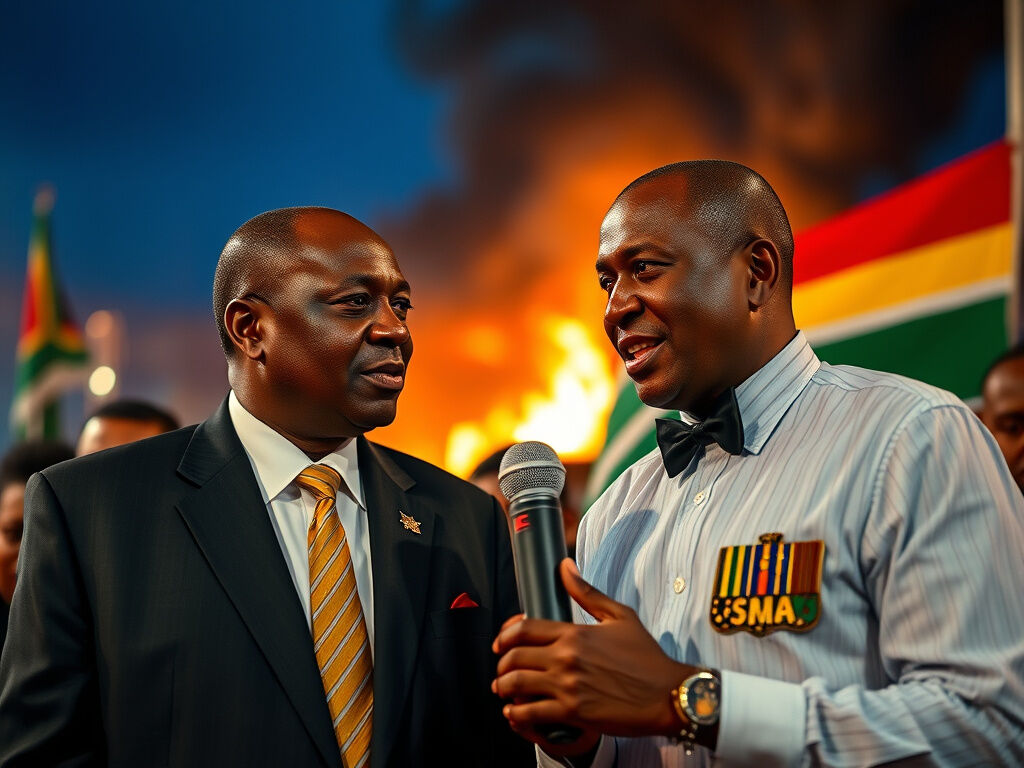
Ghana has decisively rejected South Africa’s request for a state visit by President Cyril Ramaphosa, citing escalating xenophobic and Afrophobic attacks that have plunged diplomatic relations between the two nations into crisis. The scheduled visit, originally planned for August 2–4, 2026, has been scrapped following Ghana’s firm stance against the rising tide of violence targeting African migrants, including the fatal killing of a Ghanaian national in Cape Town.
A Formal Rejection Rooted in Human Rights Concerns
The Ghanaian government, in a publicly uncompromising statement, cited the brutal murder of 40-year-old Bashiru Isak in Cape Town’s Khayelitsha township as a primary reason for the cancellation. Isak, a Ghanaian citizen, was among several African nationals subjected to violent attacks in recent months, prompting Ghana to formally lodge a protest with South African authorities over the incident.
South Africa’s response, however, has been dismissive and contradictory. The South African government denied any direct link between Isak’s killing and the broader anti-immigrant backlash, labeling Ghana’s claims as “factually incorrect” and “not based on fact.” Police sources, speaking to the Agence France-Presse (AFP), suggested the murder may have been “extortion-related” and disputed Ghana’s account, claiming the victim was a 35-year-old Ghanaian (not Isak) and that the shooting occurred on a Monday, not a Tuesday, as reported by Ghanaian authorities.
Despite these denials, Ghana’s Foreign Ministry has maintained its position, insisting that the systematic targeting of African migrants—including the killing of Isak—justifies the cancellation of the state visit.
Travel Advisory and Mass Repatriation Highlight Crisis
The severity of the situation was further underscored when the University of Ghana issued a travel advisory on July 6, 2026, urging its staff and students to avoid non-essential travel to South Africa due to the rising violence against African nationals. This advisory follows a wave of repatriations, with Ghana having voluntarily brought back approximately 926 citizens between May and June 2026 amid the worsening xenophobic climate.
An additional 900 citizens remain in South Africa but are awaiting further evacuation, according to government sources. The scale of these repatriations reflects the growing insecurity faced by Ghanaian nationals, particularly in Cape Town, Johannesburg, and Durban, where attacks have become increasingly frequent.
A Historical Bond Under Strain
The current diplomatic rift is particularly striking given the deep historical ties between Ghana and South Africa. Ghana has long been a symbol of Pan-African solidarity, having housed and educated South African anti-apartheid activists during the struggle against white minority rule. The Accra Freedom Fighter community, which included figures like Alfred Hutchinson (a leader of the African National Congress, or ANC, and a writer), thrived in Ghana during the 1950s and 1960s.
Hutchinson, who was acquitted in 1958 after a high-profile treason trial, fled to Ghana shortly after the country’s independence in 1957. His arrival was part of a broader exodus of South African activists seeking refuge in Ghana, which under Kwame Nkrumah became a beacon for anti-colonial resistance. The Ghanaian Bureau of African Affairs (BAA), established by Nkrumah, played a crucial role in supporting African liberation movements, including those in South Africa.
Even decades later, the emotional resonance of Ghana’s role in the anti-apartheid struggle remains vivid. When Peter Molotsi, a member of the South African Pan-Africanist Congress (PAC), arrived in Ghana in 1960, he famously declared, “We have arrived home, the Mecca of Pan-Africanism.”
Diplomatic Snubs and Unresolved Tensions
The current tensions have also manifested in lower-level diplomatic disputes. In February 2026, Linda Shongwe, South Africa’s newly appointed High Commissioner designate to Ghana, was expected to present her letters of credence to President John Mahama during a group presentation ceremony on June 16, 2026. However, she was not among the seven ambassadors who successfully completed the process—she was excluded.
A source familiar with the matter told Ghana Business News that her credentialing was not accepted at that time, adding another layer of unresolved friction between the two nations.
A Call for Accountability and Diplomatic Resolution
While Ghana’s decision to cancel the state visit is unambiguous, the underlying issue—systemic xenophobia in South Africa—remains unresolved. The killing of Bashiru Isak and the widespread harassment of African migrants have undermined trust in South Africa’s ability to protect foreign nationals, forcing Ghana to prioritize the safety of its citizens over diplomatic protocol.
As both nations navigate this complex crisis, the historical bond between them serves as a reminder of the shared struggles that once united them. However, unless concrete measures are taken to address the root causes of xenophobia, the diplomatic and humanitarian challenges will continue to cast a shadow over Ghana-South Africa relations.
For now, the state visit stands cancelled, and the focus remains on ensuring the safety and dignity of African migrants in South Africa—a challenge that demands urgent and sustained attention from both governments.