


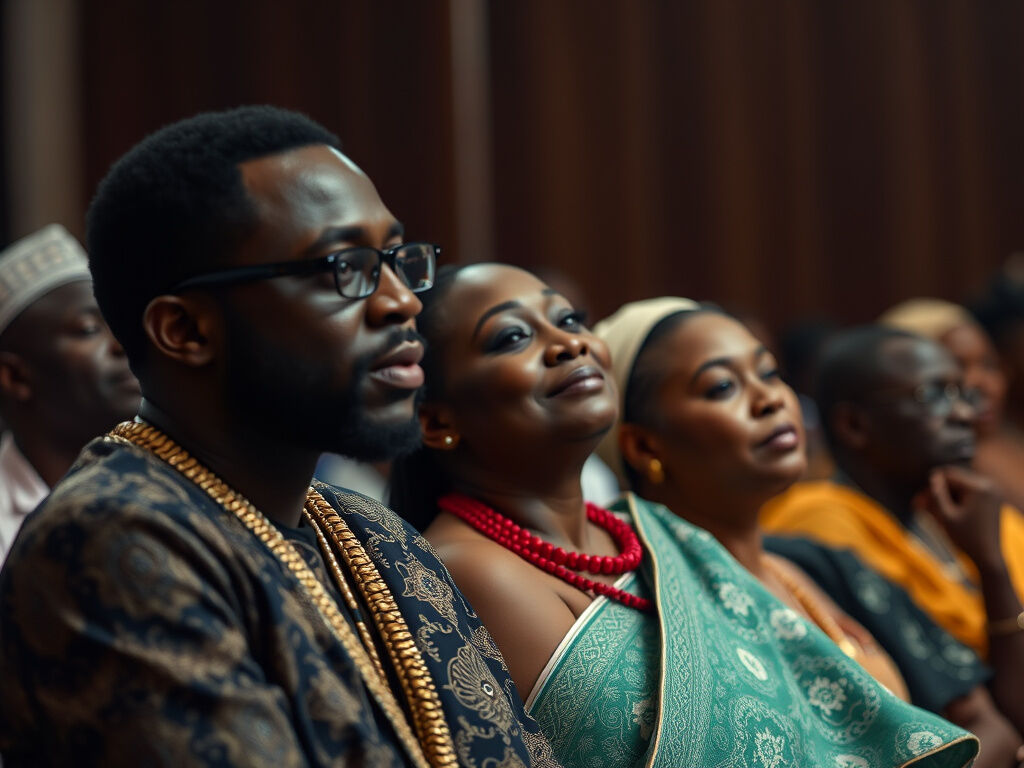
The Nigerian entertainment industry continues to captivate audiences with a dynamic blend of high-profile legal battles, passionate public debates, and deeply emotional tributes. This week’s headlines reveal a sector where celebrity influence extends beyond music and film, shaping national conversations and personal reflections. From the stalled trial of a former music mogul to the poignant revelations of industry veterans, here’s a detailed breakdown of the week’s most compelling stories.
Legal Drama: Jude Okoye’s Fraud Trial Stalled as Key Witness Remains Unaccounted For
The Federal High Court in Lagos has once again delayed proceedings in the high-profile fraud case involving Jude Okoye, the former manager of the defunct music group P-Square. Okoye, alongside his company Northside Music Limited, faces seven counts of alleged fraud totaling N1.3 billion and $1 million, as charged by the Economic and Financial Crimes Commission (EFCC).
The trial, which resumed on Wednesday, faced a significant setback when Peter Okoye (Mr. P), the lead singer of P-Square and a critical witness for the prosecution, failed to appear for cross-examination. The prosecution attributed his absence to a rescheduled flight from Abuja to Lagos, citing logistical delays. However, the defence vehemently disputed this claim, asserting that reliable sources confirmed Mr. P’s presence in Lagos prior to the hearing.
Justice Alexander Owoeye, presiding over the case, expressed concern over the inconsistency in the witness’s whereabouts and subsequently adjourned the trial until September 21, 2026. Okoye, who has pleaded not guilty to all charges, remains under scrutiny as the EFCC seeks to establish the alleged misappropriation of funds linked to P-Square’s operations.
This case underscores the broader challenges faced by the Nigerian entertainment industry in navigating financial disputes, particularly when high-profile figures are involved. The delay raises questions about the efficiency of legal processes in high-profile cases and the potential impact on the accused’s reputation.
Celebrity Clash: Davido vs. Dauda Kahutu Rarara – A Social Media Debate on Insecurity and Patriotism
A heated online exchange between Davido, Nigeria’s most commercially successful Afrobeats artist, and Dauda Kahutu Rarara, a prominent northern musician, has dominated social media discussions this week. The dispute stems from Davido’s public call for Nigerians to prioritize patriotism over political loyalty in the face of worsening insecurity across the country.
In a series of strongly worded posts, Davido urged citizens to speak out against violence and corruption, arguing that silence in the face of national crises is unacceptable. His remarks resonated widely, particularly among younger audiences who view celebrities as influential voices in shaping public sentiment.
Rarara, however, criticized Davido’s stance in a controversial video response, accusing the singer of political bias and questioning the timing of his comments. The exchange escalated when Davido replied in Hausa, further intensifying the debate. Fans and commentators have since engaged in vigorous discussions on platforms like Twitter and Facebook, with opinions divided on whether celebrities should intervene in political and social issues.
This clash highlights the growing role of Nigerian celebrities as social commentators, a trend that has both empowered and polarized public discourse. While some praise their willingness to address national challenges, others argue that such interventions can polarize an already divided society.
Tribute to Zeenat Balogun: Sickle Cell Anaemia Revealed as Cause of Death
Nearly two years after her untimely passing in October 2024, the cause of death of Zeenat Balogun, the daughter of legendary actor Saheed Balogun, has been disclosed by her family. In an emotional tribute marking World Sickle Cell Day, Zeenat’s half-brother, Kahlid Balogun, revealed that she had been battling sickle cell anaemia before her death.
Speaking during a family memorial service, Kahlid described Zeenat as a courageous fighter, whose resilience in the face of chronic illness left a lasting impression on those who knew her. He emphasized that her kindness and strength were defining traits that would continue to inspire others, even in her absence.
Sickle cell anaemia, a genetic blood disorder prevalent in Nigeria, often leads to severe complications if untreated. Zeenat’s case underscores the urgent need for awareness and better healthcare access for those living with the condition. Her family’s disclosure has sparked conversations about genetic health risks within the Nigerian entertainment community, where such conditions are sometimes overlooked due to stigma or lack of information.
Uzor Arukwe’s Reflection: Grief and the Kindness of Alex Ekubo
Actor Uzor Arukwe has shared a profound reflection on the death of his colleague Alex Ekubo, who passed away on May 11, 2026, after a prolonged battle with metastatic kidney cancer. In a heartfelt Instagram post, Arukwe revealed that his initial silence following Ekubo’s death was a result of overwhelming grief, which left him without words.
Arukwe recalled meeting Ekubo on a movie set and described him as a warm, humble, and genuinely kind individual. He shared anecdotes about Ekubo’s generosity and empathy, noting that such qualities often outshine professional achievements in how people are remembered.
His post resonated deeply with fans and fellow actors, who reflected on the human impact of Ekubo’s passing. Arukwe’s words serve as a reminder of the importance of kindness in an industry often dominated by fame and competition.
Timi Dakolo’s Advice: Men Must Prioritize Self-Care to Avoid Burnout
Singer Timi Dakolo has urged men to take their physical and emotional well-being seriously, warning against the dangerous habit of suppressing fatigue under the guise of strength.
In a social media message, Dakolo argued that constantly pretending to be invincible not only undermines health but also shortens longevity. He emphasized that fatigue is not laziness but a sign of exhaustion that demands attention. The artist encouraged men to schedule rest, seek medical care when needed, and reject societal pressures that glorify relentless productivity.
Dakolo’s message comes at a time when mental health awareness is gaining traction in Nigeria, particularly among young professionals and celebrities. His advocacy highlights the need for holistic self-care in a culture where stoicism is often mistaken for resilience.
Scarlet Gomez Warns Against the Perils of Oversharing in the Digital Age
Actress Scarlet Gomez has cautioned the public about the unintended consequences of oversharing in an era dominated by social media scrutiny.
In a thought-provoking post, Gomez noted that many meaningful moments lose their authenticity once exposed to public judgment. She warned that online audiences often form assumptions based on limited information, turning personal struggles into topics of gossip and criticism.
Gomez argued that some aspects of life are best kept private to preserve their emotional integrity. Her advice resonates with a growing segment of the population who are re-evaluating their digital footprints in light of privacy concerns and mental health risks associated with constant exposure.
Toyin Abraham’s Journey: From Struggle to Nollywood’s Success Story
Actress and filmmaker Toyin Abraham has shared the unconventional path to her financial success in Nollywood, revealing that monetary stability came late despite her decades-long career.
Speaking in a recent video interview, Abraham disclosed that she only began earning substantial income from acting about eight years ago, despite joining the industry in 2001. She explained that in the early 2000s, many actors in Nollywood worked for minimal pay, often taking roles out of necessity rather than passion.
Today, Abraham is widely regarded as one of Nigeria’s most successful filmmakers, with box-office hits like The Peeping Eye and The Wedding Party 2 under her direction. Her journey underscores the harsh realities of the Nollywood industry, where financial breakthroughs are not guaranteed and persistence is key to long-term success.
Conclusion: A Week of Contrasts in Nigeria’s Entertainment Landscape
This week’s headlines from the Nigerian entertainment industry paint a complex picture—one of legal battles, fiery debates, heartfelt tributes, and hard-earned lessons. From the fraud allegations against Jude Okoye to the social media clash between Davido and Rarara, the industry continues to blend celebrity influence with societal issues.
At the same time, stories of grief, resilience, and self-reflection—such as those shared by Uzor Arukwe, Zeenat Balogun’s family, and Toyin Abraham—remind us that behind the glamour lies human experiences that resonate universally. As Nigeria’s entertainment sector evolves, these narratives will undoubtedly shape public discourse, industry standards, and the next generation of storytellers.