


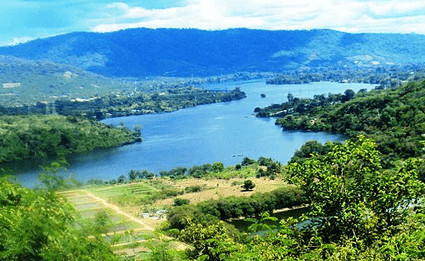
The Volta Basin, a transboundary water resource spanning Ghana, Burkina Faso, Togo, Côte d’Ivoire, and Benin, stands as a cornerstone of economic stability, energy production, and agricultural productivity for millions across West Africa. To ensure its long-term sustainability, stakeholders from Ghana and Burkina Faso, alongside international partners, convened in Accra for the Second National Stakeholder Workshop on the Water-Energy-Food (WEF) Nexus under the EPIC Africa Project. This three-day event, organised by the University of Energy and Natural Resources (UENR) in collaboration with Delft University of Technology (TU Delft), brought together policymakers, researchers, and industry leaders to explore innovative governance models that balance hydropower generation, food security, and water availability while addressing climate change pressures.
A European Union-Funded Initiative for Africa’s Future
The EPIC Africa Project, funded by the European Union, is a groundbreaking research initiative designed to develop sustainable WEF pathways tailored to the challenges of sub-Saharan Africa. By integrating climate resilience, energy access, and food production, the project aims to create future-proof infrastructure that aligns with African Union Agenda 2063—a vision for a prosperous, integrated, and sustainable continent by the mid-21st century.
This workshop, attended by delegates from Kenya, the Netherlands, Sweden, and Belgium, served as a critical platform for cross-border collaboration, ensuring that the Volta Basin—one of Africa’s most vital water systems—remains a source of prosperity for generations to come.
Key Participants and Institutional Engagement
The discussions were attended by high-level representatives from Ghanaian and Burkinabé institutions, including:
– Bui Power Authority (responsible for managing Ghana’s largest hydropower plant)
– National Development Planning Commission (overseeing long-term economic strategy)
– Volta Basin Authority (coordinating transboundary water management)
– International Water Management Institute (IWMI) (conducting global water research)
– Water Resources Commission (regulating Ghana’s water resources)
– Renewable Energy Engineering Department at UENR (leading Ghana’s energy transition efforts)
Researchers from TU Delft, VITO Nexus (Belgium), and Swedish and Dutch universities contributed cutting-edge scientific models to support data-driven decision-making, ensuring that infrastructure planning is both efficient and equitable.
The EPIC Africa Approach: Citizen-Centric Infrastructure Planning
At the heart of the EPIC Africa Project is a unique “transition space”—a participatory framework that empowers communities to shape their own future. Unlike traditional top-down planning, this approach involves citizens in co-creating infrastructure visions that reflect their values, aspirations, and developmental needs.
Dr. Edo Abraham, Coordinator of the EPIC Africa Project and Head of the Water Systems Engineering Section at TU Delft, emphasised that the project’s methodology bridges the gap between scientific modelling and real-world governance:
“EPIC Africa does not just focus on technical solutions—it ensures that infrastructure decisions are legitimate, sustainable, and desired by the people. We are looking at long-term transitions that align with Agenda 2063, asking: What kind of Volta Basin do we want? What kind of Ghana do we want? The answers must come from citizen engagement, not just expert opinions.”
The Volta Basin was selected as a case study due to its strategic importance in hydropower, irrigation, industrial water supply, fisheries, and livelihoods. As a shared resource, its management requires equitable policies that prevent water conflicts while maximising economic and ecological benefits.
Critical Discussions: Energy, Agriculture, and Climate Resilience
The workshop delved into three core pillars of sustainable WEF governance:
- Hydropower and Renewable Energy Expansion
- Ghana’s Akosombo and Bui dams are pivotal to the nation’s energy grid, but climate variability threatens their reliability.
- Discussions explored integrating solar, wind, and battery storage to create a resilient energy mix, reducing dependence on hydropower alone.
-
Dr. Felix Amankwah Diawuo, Head of UENR’s Renewable Energy Engineering Department, highlighted that participatory planning ensures that energy infrastructure evolves with community needs, rather than imposing one-size-fits-all solutions.
-
Irrigation and Agricultural Productivity
- The Volta Basin supports large-scale irrigation projects, but water scarcity and inefficient farming practices limit food security.
- Stakeholders examined precision agriculture techniques, water-efficient crops, and agroforestry models to enhance yield per drop.
-
Dr. Yves De Weerdt, Research Coordinator at VITO Nexus, stressed that scientific modelling must align with local farming traditions, ensuring technological adoption is culturally acceptable.
-
Transboundary Water Governance and Conflict Prevention
- With Ghana and Burkina Faso accounting for the largest share of the basin’s land area, both nations bear significant responsibility in ensuring fair water distribution.
- Reverend Professor Eric Ofosu Antwi, Lead of the EPIC Africa Project at UENR, warned that political short-termism could undermine long-term water security.
“National development plans must transcend partisan politics—water is not a political tool but a public good. The Volta Basin’s future depends on collaborative governance, not short-term gains.”
Aligning with the Sustainable Development Goals (SDGs)
The workshop’s framework was deeply rooted in the UN’s Sustainable Development Goals (SDGs), particularly:
– SDG 6 (Clean Water and Sanitation) – Ensuring equitable water access for all.
– SDG 7 (Affordable and Clean Energy) – Expanding renewable energy while maintaining grid stability.
– SDG 2 (Zero Hunger) – Enhancing agricultural productivity through sustainable water use.
– SDG 13 (Climate Action) – Integrating climate-resilient infrastructure into planning.
Dr. De Weerdt explained that EPIC Africa’s spatial modelling tools allow policymakers to simulate infrastructure investments—such as solar farms, transformer stations, and irrigation networks—while balancing costs, environmental impact, and social equity.
“We ask: Where should a new solar plant be built? How will urban growth affect water demand? Where should battery storage be prioritised? These are not just technical questions—they require public input to ensure fairness.”
The Path Forward: From Workshop to Policy Implementation
The three-day discussions concluded with actionable recommendations that will be presented to Ghanaian and Burkinabé policymakers to inform national and regional water, energy, and agricultural policies.
Key takeaways include:
✅ Establishing a Volta Basin Governance Forum – A multi-stakeholder body to monitor water use, resolve conflicts, and enforce equitable distribution.
✅ Developing Citizen-Led Infrastructure Visions – Using EPIC Africa’s transition spaces to co-design sustainable development pathways.
✅ Scaling Renewable Energy Integration – Accelerating solar, wind, and hydropower hybrid systems to reduce climate vulnerability.
✅ Strengthening Transboundary Cooperation – Formalising joint water management agreements between Ghana, Burkina Faso, and neighbouring nations.
Professor Ofosu Antwi urged leaders to prioritise long-term planning over electoral cycles, emphasising that sustainable development is not a political issue—it is a national imperative***.
“The Volta Basin is more than a resource—it is the lifeblood of our economies. If we fail to manage it wisely, we risk food shortages, energy crises, and social unrest. The EPIC Africa Project gives us the tools to avoid these pitfalls—but only if we act now.”
Conclusion: A Blueprint for Africa’s Water-Energy-Food Future
The Second National Stakeholder Workshop marked a turning point in how Ghana and Burkina Faso approach Volta Basin management. By combining scientific expertise with citizen participation, the EPIC Africa Project offers a blueprint for sustainable development that can be adapted across Africa.
As the project moves forward, the collaborative models developed in Accra will inform policy decisions, ensuring that the Volta Basin remains a symbol of prosperity, resilience, and shared responsibility—not just for Ghana and Burkina Faso, but for West Africa as a whole**.
With climate change accelerating water scarcity and population growth straining resources, the lessons from this workshop could redefine infrastructure planning on the continent, proving that sustainability is not an option—it is the only viable path forward.