


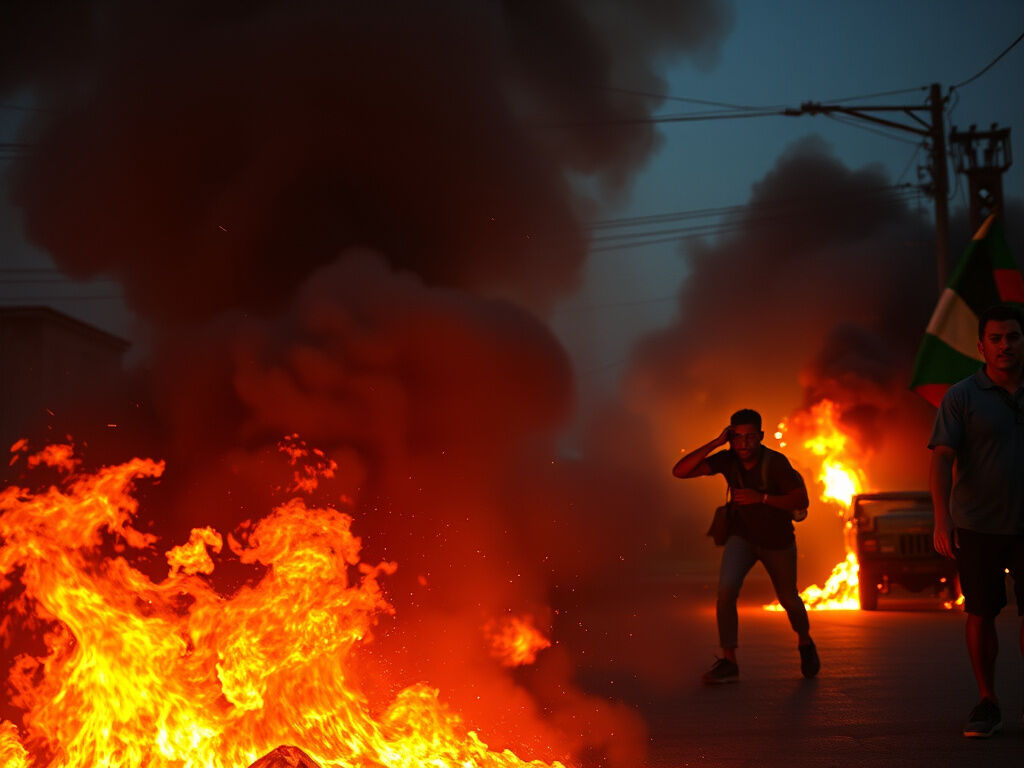
A diplomatic crisis has erupted between Ghana and South Africa following allegations that a Ghanaian migrant, Bashiru Isak, was fatally shot during anti-immigrant protests in Cape Town’s Khayelitsha township. While Ghanaian authorities have condemned the killing and demanded justice, South African officials have vehemently denied any involvement, dismissing the claims as false information. The dispute has further strained bilateral relations, with both nations exchanging sharp statements amid rising tensions over migration, safety, and human rights.
Ghana’s Formal Protest and Demands for Justice
Ghana’s Foreign Affairs Ministry issued a strong condemnation, describing the alleged killing of 40-year-old Bashiru Isak as a “profound shock” to the nation. In a formal diplomatic protest, the ministry reported the incident to South African authorities, filed a police complaint, and urged an immediate investigation.
The statement from Accra explicitly demanded:
– A full, transparent, and expedited investigation into Isak’s death.
– The arrest and prosecution of perpetrators responsible for the killing.
– South Africa’s compliance with international obligations to protect the safety, dignity, and rights of all foreign nationals residing in the country, including Ghanaians.
Ghana’s Joy FM, a leading media outlet, provided additional details, revealing that Isak, a tailor who had lived in South Africa for nearly two decades, was approached at his shop by an unknown group. According to witnesses, the assailants accused him of taking jobs from South Africans before fatally shooting him. His body is reportedly being repatriated to Ghana for burial, with the Ghanaian government extending condolences to his family.
South Africa’s Denial and Counteraccusations
South Africa’s Justice Minister responded by rejecting Ghana’s claims, stating that “Ghanaian authorities continue to communicate false information about South Africa regarding developments on irregular migration.”
The South African Police Service (SAPS) further dismissed the allegations, declaring that “there is no record of the Khayelitsha murder” in their databases. However, they acknowledged an ongoing investigation into the separate killing of another Ghanaian, Kwabena Boagen (35), who was allegedly shot in extortion-related violence in Nyanga township—a different area from Khayelitsha.
Key Details on Boagen’s Death
- Location & Circumstances: Boagen, who lived in Khayelitsha but worked in Nyanga, was reportedly ambushed at his barbershop by armed individuals who demanded money. When he refused, he was shot dead.
- Investigation Status: A post-mortem examination is underway, and SAPS confirmed that no arrests have been made as of yet.
- Police Appeal: The force urged Ghanaian authorities to provide detailed information about the Khayelitsha incident to facilitate a joint investigation.
South Africa’s Foreign Ministry spokesperson, Clayson Monyela, went further, dismissing the Isak killing as a “fabricated tale” linked to anti-immigrant sentiment. He emphasized that “there is no evidence to support claims that the death was connected to recent protests.”
Anti-Immigrant Protests and Repatriation Efforts
The alleged murder of Isak occurred amid widespread anti-immigrant protests across South Africa, which reached a peak on Tuesday (June 2024). Activists had set an unofficial deadline for all undocumented foreigners to leave the country, leading to mass demonstrations in major cities, including Johannesburg, Durban, and Cape Town.
Key Developments During the Protests
- Scale of Demonstrations: Thousands of protesters took to the streets, marching against foreign workers, particularly from Ghana, Malawi, and Nigeria.
- Government Response: South African police reported that around 900 people were arrested, primarily for immigration violations, looting, and public order offenses.
- Repatriation Efforts: Ghana, Malawi, and Nigeria have facilitated the return of thousands of citizens, with over 25,000 people repatriated so far to avoid further violence.
Despite claims of peaceful protests, violent incidents have been reported, including attacks on foreign-owned businesses and targeted harassment of migrants.
Human Rights Concerns and Economic Factors
South Africa’s high unemployment rate (exceeding 30%) has fueled growing anti-immigrant sentiment, with many locals blaming foreign workers for job displacement in informal and low-skilled sectors. While South Africa remains a regional economic hub, attracting migrants seeking better opportunities, the lack of formal employment and social tensions have intensified.
Ghana’s Foreign Ministry has warned its citizens remaining in South Africa to exercise extreme caution, avoid high-risk areas, and register with local authorities for safety and documentation purposes.
International Implications and Broader Migration Crisis
The dispute between Ghana and South Africa highlights broader challenges in African migration governance, where economic desperation, political instability, and xenophobic backlash often lead to human rights abuses. As South Africa grapples with internal economic pressures, the treatment of foreign nationals remains a contentious issue, with diplomatic fallouts becoming increasingly common.
Call for Accountability and Diplomatic Resolution
While South Africa insists that no evidence links Isak’s death to protests, Ghana’s unwavering demand for justice underscores the urgency of a transparent inquiry. Both nations must collaborate to prevent further escalation, ensuring that migrants’ rights are protected while addressing underlying socio-economic grievances that fuel anti-immigrant sentiment.
As the situation develops, international observers will closely monitor whether South Africa’s police and judicial systems will fully investigate the allegations or if diplomatic tensions will persist, risking further instability in one of Africa’s most economically significant bilateral relationships.