


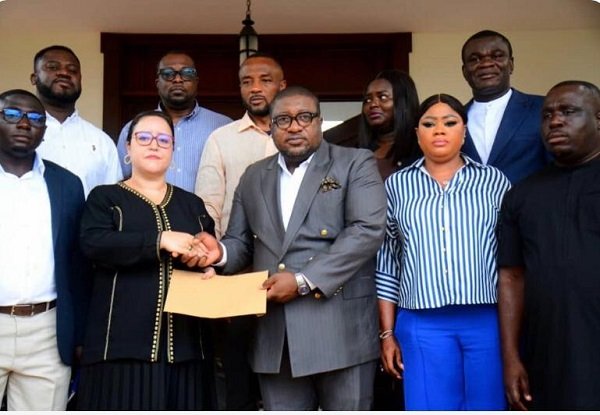
The New Patriotic Party (NPP) has formally escalated its concerns over what it describes as widespread political persecution under President John Dramani Mahama’s administration, issuing a detailed petition to Ghana’s diplomatic community. The party’s statement, released in Accra, paints a grim picture of a democratic erosion, where dissent is increasingly suppressed through arbitrary arrests, judicial harassment, and institutional intimidation.
A Culture of Silence and the Weaponisation of State Power
In a scathing indictment, the NPP argues that Mahama’s government has systematically undermined democratic norms, replacing open debate with a “culture of silence” where citizens fear voicing opposition. The party claims that state institutions—police, judiciary, and intelligence agencies—are being weaponised to target political opponents, journalists, and critics, thereby eroding the rule of law and democratic accountability.
The petition highlights a troubling pattern where individuals expressing dissent are subjected to prosecutions, prolonged detentions, and legal harassment, often under vague or politically motivated charges. The NPP warns that if unchecked, these actions could permanently damage Ghana’s reputation as a stable and democratic nation, a status built over decades of relative political stability.
Selective Justice and the Criminalisation of Free Speech
One of the most contentious allegations in the petition is the selective application of justice, where opposition figures face swift investigations and harsh penalties, while those aligned with the ruling government often escape accountability for similar offences.
A notable case cited is that of Kwame Baffoe (Abronye DC), the NPP’s Regional Chairman for the Ashanti Region, who was arrested and charged following comments deemed critical of a judge. The party argues that his denial of bail and subsequent prosecution amount to the criminalisation of free speech, a direct violation of Ghana’s constitutional protections.
The NPP also reiterates concerns about the repeal of criminal libel laws in 2001 under former President John Agyekum Kufuor, a reform that was hailed as a landmark victory for press freedom. However, the current administration, the party claims, has subverted these gains by misusing legal frameworks—such as defamation and public order laws—to silence critics rather than uphold justice.
Judicial Independence Under Threat
A critical aspect of the NPP’s petition is the removal of Chief Justice Gertrude Sackey Torkornoo, which the party argues has undermined judicial independence. The move, they contend, has fuelled perceptions that judges may face political pressure when handling cases involving ruling party figures or sensitive political matters.
This, the NPP warns, risks further eroding public trust in Ghana’s justice system, a cornerstone of any functional democracy. The party suggests that politically motivated judicial decisions—such as denying bail to opposition leaders while allowing ruling party affiliates to operate with impunity—undermine the very foundations of fair governance.
State Security Agencies as Tools of Political Repression
The petition also accuses security agencies—particularly the police and intelligence services—of engaging in politically motivated operations. Opposition figures, the NPP claims, are often arrested in dramatic, high-profile raids, detained under harsh conditions, and subjected to prolonged legal battles without fair trial guarantees.
The party highlights a pattern of intimidation, where unarmed civilians—including party members and activists—are brutally detained, while ruling party supporters involved in similar incidents face minimal consequences. This double standard, the NPP argues, demonstrates a deliberate strategy to suppress dissent rather than maintain law and order.
A Call for International Scrutiny and Intervention
In light of these systematic abuses, the NPP has urged the diplomatic community, development partners, and human rights organisations to closely monitor Ghana’s democratic backsliding. The party demands accountability, calling on foreign observers to publicly condemn what it describes as the misuse of legal and institutional power to silence opposition.
The petition explicitly requests that diplomats engage the government on these concerns, pressuring authorities to reverse course before Ghana’s democratic reputation is irreparably damaged. The NPP warns that inaction could embolden further repression, setting a dangerous precedent for future governance.
A Warning to Ghana’s Democratic Future
Beyond the immediate political fallout, the NPP’s petition serves as a stark warning about the long-term consequences of unchecked authoritarian tendencies. If left unchecked, the party argues, Ghana risks becoming a case study in democratic regression, where free speech is criminalised, justice is selective, and state institutions serve political agendas rather than the people.
The full implications of this erosion of democracy remain uncertain, but the NPP’s intervention underscores the urgency of international and domestic scrutiny to restore fairness, accountability, and the rule of law in Ghana.