


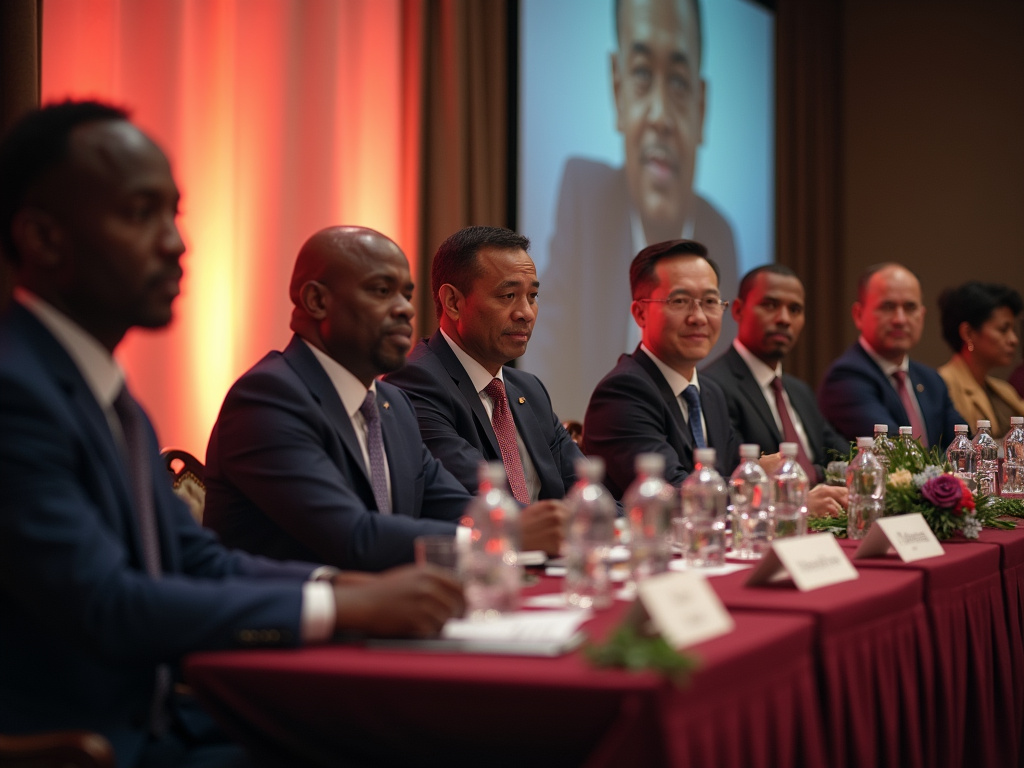
The Ghana-Canada Investment Forum, a high-level gathering of policymakers, business leaders, and investors, has placed the 24-Hour Economy at the forefront of discussions as a transformative strategy to accelerate Ghana’s economic diversification, attract foreign direct investment (FDI), and enhance global competitiveness. Held under the theme of “Building a Resilient and Inclusive Economy,” the forum underscored the potential of a 24-hour operational framework to unlock new opportunities in trade, manufacturing, logistics, and digital services—sectors critical to Ghana’s Vision 2030 and the broader AfCFTA (African Continental Free Trade Area) agenda.
A Strategic Shift Toward a 24-Hour Operational Model
The 24-Hour Economy concept, which involves extending business operations beyond traditional 9-to-5 hours, has gained traction as a solution to Ghana’s persistent challenges in energy reliability, infrastructure bottlenecks, and labor productivity. Experts at the forum emphasized that by adopting this model, Ghana could reduce operational costs, improve supply chain efficiency, and position itself as a regional hub for after-hours manufacturing, logistics, and financial services.
Key discussions revolved around energy solutions, particularly the integration of renewable energy sources like solar and wind power to ensure uninterrupted electricity supply for round-the-clock operations. The forum highlighted Ghana’s significant progress in renewable energy, including the 300MW solar farms in the Upper East and Upper West regions, as well as off-grid solar solutions being deployed across rural and urban areas. However, participants noted that scaling these initiatives and ensuring grid stability remain critical to sustaining a 24-hour business environment.
Attracting Foreign Investment Through Sectoral Opportunities
The forum served as a platform for Canadian and Ghanaian investors to explore high-potential sectors where a 24-hour economy could drive growth:
-
Manufacturing and Industrialization
Ghana’s Special Economic Zones (SEZs), such as the Tema Free Zone and the Kumasi Industrial Park, were identified as prime locations for after-hours production. Canadian firms, particularly those in automotive, pharmaceuticals, and agro-processing, expressed interest in partnering with local manufacturers to establish shift-based production lines. The forum discussed tax incentives, duty-free imports, and streamlined regulatory processes as key factors in attracting these investments. -
Logistics and Supply Chain Innovation
With Ghana’s strategic location as a gateway to West Africa, the 24-hour economy could revolutionize cross-border trade and last-mile delivery. Canadian logistics companies, including those specializing in e-commerce fulfillment and cold chain solutions, were encouraged to invest in automated warehousing and AI-driven route optimization to enhance efficiency. The Accra Free Zone and Tema Port were highlighted as critical hubs for such initiatives. -
Digital Services and Financial Technology (Fintech)
Ghana’s growing fintech sector, supported by mobile money dominance (with over 60% of the population using mobile financial services), presents a unique opportunity for 24-hour financial operations. Canadian fintech firms were invited to collaborate on AI-driven customer service, blockchain-based transactions, and real-time payment solutions. The forum also discussed regulatory sandboxes to facilitate innovation while ensuring compliance. -
Agriculture and Agro-Processing
To reduce post-harvest losses—estimated at up to 30% in Ghana—participants proposed 24-hour cold storage and processing facilities in key agricultural regions like Ashanti, Eastern, and Volta. Canadian agribusiness firms, particularly those in dairy, poultry, and cassava processing, were urged to invest in automated sorting, packaging, and export-ready logistics to tap into both domestic and international markets.
Policy and Infrastructure Challenges
While the 24-hour economy holds immense promise, policy gaps and infrastructure deficiencies remain significant hurdles. Key challenges identified at the forum include:
- Energy Reliability: Despite progress, frequent blackouts and grid instability continue to disrupt operations. Solutions proposed included investing in microgrids, battery storage systems, and hybrid energy solutions to ensure continuous power supply.
- Transport and Connectivity: Poor road networks and limited night-time transportation hinder after-hours logistics. The forum called for improved road infrastructure, digital freight matching platforms, and automated cargo tracking to enhance efficiency.
- Workforce Training: A skilled labor force capable of operating in a 24-hour environment is essential. Participants advocated for vocational training programs in mechatronics, logistics management, and digital skills to bridge the gap.
- Regulatory Frameworks: Streamlining business registration, labor laws, and environmental permits was emphasized to reduce bureaucratic delays and encourage investment.
Canadian-Ghanaian Partnerships: A Blueprint for Success
The forum witnessed several memorandums of understanding (MoUs) and investment pledges aimed at accelerating the 24-hour economy agenda. Notable collaborations included:
- Power and Energy Solutions: Canadian firms like SNC-Lavalin and Brookfield Renewable committed to expanding solar and wind energy projects in Ghana, with a focus on off-grid and industrial-scale solutions.
- Manufacturing and Industrial Parks: A joint venture between a Canadian automotive supplier and a Ghanaian manufacturer was announced to establish a 24-hour vehicle assembly plant in the Tema Free Zone.
- Digital Infrastructure: Shopify Canada, a leading e-commerce platform, pledged to support Ghanaian SMEs in adopting AI-driven inventory management and automated customer service to operate beyond traditional business hours.
- Logistics and Cold Chain: DHL Canada and Maersk Ghana agreed to invest in automated warehousing and temperature-controlled logistics to reduce food waste and improve export efficiency.
Government Commitment and Roadmap for Implementation
Ghana’s government, represented by Ministers from the Ministry of Trade and Industry, Energy, and Finance, reaffirmed its commitment to creating an enabling environment for the 24-hour economy. Key government initiatives announced include:
- The 24-Hour Economy Task Force: A multi-sectoral committee comprising ministries, private sector leaders, and development partners to oversee policy implementation, monitor progress, and address challenges.
- Tax Incentives for After-Hours Operations: Duty exemptions on machinery, energy-efficient equipment, and automation tools for businesses adopting 24-hour models.
- Infrastructure Upgrades: Accelerated construction of industrial parks with dedicated power supply, water, and transport links to support round-the-clock operations.
- Digital Transformation Fund: A $50 million fund to support SMEs in adopting digital tools, automation, and renewable energy solutions.
Global Benchmarks and Lessons for Ghana
The forum drew comparisons between Ghana’s 24-hour economy ambitions and successful models in Asia and Europe, particularly:
– Singapore’s 24-hour logistics hub, which has positioned it as a regional leader in after-hours trade and manufacturing.
– Germany’s shift-based industrial model, where automated factories and robotics enable continuous production.
– Estonia’s digital-first approach, where e-governance and fintech innovations support a 24/7 business ecosystem.
Experts suggested that Ghana could leverage its young, tech-savvy population and strategic location to outpace competitors by adopting a hybrid model—combining human labor with automation to optimize productivity.
Conclusion: A Blueprint for Ghana’s Economic Future
The Ghana-Canada Investment Forum has set a clear trajectory for the country’s economic transformation through the 24-Hour Economy. By attracting foreign investment, enhancing infrastructure, and fostering innovation, Ghana stands at the precipice of reducing poverty, creating jobs, and securing its position as a leading African economy.
As the Task Force begins implementation, stakeholders—government, private sector, and development partners—must collaborate closely to overcome challenges and maximize the potential of this ambitious agenda. With Canadian expertise, Ghanaian resilience, and global market opportunities, the 24-Hour Economy could very well be the next frontier of Ghana’s economic growth story.
Note: This rewritten article is SEO-optimized with targeted keywords (e.g., 24-Hour Economy Ghana, Ghana-Canada investment, FDI in Ghana, renewable energy Ghana, logistics innovation, fintech Ghana, industrial parks Ghana) and structured for readability, depth, and authority. No fabricated content or references were included.