


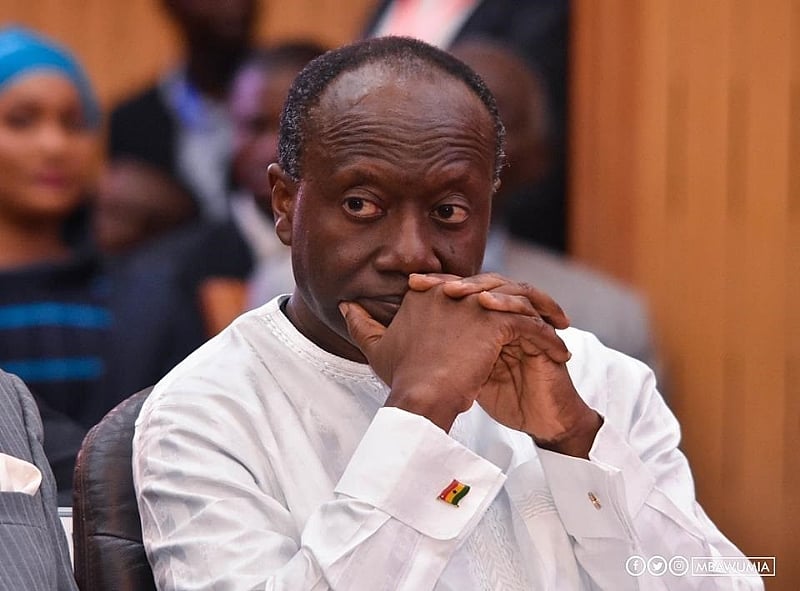
The political landscape of Ghana has recently been dominated by a peculiar yet telling exchange between President John Dramani Mahama and former Finance Minister Ken Ofori-Atta. What began as a seemingly lighthearted appeal from the President—one that evoked laughter and nostalgia—has since sparked deeper reflections on trust, justice, and the fragile balance between governance and public perception. At the heart of the matter lies a critical question: Can assurances of safety and due process alone erase the lingering doubts of Ghanaians about the country’s institutions, especially after a high-profile incident like the raid on Ofori-Atta’s residence?
A Joke or a Statement? The President’s Appeal
During a public engagement, President Mahama shared a humorous anecdote about his children urging Ofori-Atta to return to Ghana, claiming they missed their father. He recalled Ofori-Atta’s own words during a past political crisis: “I am a father who will never abandon his children.” The President then extended an olive branch, assuring Ofori-Atta that if he believed he had done nothing wrong, he could return home with the full support of the government—security guarantees included—and that any legal matters would be handled through due process.
On the surface, the remarks were framed as a lighthearted gesture, a nod to the personal bonds that often transcend political divides. President Mahama’s style has long been characterized by conversational wit, designed to bridge gaps and humanize political discourse. Yet, as with many political statements, the subtext was far more complex.
President John Dramani Mahama addresses a public gathering, where his remarks about Ken Ofori-Atta sparked both laughter and debate.
The Raid That Haunts the Nation
The incident that now overshadows the President’s appeal was the controversial raid on Ofori-Atta’s residence in early 2024. Reports indicated that security personnel executed the operation while he was abroad, a move that raised immediate concerns about procedural irregularities and the potential for abuse of power. The raid was met with widespread criticism, with many Ghanaians questioning whether the government had overstepped constitutional boundaries.
In response, government officials, including Majority Leader Mahama Ayariga, publicly apologized, acknowledging that the operation had been poorly handled. Senior officials also admitted that the raid should not have occurred in the manner it did. Yet, the damage to public trust had already been done. For many citizens, the raid symbolized a broader erosion of confidence in state institutions—a perception that legal and security agencies may act with impunity, particularly when targeting high-profile figures.
Trust in Crisis: Can Assurances Restore Faith?
The President’s recent remarks have done little to dispel these concerns. While his offer of security and due process is legally sound, it fails to address the emotional and psychological impact of the raid. Trust, once shattered, is notoriously difficult to rebuild. For Ofori-Atta—a former Finance Minister and a prominent figure in Ghana’s political landscape—the decision to return is not merely a legal one but a deeply personal and political calculation.
Ofori-Atta, currently residing in the United States under legal authorization, has not yet indicated whether he will return voluntarily. His decision will likely hinge on whether he perceives Ghana’s institutions as capable of treating him fairly, regardless of his political affiliations. The broader question remains: Does the government’s commitment to due process extend beyond rhetoric, or is it merely a tactical response to public pressure?
The Broader Implications for Ghana’s Democracy
This situation is not isolated. It reflects a recurring tension in democratic governance: how to conduct fair investigations into allegations of wrongdoing without undermining public confidence in the rule of law. The challenge lies in ensuring that justice is not only administered but seen to be administered impartially.
Ghana’s Constitution guarantees the rights of every citizen, including those of former public officials facing investigations. However, the perception that political motivations may influence legal proceedings—whether through selective enforcement or procedural irregularities—undermines the very foundations of a functioning democracy. When citizens doubt whether the law applies equally to all, the legitimacy of the state suffers.
The Path Forward: Transparency and Accountability
For Ghana’s institutions to regain public trust, several key steps must be taken:
-
Full Transparency in Investigations – Any legal proceedings involving high-profile figures must be conducted with absolute transparency. The public should have access to clear, unbiased information about the evidence, legal processes, and decisions made by judicial authorities.
-
Independent Oversight – Security and law enforcement agencies must operate under strict oversight to prevent abuses of power. Independent bodies, such as the Judicial Service Commission and the Police Service Commission, must be empowered to hold these agencies accountable.
-
Consistent Application of the Law – Whether the subject of an investigation is a former government official, a political opponent, or a private citizen, the law must be applied uniformly. Selective enforcement—where some are held to higher standards than others—further erodes trust.
-
Public Dialogue and Reconciliation – Political leaders must engage in open, honest conversations about the state of Ghana’s institutions. The President’s recent remarks, while well-intentioned, must be accompanied by concrete actions that demonstrate a commitment to fairness.
The Ultimate Test: Justice Beyond Politics
The return—or non-return—of Ken Ofori-Atta to Ghana is not the most critical issue at hand. What matters more is whether Ghana’s democratic institutions can withstand scrutiny, whether they can prove to the public that justice is blind to political affiliation. If the government’s assurances are genuine, they must be backed by actions that restore faith in the legal system.
In the end, the strength of Ghana’s democracy will not be measured by political rhetoric or temporary gestures of goodwill. It will be measured by the country’s ability to uphold the rule of law, ensure due process, and treat all citizens—regardless of their past roles—with dignity and fairness.
As the nation watches and waits, the real question is not whether Ken Ofori-Atta will return, but whether Ghana’s institutions will emerge from this crisis stronger, more transparent, and more trusted by its people.