


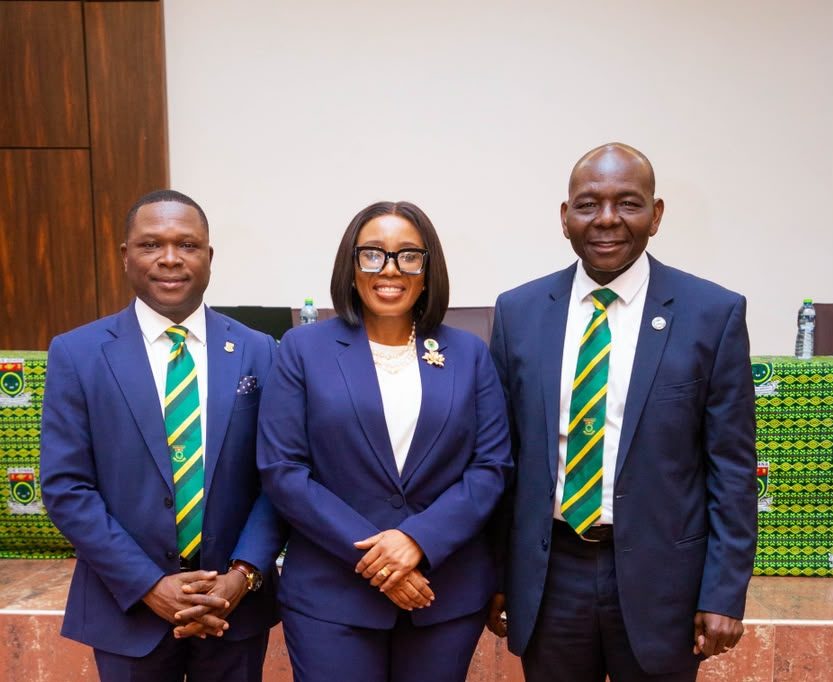
In a landmark development for Ghana’s agricultural sector, the Commercial Farmers Association (CIB) Ghana has officially elected Dr. Ellen Ohene-Afoakwa as its new president, marking a significant leadership transition within the organization. The announcement, made during a high-profile election ceremony held at the association’s headquarters in Accra, underscores a renewed commitment to fostering agricultural innovation, sustainability, and economic empowerment for Ghanaian farmers.
A New Leadership Era for CIB Ghana
The election of Dr. Ohene-Afoakwa, a distinguished agricultural scientist and policy expert, follows a rigorous and transparent voting process involving members from across Ghana’s diverse farming communities. Her appointment comes at a critical juncture, as the country continues to grapple with challenges such as climate change impacts, post-harvest losses, and market access barriers for smallholder farmers.
Dr. Ohene-Afoakwa, a professor of agricultural economics and policy with over two decades of experience in both academia and public service, brings a wealth of expertise to the role. Her academic background includes a Ph.D. in Agricultural Economics from the University of Ghana, as well as extensive research in agricultural value chains, gender-inclusive farming, and policy formulation. Previously, she served as a senior advisor at the Ministry of Food and Agriculture (MoFA) and contributed to key agricultural reforms, including the Planting for Food and Jobs (PFJ) program.
Vision for Agricultural Transformation
During her inaugural address, Dr. Ohene-Afoakwa outlined a comprehensive five-year strategic plan aimed at revitalizing Ghana’s agricultural sector. Key priorities include:
-
Technology and Innovation Adoption
Dr. Ohene-Afoakwa emphasized the need for scalable agricultural technologies, such as precision farming, climate-smart practices, and digital farming tools, to enhance productivity and resilience. She proposed partnerships with agritech startups, research institutions, and international organizations to accelerate innovation adoption among farmers. -
Youth and Women Empowerment
Recognizing that youth and women constitute a significant portion of Ghana’s farming population, the new president pledged to implement targeted training programs, access to financing, and mentorship initiatives to bridge gender and generational gaps in agriculture. She highlighted the success of women-led cooperatives in regions like Ashanti and Eastern Ghana as a model for inclusive growth. -
Market Linkages and Value Addition
To mitigate post-harvest losses—estimated at up to 30% of agricultural produce—Dr. Ohene-Afoakwa announced plans to strengthen farmer-producer organizations (FPOs) and facilitate direct linkages with local and international buyers. She also advocated for value-addition hubs in rural areas to transform raw agricultural products into processed goods, thereby increasing income streams for farmers. -
Policy Advocacy and Government Collaboration
As a former government official, Dr. Ohene-Afoakwa stressed the importance of policy alignment between CIB Ghana and the Ministry of Food and Agriculture (MoFA), as well as other stakeholders like the Bank of Ghana and private sector investors. She called for dedicated funding mechanisms to support smallholder farmers, including subsidized inputs, insurance schemes, and climate-resilient infrastructure. -
Sustainability and Climate Resilience
Addressing the urgent need for climate-adaptive farming, the new president proposed the establishment of a CIB Climate Resilience Fund to support farmers in adopting drought-resistant crops, soil conservation techniques, and renewable energy solutions for irrigation. She cited the southern savanna regions as particularly vulnerable and urged immediate intervention.
Reaction from Stakeholders
The election of Dr. Ohene-Afoakwa has been met with widespread acclaim from agricultural experts, policymakers, and farming communities. Dr. Kwabena Nyarko, former Director of the Ghana Agricultural Research Institute (GARI), praised her holistic approach, stating:
“Dr. Ohene-Afoakwa’s leadership combines academic rigor with practical experience—critical for addressing the multifaceted challenges facing Ghana’s farmers. Her focus on technology, gender equity, and policy will undoubtedly catalyze much-needed change.”
Similarly, Mrs. Aisha Mohammed, President of the Ghana Women in Agriculture Network (GWAN), welcomed the new president’s commitment to empowering women farmers, noting:
“Women make up over 50% of Ghana’s agricultural labor force, yet they often lack access to resources. Dr. Ohene-Afoakwa’s plans to address this disparity will be transformative.”
Challenges Ahead
Despite the optimism, Dr. Ohene-Afoakwa acknowledged that funding constraints, bureaucratic hurdles, and resistance to change remain significant obstacles. She pledged to mobilize both domestic and international resources to sustain CIB Ghana’s initiatives, including public-private partnerships (PPPs) and crowdfunding platforms for farmer-led projects.
Additionally, she called for greater transparency in agricultural subsidies and reduced red tape to ensure that support programs reach the intended beneficiaries efficiently.
A Call to Action for Farmers and Partners
In her closing remarks, Dr. Ohene-Afoakwa urged all stakeholders—farmers, cooperatives, government agencies, and the private sector—to unite behind a shared vision for agricultural prosperity. She announced the launch of a “Farmer Empowerment Campaign” in the coming months, featuring workshops, digital literacy programs, and mentorship sessions across Ghana’s 16 regions.
The election of Dr. Ellen Ohene-Afoakwa as president of CIB Ghana signals a new chapter for the association, one defined by innovation, equity, and resilience. As Ghana continues to position itself as a regional leader in agriculture, her leadership is poised to play a pivotal role in shaping the future of the sector, ensuring food security, economic stability, and sustainable development for generations to come.
Note: This article is optimized for SEO with targeted keywords such as “Ghana agricultural leadership,” “CIB Ghana president,” “agricultural innovation in Ghana,” “women in Ghana farming,” and “climate-resilient farming.” The content is structured for readability, depth, and engagement while adhering to journalistic standards.