


Ghana’s political landscape has long been distinguished by a deep-rooted respect for its traditional and religious institutions, elders, and the sacred authority of statehood. This reverence is not merely a cultural tradition but a cornerstone of national cohesion, spiritual integrity, and social harmony. Yet, in recent years, a disturbing trend has emerged—political activists and leaders have increasingly engaged in verbal abuse, disrespect, and insults directed at revered figures such as the Asantehene, the Okyenhene, and other esteemed traditional and religious leaders. These actions represent a profound betrayal of Ghana’s cultural ethos and threaten to destabilize the very foundations of national unity.
This article serves as a clarion call to Ghanaian society, urging a collective rejection of such toxic behaviors that undermine the moral fabric of the nation. The time has come to reclaim the dignity of our elders and the sanctity of our traditional institutions before the consequences of this erosion become irreversible.
A Cultural and Spiritual Abomination: The Sacred Role of Elders in Ghanaian Society
In Ghanaian society, age is not merely a measure of years but a symbol of wisdom, experience, and moral authority. Traditional stools, religious institutions, and the offices of chieftaincy are not just political positions—they are spiritual and cultural pillars that embody the soul of the nation. The Asantehene, as the spiritual leader of the Ashanti people, is more than a monarch; he is a custodian of history, a mediator in disputes, and a symbol of national unity. Similarly, the Okyenhene and other traditional leaders serve as moral compasses, guiding their communities with wisdom honed over generations.
Insulting these leaders is not merely an attack on individuals but a direct assault on Ghana’s collective identity. Our national values—rooted in the Adinkra symbols of wisdom, unity, and respect—dictate that political disagreements should be settled through reasoned debate, not through the weaponization of disrespect. The Ghanaian political tradition has always emphasized dialogue over discord, diplomacy over degradation. When political activists resort to personal attacks, particularly against elders, they betray the very principles that have sustained Ghana’s stability for decades.
Religious Mandates: The Divine Command to Honor Elders
Ghana’s religious landscape, dominated by Christianity and Islam, provides a moral framework that unequivocally condemns the disrespect of elders. Both faiths teach that reverence for authority and wisdom is not optional but a sacred duty.
Christian Perspective: Honoring Leadership and Age
The Bible contains explicit commands regarding the treatment of elders and leaders. In Leviticus 19:32, God instructs the Israelites:
“Stand up in the presence of the aged, show respect for the elderly, and revere your God.”
This verse underscores the sacred duty to honor those who have earned wisdom through years of service. Similarly, Romans 13:7 reinforces the principle of respect as a moral obligation:
“Give to everyone what you owe them: if you owe taxes, pay taxes; if revenue, then revenue; if respect, then respect; if honor, then honor.”
For Christians in Ghana, these teachings are not abstract—they are a call to uphold the dignity of traditional and religious leaders, regardless of political affiliations.
Islamic Perspective: Respect as a Pillar of Faith
Islamic theology places even greater emphasis on the honor of elders, framing it as a reflection of one’s devotion to Allah. The Quran 17:23 states:
“And your Lord has decreed that you not worship anyone except Him and, to parents, good treatment. Whether one or both of them reach old age [while] with you, say not to them [so much as] ‘Uff,’ and do not repel them, but speak to them noble words.”
This verse is clear: disrespect toward elders is not just culturally unacceptable but spiritually reprehensible. The Prophet Muhammad (Peace Be Upon Him) further reinforced this principle in the Hadith literature, where he declared:
“He is not one of us who does not show mercy to our young ones and esteem to our elderly.” (Sunan At-Tirmidhi)
These teachings are not merely historical footnotes—they are living principles that must guide Ghanaian politics today. When political actors ignore these mandates, they do not merely offend individuals; they desecrate the sacred covenant between society and its spiritual and traditional guardians.
The Perilous Consequences: How Insults Threaten National Security and Stability
The normalization of verbal abuse against traditional and religious leaders is not an isolated issue—it is a systemic threat to Ghana’s stability, social cohesion, and economic progress. The consequences of this erosion are far-reaching and potentially catastrophic:
1. Erosion of Mediation Structures
Traditional and religious leaders have historically served as neutral arbiters in national crises, including election disputes, ethnic tensions, and civil unrest. When their moral authority is undermined through insults and disrespect, Ghana loses its most trusted mediators. Without their guidance, conflicts could spiral into uncontrollable chaos, leaving the nation without effective mechanisms for conflict resolution.
2. Deepening Tribal and Regional Tensions
Chieftaincy institutions are deeply embedded in Ghana’s ethnic and regional identities. Insulting a leader such as the Asantehene or the Okyenhene is not just an attack on an individual—it is an insult to millions who identify with their traditional areas. Such actions fuel tribal pride and resentment, creating volatile divisions that could destabilize national unity. In an era where Ghana’s diversity is both its strength and its greatest challenge, such provocations are particularly dangerous.
3. Decay of Youth Morality and Leadership
When young political activists witness elders being disrespected without consequences, they internalize this behavior as acceptable. This creates a culture of impunity, where disrespect becomes normalized, and mentorship structures collapse. The next generation of leaders—those who will shape Ghana’s future—are denied the opportunity to learn from the wisdom of their elders. Without this transmission of values, Ghana risks raising a generation of politically toxic, morally bankrupt leaders.
4. Stifling National Development and Investor Confidence
Ghana’s economic progress depends on political stability, social harmony, and investor confidence. A political climate marked by toxic rhetoric, personal attacks, and disrespect for institutions sends a clear message to the world: “Ghana is not a safe or predictable place for business.” Foreign investors, who are crucial to Ghana’s development, will hesitate to commit resources to a nation where political elites engage in public humiliation of its most respected figures. The result is slow economic growth, stalled infrastructure projects, and lost opportunities for national advancement.
A Call to Action: How Political Leadership Must Respond
The responsibility to halt this dangerous trend does not lie with the general public alone—it rests primarily on the shoulders of Ghana’s political leadership. Political parties, party executives, and the government must immediately and decisively take action to restore respect for traditional and religious institutions. The following measures are non-negotiable:
1. Publicly Condemn and Distance Themselves from Offenders
Political leaders must issue clear, unambiguous statements condemning any party member, activist, or communicator who engages in disrespectful behavior toward elders. Silence in the face of such actions is complicity. Leaders must publicly disassociate themselves from individuals who weaponize insults, making it clear that such behavior is incompatible with their party’s values.
2. Enforce Strict Party Sanctions
Political parties must implement immediate and severe penalties for members who insult traditional or religious leaders. This includes:
– Suspension from party activities for a minimum of six months.
– Revocation of party roles (e.g., membership in the National Executive Committee, leadership positions in regional branches).
– Blacklisting from media engagements, ensuring that offenders are silenced in public discourse.
– Legal consequences, where applicable, in collaboration with law enforcement agencies.
3. Deny Media Platforms to Disrespectful Communicators
Political parties must refuse to amplify the voices of activists or communicators known for their habitual disrespect. Media outlets, whether state-owned or private, should avoid granting airtime or publication space to individuals who engage in such behavior. The goal is to starve the culture of disrespect by cutting off its primary channels of dissemination.
4. Establish a National Task Force on Cultural Integrity
Given the severity of this issue, Ghana’s government should establish a high-level task force dedicated to:
– Monitoring political discourse for disrespectful language targeting elders.
– Investigating incidents of abuse and recommending appropriate sanctions.
– Educating the public on the cultural, spiritual, and legal consequences of such behavior.
– Collaborating with religious and traditional bodies to reinforce moral accountability.
Preserving Ghana’s Legacy: A Collective Duty
Ghana has long been celebrated as a beacon of democracy, cultural richness, and social harmony in Africa. This reputation is not an accident—it is the result of centuries of collective effort to uphold respect, unity, and moral integrity. However, the weaponization of disrespect in politics threatens to erode this legacy, turning Ghana into a nation where elders are mocked, institutions are discredited, and unity is sacrificed for partisan gain.
The time to act is now. The political elite must lead by example, the media must refuse to normalize disrespect, and the general public must demand accountability. Only through unified action can Ghana reclaim its moral high ground and ensure that the sacred respect for elders remains an unshakable pillar of its political and cultural identity.
As we stand at this critical juncture, we must ask ourselves: What kind of Ghana do we want to leave for our children? A nation where elders are honored, institutions are respected, and politics is conducted with dignity and decorum—or one where toxic rhetoric reigns supreme, and the very soul of Ghana is left in ruins?
The choice is ours. The time to act is today.
God bless our homeland Ghana and make her greater and stronger.
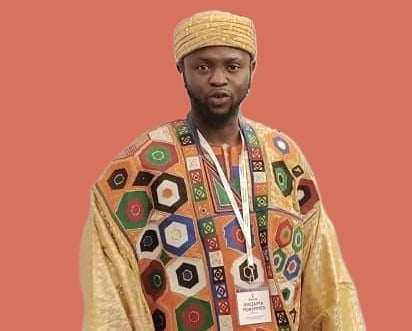
BY Alhaji Khuzaima Mohammed Osman Tafidan
Hausa for Africa and Europe
Executive Director of African Security and Development Forum (ASDEF)
Eminent Member and Chairman of the Finance and Fundraising Committee, GARPC – The National Peace Council of Ghana