


Ghana’s political landscape in 2024 is a dynamic chessboard where every alliance, statement, and strategic silence carries weight. In such an environment, the most formidable move is not to lock oneself into rigid commitments prematurely—it is to preserve the freedom to adapt. This principle, distilled from the timeless wisdom of Robert Greene’s The 48 Laws of Power, underscores a critical truth: “Do not commit to anyone.” This is not an exhortation to betrayal but a strategic imperative rooted in discipline, foresight, and the preservation of leverage.
For the National Democratic Congress (NDC), this lesson is particularly pertinent. The party stands at a crossroads, where the temptation to anchor its future to a single faction, narrative, or external ally could prove disastrous. The economy’s volatility, shifting voter priorities, and the rapid evolution of public discourse demand a party that can pivot without being shackled by past pledges. Flexibility, not rigidity, is the cornerstone of resilience.
1. Preserving Strategic Leverage: The Perils of Premature Commitment
Every political party operates within a web of alliances, internal factions, and external stakeholders. However, the moment a party—particularly the NDC—ties its destiny to a singular voice, faction, or ideological stance, it surrenders its strategic flexibility. History has shown that elections, economic conditions, and public sentiment are unpredictable. A party that remains rigidly bound to yesterday’s promises risks irrelevance when tomorrow’s realities demand a different approach.
Consider the NDC’s current composition: a blend of seasoned politicians, youth activists, traditional leaders, business elites, and diaspora voices. Each group carries distinct expectations and agendas. While engagement with all is essential, unconditional loyalty to any one segment risks diluting the party’s core mission. The NDC must resist the urge to over-invest in a single narrative, whether it be economic revival, anti-corruption crusades, or social reforms. Instead, it should remain agile, ready to adjust its messaging and policies as circumstances evolve.
Why does this matter? Because predictability in politics is a liability. When a party is seen as beholden to a particular faction—whether within its ranks or externally—it becomes an easy target for manipulation. External actors, including foreign interests or rival parties, may exploit perceived weaknesses, while internal factions could exploit perceived betrayals to fracture the party’s unity.
2. Avoiding the Trap of Being Used: The Danger of Unconditional Loyalty
One of the most insidious risks for any political party is becoming an extension of another entity’s agenda. When the NDC fully commits to a single faction—whether a powerful minister, a dominant youth wing, or an external ally—it loses its autonomy. Predictable actors are easy to bargain with, and equally easy to sideline when they no longer serve a purpose.
The NDC’s current landscape is fragmented yet interconnected, with:
– The “old guard”—experienced politicians who bring institutional memory but may resist modern reforms.
– Youth activists—energetic and socially conscious but sometimes disconnected from practical governance.
– Traditional leaders—whose influence is immense but whose priorities may not always align with urban or rural voter concerns.
– Business elites—who demand economic stability but may resist progressive policies that disrupt profit margins.
– The diaspora—a critical voting bloc with diverse expectations, from remittance-based economic policies to cultural representation.
The solution? Engage with all stakeholders strategically, but never at the expense of the party’s overarching mission. The NDC must avoid becoming a puppet—whether to internal factions demanding immediate gratification or external forces pushing agendas that undermine national cohesion. Loyalty should be to the party’s vision, not to any single individual or group.
3. Strength Through Strategic Independence: Choosing Commitments Wisely
Not committing to anyone does not mean operating in isolation. It means selecting alliances deliberately, ensuring that every engagement serves the greater goal—in this case, regaining voter trust, presenting a credible governance alternative, and delivering disciplined leadership.
For the NDC, the 2026 election is not just about winning; it is about rebuilding credibility. This requires:
– A credible economic plan—one that balances growth with social equity, avoiding the pitfalls of populist spending or austerity measures that alienate key demographics.
– A transparent anti-corruption strategy—one that goes beyond rhetoric and demonstrates tangible progress in recovering stolen funds and reforming institutions.
– A youth-focused but inclusive governance approach—ensuring that while the NDC appeals to young voters, it does not neglect the concerns of older, rural, or economically vulnerable populations.
The key is to engage with all stakeholders—traditional leaders, labour unions, business associations, and the diaspora—but never to surrender policy autonomy in the process. For example:
– Traditional leaders can be partners in local governance, but their influence should not dictate national policy on education or healthcare.
– Business elites can be consulted on economic reforms, but their demands for deregulation should not come at the cost of worker protections or environmental sustainability.
– Youth activists can drive digital governance initiatives, but their campaigns should not overshadow broader infrastructure or job creation efforts.
Policy must be driven by data, national interest, and long-term vision—not by the pressure of a single bloc. The NDC’s strength lies in its ability to listen, negotiate privately, and act decisively when the moment is right.
4. The Risks of Overcommitment: When Promises Become Liabilities
In politics, every promise is a potential landmine. The more commitments a party makes—whether in constituency meetings, media interviews, or public pledges—the more strings are attached to its actions. These commitments can clash with policy objectives, create internal divisions, or alienate key voter groups.
For instance:
– A promise to double salaries for public servants in a constituency campaign may conflict with a fiscal responsibility plan presented to investors.
– An alliance with a specific faction to secure a ministerial post could backfire if that faction later demands concessions that undermine the party’s reform agenda.
– Public endorsements of controversial figures (whether for tactical reasons or ideological alignment) may polarise the electorate and deter swing voters.
The NDC must exercise extreme caution in making public commitments. Private negotiations are essential—allowing the party to test waters, gauge reactions, and refine positions before locking in decisions. Public declarations should only be made when they align with the party’s core strategy, not as reactive gestures to appease a faction or secure short-term gains.
5. The Bottom Line: Discipline Over Dogma
This is not a call for political cynicism—it is a call for strategic discipline. The NDC does not need to close doors to potential allies or voters. What it must do is:
– Keep the right doors open—those that serve the party’s long-term vision.
– Walk through them on its own terms—ensuring that engagements are mutually beneficial, not one-sided.
– Avoid being boxed in by pressure from any single faction, whether internal or external.
In a democracy, power is not just about who you stand with today—it is about preserving the freedom to stand for the people tomorrow. The NDC’s ability to adapt, negotiate, and lead without being constrained by past decisions will determine whether it reclaims its legacy or becomes a casualty of its own rigidity.
The choice is clear: Flexibility first. Only then can the NDC navigate the complexities of Ghana’s political terrain and emerge as the credible, adaptable force that voters deserve.
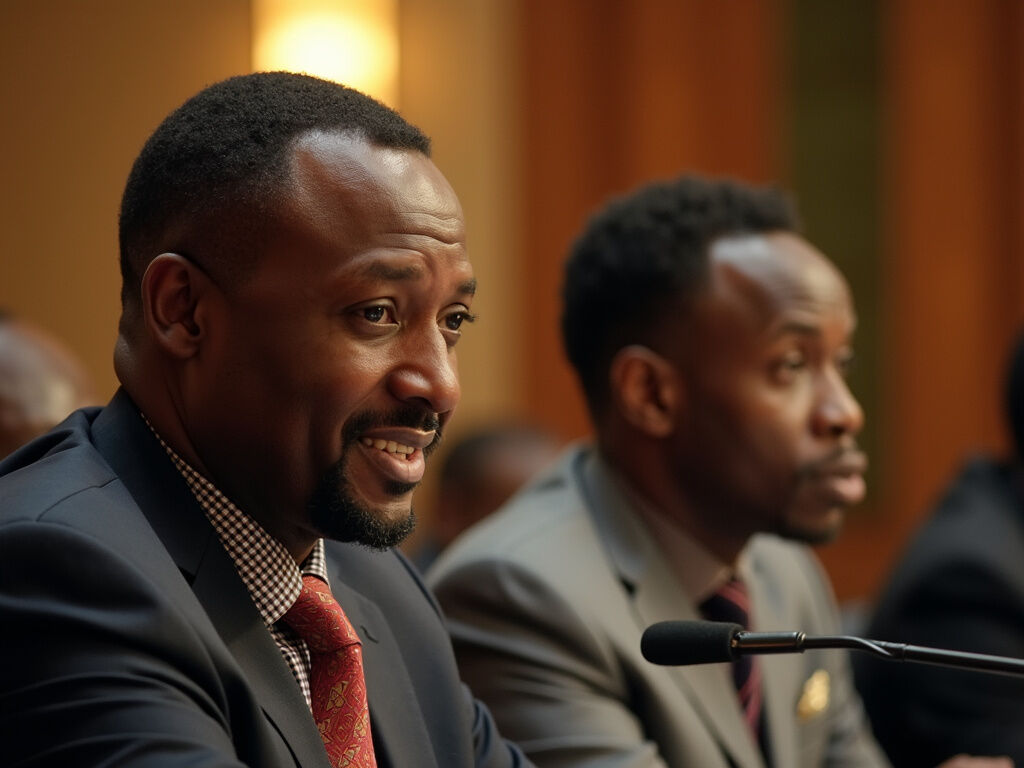
(A visual representation of Ghana’s political landscape, symbolising strategic flexibility in governance.)