


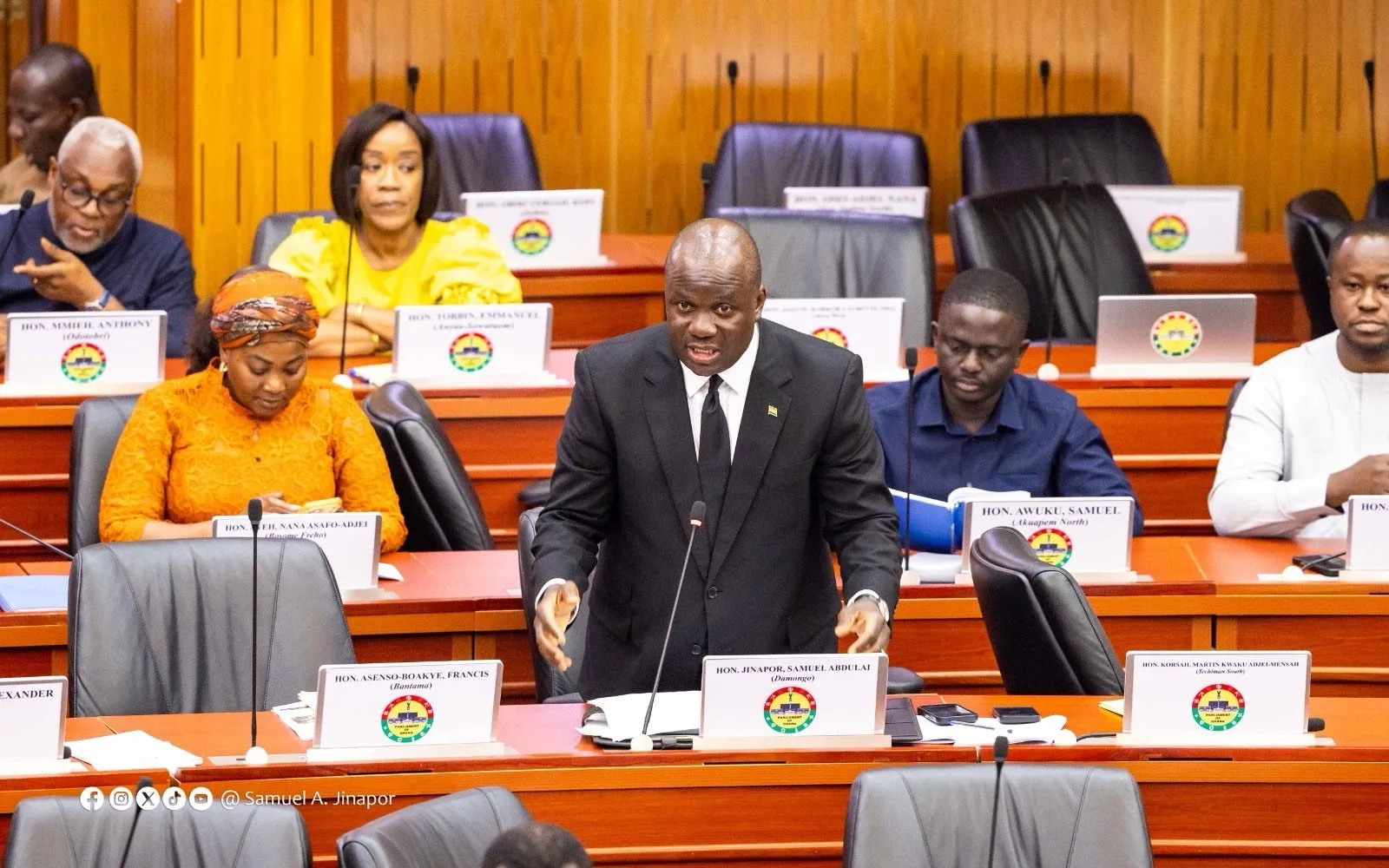
Jinapor questions gap between government’s economic claims and Ghanaians’ realities – Former Lands Minister says economic gains must translate into improved living conditions for ordinary Ghanaians.
The Ranking Member on Parliament’s Foreign Affairs Committee, Samuel Abu Jinapor, has questioned the extent to which the government’s reported economic gains are translating into tangible improvements in the lives of ordinary Ghanaians.
He argued that despite positive indicators presented in official economic figures, many households continue to face cost-of-living pressures, raising questions about the impact of the government’s economic policies on citizens.
Mr Jinapor raised the concerns while contributing to the debate on the 2027 Budget, under the theme “The Paper Economy versus the Pocket Economy.”
The former Minister for Lands and Natural Resources maintained that economic performance should not be assessed solely on the basis of headline figures but also on whether ordinary citizens are experiencing meaningful improvements in their daily lives.
He challenged the government to demonstrate how the economic progress it has been highlighting was translating into relief for households and improved living conditions.
Mr Jinapor also accused the government of recycling promises rather than delivering on commitments made to Ghanaians.
He cited the proposed construction of regional stadia as an example, questioning why the projects continued to feature as government commitments when concerns remained about their actual implementation.
He argued that budgetary allocations and policy announcements must result in completed projects and measurable benefits for citizens, rather than remain promises contained in official documents.
According to the former minister, the ultimate measure of the 2027 Budget should be its impact on the pockets and livelihoods of Ghanaians, rather than the economic projections and commitments presented by the government.
Diaspora Perspectives & UK-Ghana Linkages: The developments concerning ‘Jinapor questions gap between government’s economic claims and Ghanaians’ realities’ have sparked significant dialogue among Ghanaian communities in the United Kingdom and across Europe. Diaspora stakeholders and business associations continue to examine the economic and social ramifications, highlighting the enduring bridge between home institutions and global Ghanaian interests.
Policy Context & Institutional Resilience: Policy analysts and governance observers point out that addressing the core themes raised by this story requires steady regulatory adherence and stakeholder transparency. Sustained institutional performance and accountable administration remain central priorities for public and private sector stakeholders.