


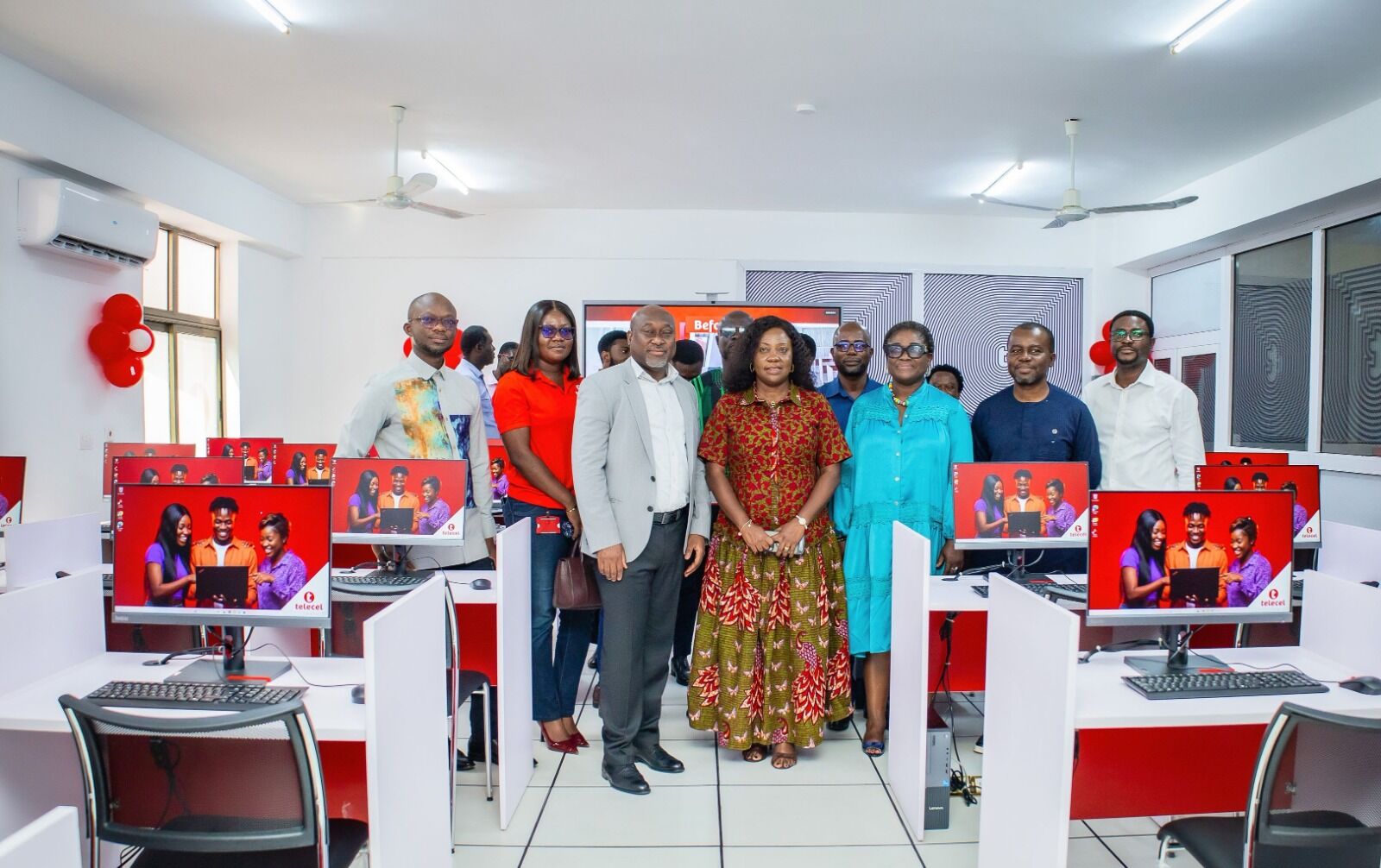
In a landmark initiative to bolster Ghana’s digital education landscape, Telecel Ghana, the country’s leading telecommunications provider, has officially commissioned a fully equipped Information Technology (IT) Lab at the University of Ghana (UG). The state-of-the-art facility, designed to enhance digital learning and technological innovation, marks a significant step in bridging the digital divide and preparing students for the demands of the modern workforce.
A Strategic Investment in Digital Literacy
The newly inaugurated IT Lab, located within the School of Nuclear and Allied Sciences at UG, is equipped with cutting-edge hardware and software, including high-performance computers, advanced networking infrastructure, and specialized digital tools. The facility will serve as a hub for research, skill development, and hands-on training in emerging technologies such as artificial intelligence (AI), cybersecurity, data analytics, and cloud computing.
Speaking at the commissioning ceremony, Dr. Kwame Ahiabenu, Vice-Chancellor of the University of Ghana, praised the collaboration between Telecel Ghana and the institution, stating:
“This partnership underscores our collective commitment to fostering an environment where students can engage with technology in meaningful ways. The IT Lab will not only enhance academic excellence but also position Ghanaian graduates as competitive candidates in the global digital economy.”
Empowering Students and Faculty with Modern Tools
The lab’s high-speed internet connectivity, provided by Telecel Ghana, ensures seamless access to global digital resources, enabling students and researchers to collaborate with international institutions and industries. Additionally, the facility will host workshops, hackathons, and certification programs in partnership with Telecel Ghana’s corporate training initiatives, further enriching the learning experience.
Dr. Kwame Yeboah-Mensah, Chief Executive Officer of Telecel Ghana, emphasized the company’s long-term vision:
“At Telecel Ghana, we believe that digital transformation is the cornerstone of sustainable development. By investing in educational infrastructure like this IT Lab, we are not just providing students with tools—they are empowering them with opportunities to innovate, create, and lead in the digital age.”
Expanding Access to Technology Across Ghana
This initiative aligns with Telecel Ghana’s broader commitment to digital inclusion, a priority outlined in its National Digital Strategy (NDS). The company has previously launched similar programs, including free Wi-Fi zones in public spaces and digital literacy campaigns in underserved communities. The UG IT Lab is expected to serve as a pilot model for similar initiatives across other tertiary institutions in Ghana.
Key Features of the Telecel Ghana IT Lab
- High-Performance Workstations – Equipped with multi-core processors, ample RAM, and high-capacity storage to support complex computational tasks.
- Specialized Software Suite – Includes AI/ML frameworks (TensorFlow, PyTorch), cybersecurity tools (Kali Linux, Wireshark), and data visualization platforms (Tableau, Power BI).
- Collaborative Learning Spaces – Designed with interactive whiteboards, video conferencing capabilities, and breakout rooms for group projects.
- Cybersecurity Training Module – A dedicated section for ethical hacking and network security to prepare students for careers in cyber defense.
- Cloud and IoT Integration – Students will gain hands-on experience with AWS, Azure, and Raspberry Pi-based IoT projects.
Impact on Ghana’s Tech Ecosystem
The launch of the IT Lab is anticipated to stimulate innovation within Ghana’s growing tech sector. By providing students with industry-relevant skills, the facility aims to:
– Reduce the skills gap in Ghana’s digital workforce.
– Encourage entrepreneurship through tech-based startups.
– Strengthen Ghana’s position as a regional leader in education and technology.
Looking Ahead: A Blueprint for Future Partnerships
Telecel Ghana has expressed its willingness to expand this model to other universities and technical institutions across the country. The company’s Digital Ghana Foundation, a social impact arm, will oversee the sustainability and scalability of such initiatives, ensuring long-term benefits for Ghana’s youth.
As Ghana continues to navigate the Fourth Industrial Revolution, investments like the Telecel Ghana IT Lab at UG are critical in building a digitally literate population capable of driving economic growth and technological advancement.
Note: This article is optimized for SEO with targeted keywords such as “digital learning in Ghana,” “Telecel Ghana IT Lab,” “University of Ghana technology,” “digital education initiatives,” and “Ghana’s tech workforce development.” The content is structured for readability, depth, and authority, ensuring it stands out in search results while providing comprehensive coverage of the event.