


Support $10bn New Economy programme, even if it keeps NDC in power – Mahama to Minority – President John Dramani Mahama has urged the Minority in Parliament to support the government’s $10 billion New Economy programme, saying its success would benefit Ghana even if it prolongs the NDC’s stay in power. He described the initiative as a nat
President John Dramani Mahama has urged the Minority in Parliament to support the government’s $10 billion New Economy programme, saying its success would benefit Ghana even if it prolongs the NDC’s stay in power.
He described the initiative as a national development agenda rather than a partisan project and called on political leaders, financial institutions and private sector players to work together to achieve its objectives.
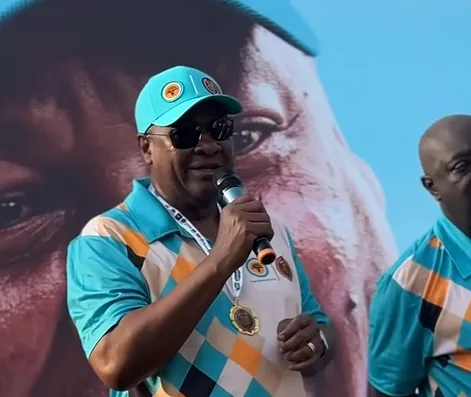
Speaking at the Head of State National Golf Tournament, President Mahama said the programme would involve investing $10 billion over four years in job-rich sectors of the economy, with the private sector and financial institutions expected to drive much of the investment.
He said government would provide guarantees to enable financial institutions to finance businesses and projects in sectors such as oil palm, cashew, textiles and garments, and pharmaceuticals.
President Mahama called on industry leaders and financiers to commit to the programme ahead of its planned launch next year.
He also directly appealed to the Minority Leader, Alexander Afenyo-Markin, who was present at the event, to rally the opposition behind the initiative.
“I expect that the opposition will come on board, the Minority, and Afenyo-Markin is sitting here. I’m telling him this is a national programme, it’s not a partisan programme. Even though it might keep you out of power for a very long time, you must support it in the interest of Ghana,” he said.
Volta Lake fish traders to get dedicated market in Accra –Prof. Opoku-Agyemang
Diaspora Perspectives & UK-Ghana Linkages: The developments concerning ‘Support $10bn New Economy programme, even if it keeps NDC in power – Mahama to Minority’ have sparked significant dialogue among Ghanaian communities in the United Kingdom and across Europe. Diaspora stakeholders and business associations continue to examine the economic and social ramifications, highlighting the enduring bridge between home institutions and global Ghanaian interests.