


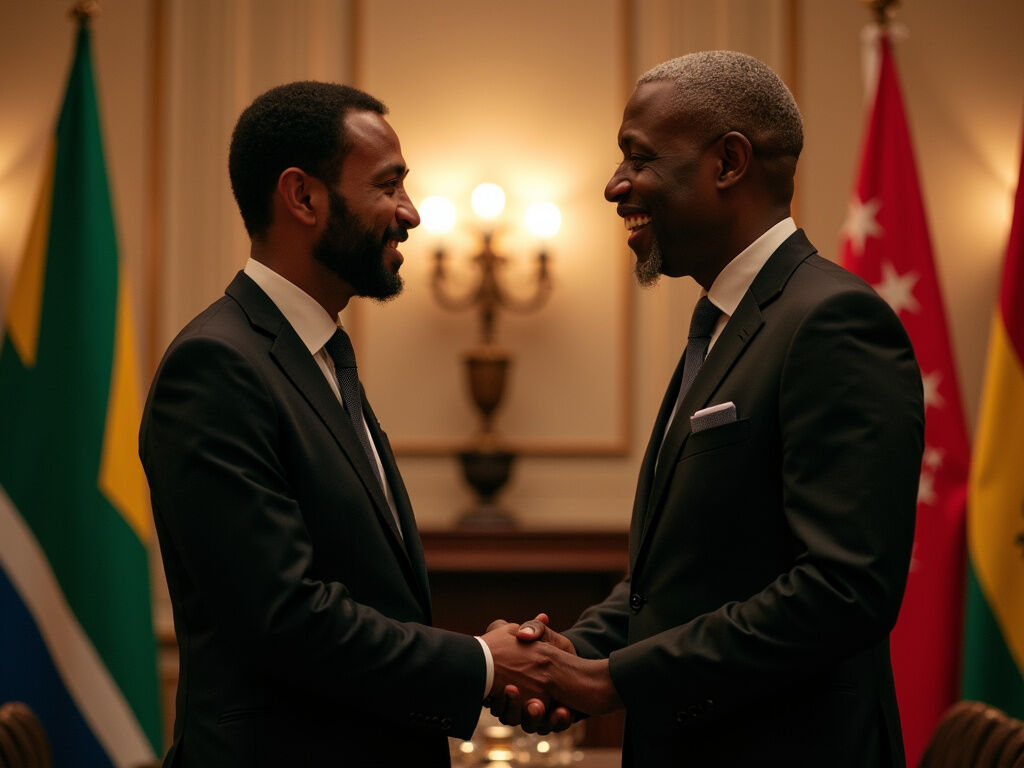
The South African government has categorically denied any formal request for a state visit by President Cyril Ramaphosa to Ghana, clarifying that ongoing diplomatic engagements between the two nations are focused on the Bi-National Commission (BNC) framework rather than high-profile presidential visits. The clarification comes amid reports suggesting otherwise, with Ghanaian government sources previously indicating that a proposed visit scheduled for August 2–4, 2026, had been rejected due to concerns over xenophobia and Afrophobia in South Africa, including the fatal attack on a Ghanaian national, 40-year-old Bashiru Isak, in Cape Town’s Khayelitsha township.
Diplomatic Miscommunication and Contextual Clarifications
A spokesperson for President Ramaphosa, Vincent Magwenya, addressed the confusion in a detailed statement, emphasizing that South Africa’s engagement with Ghana is exclusively centered on the BNC, a structured platform for bilateral cooperation established in 2019. The Second Session of the BNC was held in South Africa in March 2024, with Ghana slated to host the Third Session in the near future.
Magwenya underscored that the Bi-National Commission serves as the primary mechanism for addressing political, economic, defense, security, and social cooperation between the two nations. He reiterated South Africa’s commitment to strategic partnership with Ghana, framing the collaboration as mutually beneficial and aligned with the broader African Agenda—a reference to continental integration and economic development.
Distinguishing Between State Visits and Working Visits
The spokesperson clarified that South Africa’s latest correspondence with Ghanaian authorities was not a request for a state visit but rather a formal confirmation of the BNC’s operational framework, including the co-chairmanship by both presidents—a role already agreed upon during the 2024 session. He stressed that the discussions were part of routine bilateral relationship management, with dates for the next BNC session having been previously discussed among officials.
Magwenya dismissed the suggestion that the correspondence constituted a new request, describing it as “more of a formality than a new initiative” within an established process. He further differentiated between a state visit—a ceremonial diplomatic engagement—and a working visit tied to the BNC, which involves high-level officials addressing substantive policy matters.
Addressing Tensions and Rhetoric
In his statement, Magwenya expressed concern over what he termed “anti-South African rhetoric” emanating from Ghanaian authorities, including public statements by Ghana’s High Commissioner in South Africa and remarks from the Ghanaian Foreign Minister. He denied any basis for hostility, asserting that Ghanaian nationals have not been disproportionately affected by recent anti-illegal migration protests in South Africa.
The spokesperson condemned unverified claims, asserting that South Africa remains committed to maintaining warm diplomatic ties and mutually beneficial trade relations with Ghana. He reaffirmed the two nations’ shared goal of advancing continental development, emphasizing that diplomatic engagements would continue through formal channels to identify a mutually convenient date for the next BNC session.
Broader Implications for South Africa-Ghana Relations
The clarification comes at a time when African intra-continental relations are under scrutiny, particularly regarding migration policies, xenophobia, and economic cooperation. While South Africa has faced criticism for its handling of irregular migration, Ghana—like other African nations—has navigated complex diplomatic waters, balancing economic partnerships with human rights concerns.
Magwenya’s remarks highlight the delicate nature of state diplomacy, where perceived slights or miscommunications can escalate into broader tensions. However, both nations appear determined to prioritize cooperation over conflict, with the BNC serving as a stable platform for addressing shared challenges, from trade expansion to security collaboration.
As Ghana prepares to host the Third Session of the BNC, the focus remains on substantive outcomes rather than ceremonial visits, reinforcing the pragmatic approach both countries are adopting in their bilateral relations. The denial of a state visit request, therefore, underscores a shift toward structured, results-driven diplomacy—a departure from traditional high-profile presidential engagements that, while symbolic, may sometimes overshadow practical cooperation.