


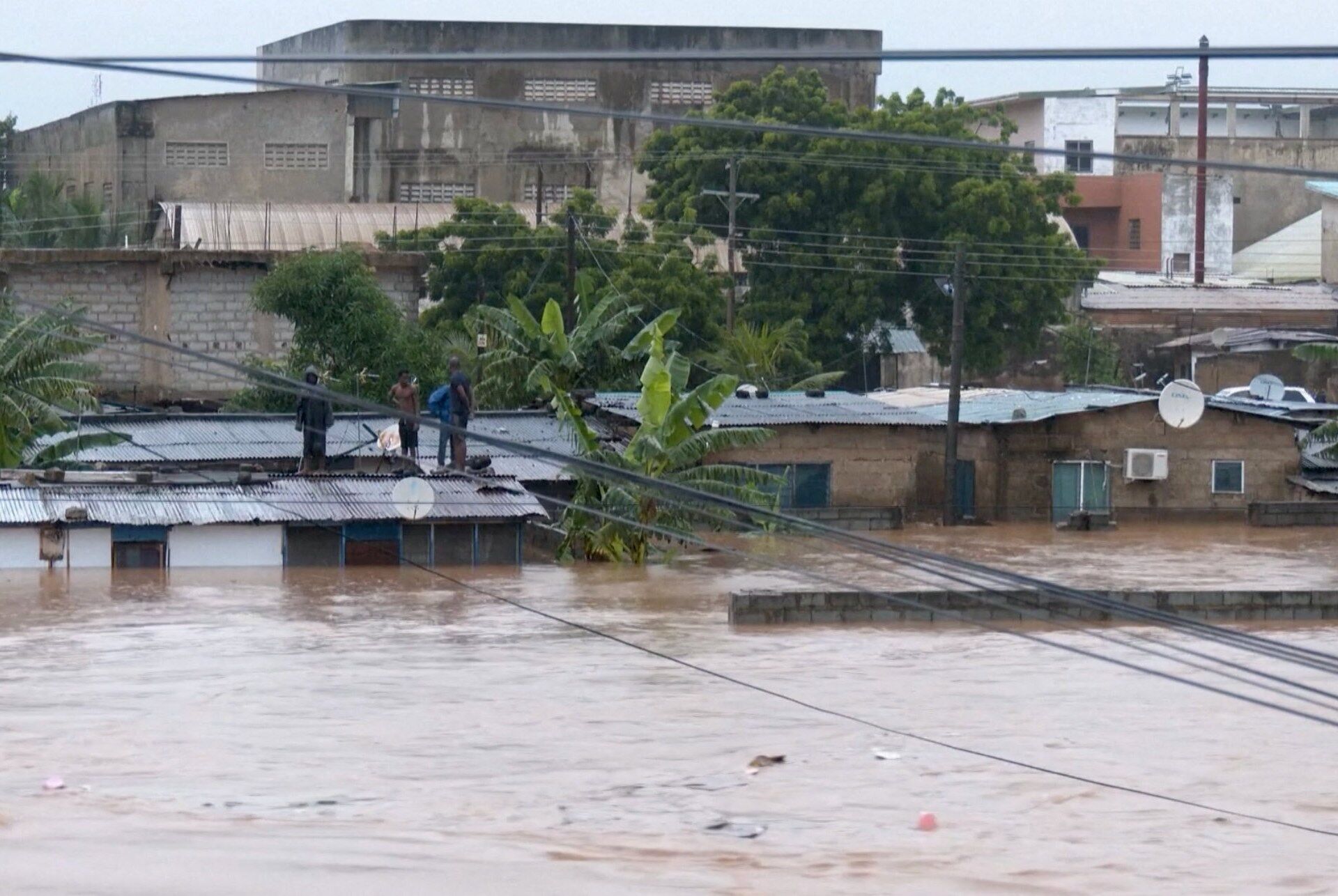
Accra, Ghana’s bustling capital and economic hub, has faced an unprecedented double crisis as devastating fires and catastrophic floods have paralyzed key areas, leaving thousands of residents stranded and their livelihoods in peril. Over the past 48 hours, the city has witnessed unprecedented destruction, with emergency services stretched to their limits as they scramble to rescue trapped individuals, extinguish blazes, and manage the aftermath of flooding in low-lying neighborhoods.
Fires Rage Across Accra: A Crisis of Unprecedented Scale
The fires, which have broken out in multiple high-density areas, have been fueled by strong winds, electrical faults, and poor waste management—common triggers in urban centers with aging infrastructure. The East Legon, Osu, and Kaneshie districts have been among the hardest-hit, with flames consuming residential buildings, market stalls, and small businesses within hours.
Witnesses reported thick plumes of black smoke choking the air, forcing residents to flee with little more than the clothes on their backs. The Accra Fire Service, already overwhelmed, has been reinforced with military personnel and volunteers, but the scale of the blaze has outpaced response efforts. Authorities have warned that secondary fires could erupt if the situation is not contained swiftly, particularly in areas where flammable materials like plastic waste and dry vegetation accumulate.
Floods Submerge Homes and Roads, Cutting Off Communities
Simultaneously, heavy downpours and poor drainage systems have triggered severe flooding in Accra’s most vulnerable areas. The James Town, Mamprobi, and Teshie neighborhoods, already prone to waterlogging, have been completely submerged, with streets turning into rivers and homes inundated up to roof level.
Residents have been trapped in their homes, unable to access food, clean water, or basic medical supplies. The Greater Accra Metropolitan Assembly (GAMA) has confirmed that over 500 homes have been damaged or destroyed, displacing hundreds of families. Schools, markets, and small businesses—critical lifelines for many—have been shut down, exacerbating economic losses.
Transport Chaos and Supply Chain Disruptions
The dual disasters have paralyzed Accra’s transportation network, with major roads like the Accra-Tema Highway and the Kaneshie-Nungua corridor rendered impassable due to burned-out vehicles, fallen trees, and flooded pathways. Public transport operators report near-total breakdowns, leaving commuters stranded for hours. The Metro Mass Transit (MMT) system, a vital artery for daily workers, has been temporarily suspended, adding to the city’s logistical nightmare.
Supply chains have also collapsed, with food and essential goods unable to reach markets. The Accra Central Market, one of West Africa’s largest, has been partially destroyed by fire, leading to shortages of fresh produce and household items. Traders, many of whom rely on daily sales, face immediate financial ruin, while consumers struggle to find basic necessities.
Government and Emergency Response Efforts
The Ghanaian government, under the leadership of President Nana Addo Dankwa Akufo-Addo, has declared a state of emergency in the affected areas. The Ministry of Interior has deployed additional fire brigades, police personnel, and medical teams to assist in rescue operations. The Army and Air Force have been called in to evacuate stranded residents and transport critical supplies.
However, critics have raised concerns about the slow response in some areas, particularly in informal settlements where access remains difficult. The National Disaster Management Organization (NADMO) has urged residents to avoid flooded areas, report fires immediately, and follow evacuation orders to prevent further casualties.
Long-Term Risks and Environmental Concerns
Experts warn that the combined impact of fires and floods could have lasting environmental consequences. The burning of plastic and other waste releases toxic fumes, contributing to air pollution that already ranks among the worst in West Africa. Meanwhile, floodwaters carrying debris and chemicals pose health risks, including waterborne diseases like cholera and typhoid.
Urban planners have long highlighted Ghana’s inadequate infrastructure—particularly in drainage systems and fire safety regulations—as a major vulnerability. Without sustained investment in resilient urban planning, future disasters of this magnitude are inevitable.
Residents Call for Immediate Relief and Reconstruction
For now, thousands of Accra residents remain displaced, sleeping in temporary shelters or with relatives. The Red Cross and other humanitarian organizations have begun distributing food, water, and medical aid, but long-term solutions—such as rebuilding homes, repairing infrastructure, and enforcing stricter building codes—remain critical.
Community leaders have urged the government to prioritize relief efforts, warning that economic recovery could take months. The Ghana Chamber of Commerce has also called for tax relief and financial support for businesses that have been devastated by the fires and floods.
A Warning for Ghana’s Urban Future
This crisis serves as a harsh reminder of the fragility of Ghana’s urban centers in the face of climate-induced disasters. With rising temperatures, unpredictable rainfall patterns, and rapid urbanization, Accra—and other major cities like Kumasi and Tamale—face increasing risks of similar catastrophes.
Unless proactive measures are taken—such as improving drainage systems, enforcing fire safety laws, and investing in climate-resilient infrastructure—future generations may face even greater hardships when the next storm hits.
For now, the people of Accra endure, their resilience tested by fire and flood. The question remains: Will their government act swiftly enough to prevent this from becoming a recurring tragedy?