


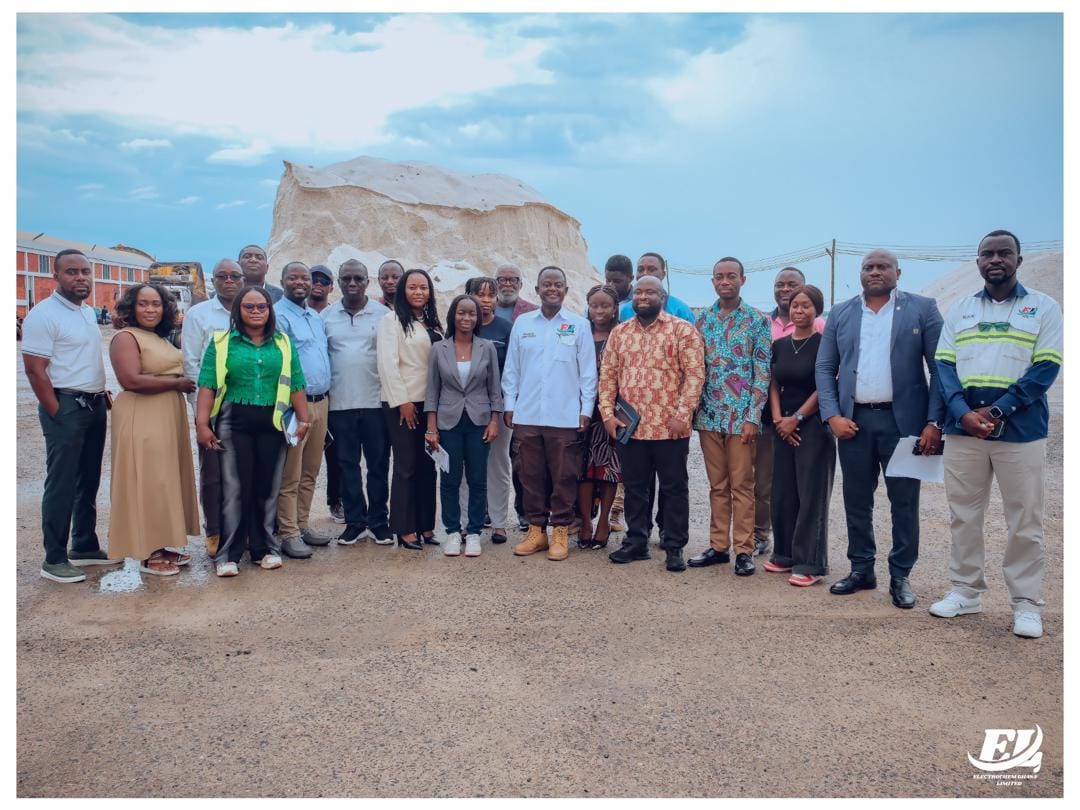
Ghana stands at a critical juncture in its economic trajectory, with a landmark $1 billion investment by Electrochem Industries Limited poised to transform the nation’s industrial and agricultural landscapes. The Salt Revolution—a monumental project aimed at establishing a world-class salt processing and export hub—represents more than just a commercial venture; it is a strategic imperative for Ghana’s long-term economic resilience, food security, and global competitiveness. Yet, the question remains: Why can Ghana afford neither to underinvest in this project nor delay its full realization?
A Strategic Imperative for Ghana’s Industrial Future
Electrochem’s $1 billion Salt Revolution is not merely about salt production. It is a multi-sectoral catalyst designed to anchor Ghana’s industrialization agenda, diversify its export base, and create high-value employment opportunities. The project, located in Tema Free Zone, will integrate salt mining, processing, and export logistics into a vertically integrated supply chain. This integration is pivotal for Ghana’s push toward manufacturing-led growth, a cornerstone of the government’s Ghana Beyond Aid and Ghana Industrialization Plan.
By establishing a salt-to-value-added-products ecosystem, Electrochem will enable Ghana to transition from being a raw material exporter to a high-value industrial player. The facility will produce industrial-grade salt, food-grade salt, and specialized salts for pharmaceuticals, water treatment, and agriculture, unlocking new revenue streams. For a nation that has long relied on commodities like cocoa and gold, this diversification is non-negotiable in the face of global market volatility.
Food Security and Agricultural Transformation
Ghana’s agricultural sector, while vibrant, faces persistent challenges—soil degradation, post-harvest losses, and reliance on imported fertilizers. The Electrochem project addresses these gaps by supplying high-quality agricultural salt, a critical input for soil conditioning, livestock feed, and food preservation. The $1 billion investment includes a dedicated agricultural salt division, ensuring that Ghanaian farmers gain access to cost-effective, locally produced inputs that enhance productivity.
Moreover, the project aligns with Ghana’s National Food and Nutrition Security Policy, which seeks to reduce food imports and improve nutritional outcomes. By reducing dependency on foreign salt imports—currently a significant drain on foreign exchange—the project will stabilize agricultural costs and bolster rural economies. This is particularly crucial as Ghana aims to achieve food self-sufficiency in key staples like maize, rice, and beans by 2025.
Job Creation and Human Capital Development
With Ghana’s youth unemployment rate hovering around 15%, large-scale industrial projects like Electrochem’s are economic lifelines. The $1 billion Salt Revolution is projected to create over 10,000 direct and indirect jobs, spanning mining, processing, logistics, and ancillary services. This aligns with the government’s Ghana Youth Employment and Entrepreneurship Development Policy, which prioritizes skills development and job creation in high-growth sectors.
Beyond employment, the project will upskill Ghanaian workers through partnerships with vocational training institutions, ensuring a localized workforce capable of operating advanced industrial facilities. This human capital investment is essential for sustaining Ghana’s industrial growth beyond the initial project phase.
Export Expansion and Foreign Exchange Resilience
Ghana’s foreign exchange reserves have faced pressure due to rising import costs and declining commodity prices. The Electrochem project will reverse this trend by positioning Ghana as a major global exporter of processed salt and derivatives. With annual production capacity exceeding 2 million metric tons, the facility will supply African, European, and Asian markets, reducing reliance on Middle Eastern and European salt imports.
The $1 billion investment includes state-of-the-art export infrastructure, including dedicated port facilities and cold storage, ensuring Ghana can compete in high-margin international markets. This export-driven growth will increase foreign exchange earnings, stabilize the cedi, and reduce the trade deficit—a critical priority for Ghana’s economic stability.
Environmental Sustainability and Green Industrialization
Critics often question the environmental impact of large-scale mining and industrial projects. However, Electrochem’s $1 billion Salt Revolution is designed with sustainability at its core. The project incorporates zero-waste processing technologies, renewable energy integration, and strict environmental compliance to minimize ecological footprint.
By adopting solar-powered processing units and water recycling systems, Electrochem will set a benchmark for green industrialization in Ghana. This aligns with the government’s Ghana Green Stimulus Package, which seeks to transition industries toward low-carbon pathways. A sustainable salt industry will not only preserve Ghana’s natural resources but also attract foreign direct investment (FDI) from environmentally conscious global firms.
Infrastructure Development and Regional Integration
The Tema Free Zone, where Electrochem’s facility is located, is a strategic hub for Ghana’s industrial and trade expansion. The $1 billion project will upgrade port facilities, road networks, and energy grids in the region, benefiting not just Electrochem but the entire Tema Metropolitan Area.
Additionally, the project will strengthen Ghana’s position as a regional industrial leader, fostering trade links with West African neighbors through initiatives like the AfCFTA (African Continental Free Trade Area). By becoming a key player in the regional salt supply chain, Ghana can reduce dependency on external markets and boost intra-African trade, a priority under the African Union’s Agenda 2063.
The Cost of Underinvestment: Economic and Strategic Risks
While the $1 billion investment is substantial, the opportunity cost of underinvestment is far greater. Here’s why Ghana cannot afford to delay or downsize the Electrochem project:
- Lost Economic Growth
- The project is estimated to add $500 million annually to Ghana’s GDP once fully operational.
-
Underinvestment would stifle industrialization, leaving Ghana trapped in low-value commodity exports.
-
Missed Foreign Direct Investment (FDI) Opportunities
- Large-scale industrial projects like this attract multiplier effects, including supply chain investments and technology transfers.
-
Delaying the project risks losing FDI to competitors like Nigeria, Kenya, and Rwanda, which are aggressively pursuing industrial hubs.
-
Increased Food Import Dependence
- Ghana currently imports millions of tons of salt annually, costing hundreds of millions in foreign exchange.
-
Underinvestment would prolong this dependency, weakening food security and economic stability.
-
Youth Unemployment Crisis Worsens
-
With over 1 million young Ghanaians entering the job market annually, failing to scale up industrial projects like Electrochem will exacerbate unemployment, fueling social unrest.
-
Strategic Geopolitical Vulnerability
- Ghana’s energy and food security are increasingly tied to global supply chains.
- By localizing critical industrial inputs, the Electrochem project reduces geopolitical risks associated with foreign supply chain disruptions.
Conclusion: A Non-Negotiable Investment for Ghana’s Future
The $1 billion Electrochem Salt Revolution is more than an industrial project—it is a blueprint for Ghana’s economic transformation. From job creation and export expansion to food security and green industrialization, the benefits are too significant to ignore.
Underinvestment would not only stunt Ghana’s industrial growth but also leave the nation vulnerable to global economic shocks. In an era where African nations are competing for FDI and industrial supremacy, Ghana must seize this opportunity with full commitment.
The $1 billion investment is an anchor for Ghana’s Vision 2040—a nation that is industrialized, food-secure, and economically resilient. To underinvest in this project would be to bet against Ghana’s future. The time to act is now.