


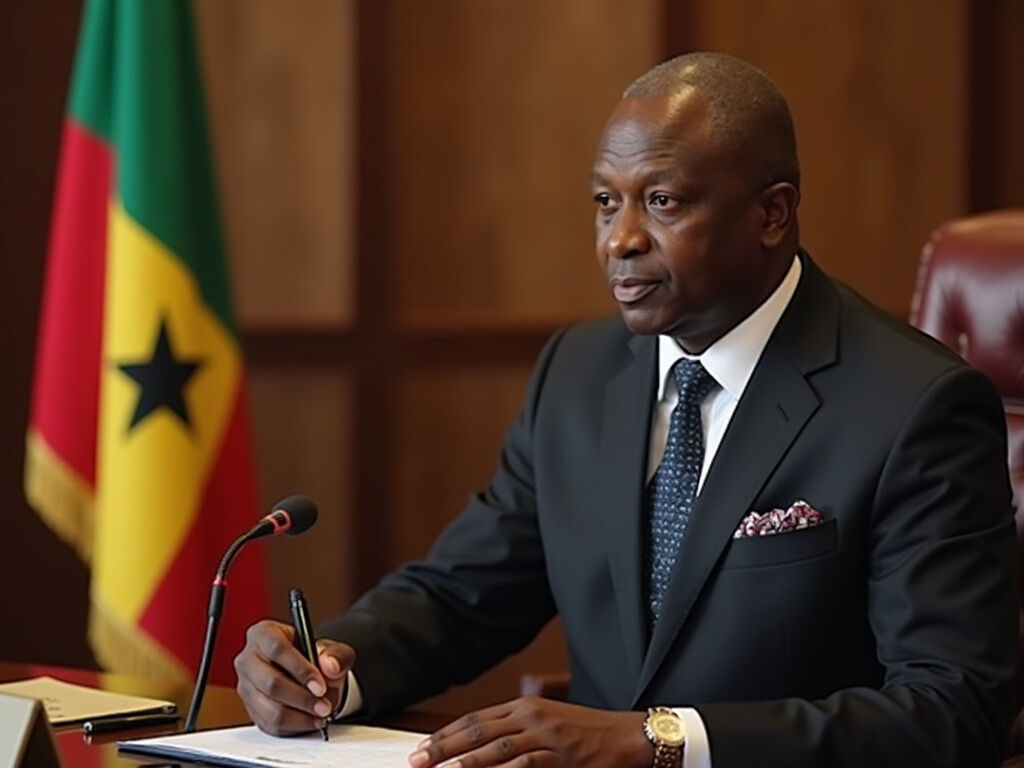
Ghana’s government has unambiguously rejected South Africa’s request for a state visit by President Cyril Ramaphosa, citing rising xenophobic and Afrophobic violence in the Southern African nation. The decision, announced by Ghanaian authorities, follows a series of brutal attacks on African migrants, including the murder of a Ghanaian national, 40-year-old Bashiru Isak, in Cape Town’s Khayelitsha township. The Ghanaian government has formally protested the killing to South African authorities, demanding accountability and justice.
A Diplomatic Rejection Rooted in Human Rights Concerns
The scheduled visit, originally planned for August 2–4, 2026, has been scrapped entirely. Ghana’s Foreign Ministry, in a firm statement, attributed the cancellation to the systematic targeting of African migrants in South Africa, where dozens of lives have been lost and thousands displaced since the outbreak of violence in early 2026. The ministry emphasized that Ghana will not normalize relations with a country where its citizens remain vulnerable to state-sanctioned or state-ignored violence.
South Africa’s response to Ghana’s allegations has been defensive and dismissive. The South African government denied any direct link between the killing of Isak and the broader anti-immigrant pogroms, labeling Ghana’s claims as “factually incorrect” and “not based on fact.” Police authorities, in statements to the Agence France-Presse (AFP), suggested the murder may have been “extortion-related” and disputed Ghana’s timeline, claiming the victim was shot in a barbershop on a Monday, not the Tuesday Ghanaian officials had stated.
However, Ghana’s Foreign Ministry reiterated its position, maintaining that independent investigations—including eyewitness accounts and forensic evidence—confirmed the killing occurred under suspicious circumstances, likely tied to the xenophobic attacks. Government sources confirmed that Isak’s death was a key factor in the visit’s cancellation, alongside growing public outrage in Ghana over the systematic persecution of African nationals in South Africa.
A Travel Advisory and Mass Repatriation Highlight Crisis
The escalating violence has prompted urgent action from Ghanaian authorities. On July 6, 2026, the University of Ghana issued a travel advisory, warning its staff and students against traveling to South Africa due to “ongoing anti-immigrant attacks” that pose “grave risks to personal safety.” The advisory cited reports of arson, assaults, and looting targeting African nationals, particularly those from Nigeria, Malawi, and Ghana.
In response to the crisis, Ghana has voluntarily repatriated 926 of its citizens from South Africa between May and June 2026. An additional 900 individuals have undergone health and security screenings and are awaiting further evacuation. The mass exodus reflects the deepening humanitarian crisis, as Ghanaian authorities prioritize the safety of its nationals over diplomatic engagements.
Historical Ties Under Strain: From Solidarity to Diplomatic Distrust
Ghana and South Africa have long shared deep historical and ideological bonds, rooted in their collective struggle against colonialism and apartheid. During the 1950s and 1960s, Ghana—under the leadership of Kwame Nkrumah—served as a sanctuary for South African anti-apartheid activists, including Alfred Hutchinson, a prominent ANC leader and writer who fled to Ghana after being acquitted on treason charges in 1958. Hutchinson, one of 156 defendants in the 1956 Treason Trial, found refuge in Ghana, which had just gained independence the previous year.
South African activists, such as Peter Molotsi of the Pan-Africanist Congress, described Ghana as “the Mecca of Pan-Africanism” upon arriving in 1960. The Ghanaian Bureau of African Affairs (BAA), established by Nkrumah, played a pivotal role in supporting African liberation movements, including those in South Africa. By the late 1950s and early 1960s, Accra had become a hub for exiled freedom fighters, with many South African activists contributing to anti-apartheid propaganda and resistance efforts.
Yet, despite this shared revolutionary legacy, the current diplomatic rift underscores how modern geopolitical realities have strained these historical ties. The rejection of South Africa’s High Commissioner designate, Linda Shongwe, during her scheduled credence presentation in June 2026 further illustrates Ghana’s growing disillusionment. Sources close to the matter revealed that Shongwe’s credentials were not accepted, a decision that symbolizes Ghana’s refusal to engage diplomatically under the current climate of xenophobia and violence.
A Turning Point in Africa’s Diplomatic Landscape
The cancellation of Ramaphosa’s state visit marks a significant shift in Ghana’s foreign policy, signaling that human rights violations—particularly those targeting African migrants—will no longer be ignored or tolerated. While Ghana and South Africa have historically stood in solidarity, the rising tide of Afrophobia in South Africa has forced Ghana to prioritize the safety of its citizens over traditional diplomatic courtesies.
Experts warn that this escalation in tensions could further destabilize intra-African relations, particularly if other nations follow Ghana’s lead in condemning xenophobic violence and withdrawing diplomatic support. The repatriation efforts, travel advisories, and formal protests sent by Ghana to South Africa indicate a new era of assertive diplomacy, where citizen safety takes precedence over state-to-state engagements.
As the situation in South Africa continues to deteriorate, Ghana’s stance serves as a cautionary example for other African nations, demonstrating that diplomatic relations must be built on mutual respect and protection of vulnerable populations—not just historical alliances. The Ramaphosa visit’s cancellation is not merely a symbolic gesture but a clear message: Ghana will not compromise on the lives of its people, even at the cost of strained bilateral relations.