


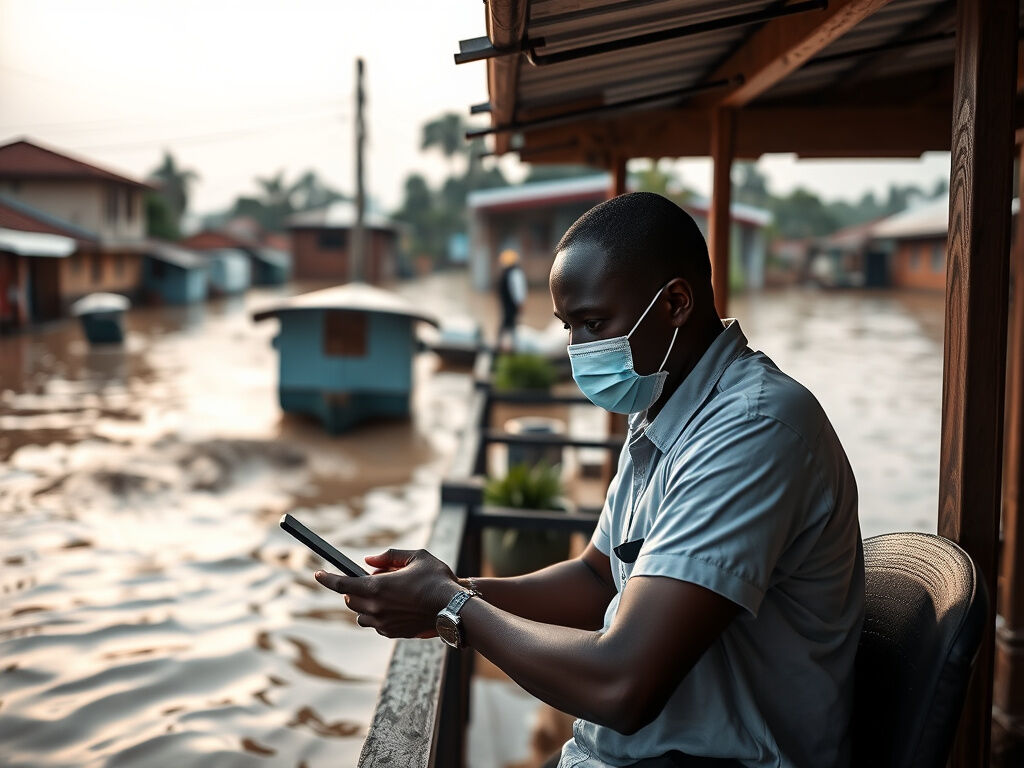
In the wake of the catastrophic floods that have ravaged multiple regions of Ghana, the Ghana Digital Centres (GDC) has issued a statement clarifying its decision to temporarily lay off a portion of its temporary staff. The move, which has sparked public debate, has been framed by the organisation as a necessary measure to ensure operational resilience and financial sustainability during an unprecedented humanitarian crisis.
The Impact of the Floods on National Infrastructure
The recent floods, triggered by relentless rainfall and exacerbated by poor drainage systems in urban centres, have left vast swathes of the country submerged. Accra, Kumasi, and other major cities have experienced severe flooding, disrupting essential services, including electricity, transportation, and digital infrastructure. The National Disaster Management Organisation (NADMO) has reported that over 100,000 people have been displaced, with property damage estimated in the hundreds of millions of cedis.
For organisations like the Ghana Digital Centres, which operates a network of public digital access hubs across the country, the floods have presented significant challenges. Many of these centres, located in flood-prone areas, have been partially or fully inundated, rendering them temporarily unusable. The Accra Digital Centre, situated in a low-lying district, was among the hardest hit, with water seeping into server rooms and damaging critical equipment.
The Decision to Temporarily Lay Off Temporary Staff
In response to these disruptions, the Ghana Digital Centres announced on October 15, 2023, that it would be placing approximately 30% of its temporary staff on temporary leave. The organisation cited financial constraints, operational risks, and the need to prioritise core services as key reasons for this decision.
A press release from the GDC’s Executive Director, Dr. Kwame Agyeman, stated:
“While we remain committed to our mission of bridging the digital divide, the current situation demands pragmatic measures. Our temporary staff, who are primarily engaged in administrative and support roles, will be placed on leave until further notice. This is not a permanent solution but a necessary adjustment to ensure the sustainability of our operations during this crisis.”
The move has drawn mixed reactions from both staff members and the public. Some temporary workers have expressed concern over financial instability, particularly those who rely solely on their GDC income. Others, however, have acknowledged the validity of the organisation’s concerns, given the unprecedented scale of the flooding and its broader economic impact on the country.
Financial and Operational Challenges Faced by GDC
The Ghana Digital Centres operates under the Ministry of Communications and Digitalisation, receiving both government funding and private sector partnerships to sustain its operations. However, the floods have disrupted revenue streams, including:
– Reduced foot traffic at digital centres due to restricted movement and safety concerns.
– Increased operational costs for repairs, cleanup, and temporary relocations.
– Potential loss of partnerships if stakeholders perceive the organisation as unstable.
Dr. Agyeman further explained that the temporary layoffs were not a reflection of the organisation’s financial health but rather a precautionary measure to preserve jobs in the long term. He emphasised that the GDC remains fully operational in unaffected centres and is actively working with NADMO and local authorities to assess damage and restore services.
Public and Stakeholder Reactions
The decision has polarised public opinion, with some digital rights advocates criticising the move as callous, given the vulnerable status of temporary workers. The Ghana Federation of Labour (GFL) has called for urgent dialogue between the GDC and affected staff to explore alternative solutions, such as reduced hours or wage adjustments rather than outright layoffs.
On the other hand, government officials have endorsed the GDC’s stance, with the Minister of Communications and Digitalisation, Kwaku Asante-Oduro, stating:
“In times of national crisis, every organisation must do what is necessary to protect its core functions. The GDC’s decision is a responsible one, and we are working to ensure that affected staff receive support during this period.”
Support Mechanisms for Affected Staff
In an effort to mitigate the impact of the layoffs, the GDC has announced several support measures, including:
– Short-term financial assistance for affected temporary staff, funded by emergency relief funds.
– Reassignment opportunities in less affected centres where demand for digital services remains high.
– Skill development programmes to help staff transition into remote or hybrid roles if their positions are not immediately reinstated.
Additionally, the Ministry of Labour and Social Affairs has been engaged to explore unemployment benefits for those who remain out of work for an extended period.
Long-Term Implications for Digital Access in Ghana
Beyond the immediate crisis, the floods have highlighted vulnerabilities in Ghana’s digital infrastructure. The GDC’s temporary layoffs serve as a warning sign of how natural disasters can disrupt essential services, particularly in public-private partnerships that rely on stable funding and workforce continuity.
Experts suggest that greater investment in flood-resistant infrastructure—such as elevated server rooms, reinforced buildings, and decentralised digital hubs—could future-proof such organisations against similar crises. The Ghana Digital Centres has already begun assessing its long-term resilience strategy, with plans to upgrade flood-prone centres in collaboration with international development partners.
Conclusion: Balancing Crisis Response with Humanitarian Considerations
The Ghana Digital Centres’ decision to temporarily lay off staff amid the floods is a complex balancing act between operational survival and social responsibility. While the move has sparked controversy, it reflects a realistic assessment of the economic and logistical challenges facing the organisation in the aftermath of one of Ghana’s worst flooding events in decades.
As the country gradually recovers, the GDC’s ability to restore full operations—while ensuring fair treatment of its workforce—will be critical in maintaining public trust in digital inclusion initiatives. For now, the organisation remains focused on recovery, with a clear commitment to reintegrating staff once stability is restored.
The floods have underscored the fragility of public services in Ghana, and the GDC’s response serves as a case study in how government-backed institutions navigate crises while protecting both their mission and their people.