


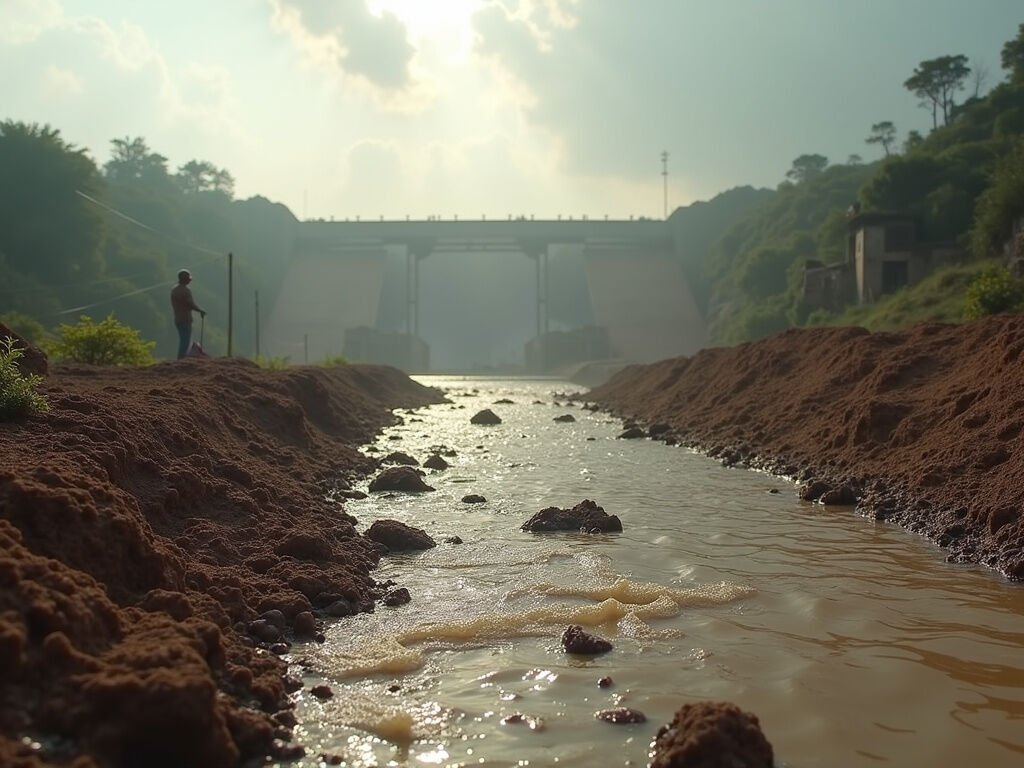
Ghana’s government has been urged to pursue formal compensation from the International River Basin Organization (IGR) and the government of Burkina Faso following the catastrophic Bagré Dam spillage in early 2024. The incident, which submerged vast tracts of farmland, displaced thousands of residents, and disrupted ecosystems, has left environmental scientists and local communities demanding accountability and restitution.
The Scale of the Disaster
The Bagré Dam, located on the Black Volta River near the border with Burkina Faso, is a critical hydroelectric project jointly managed by Ghana and Burkina Faso. However, in February 2024, an unprecedented spillage of water from the dam—exceeding its designed capacity—flooded over 10,000 hectares of arable land, destroyed infrastructure, and forced the evacuation of nearly 20,000 people in the Bono, Bono East, and Northern Regions of Ghana.
The Volta River Basin Development Authority (VRBDA), responsible for dam operations, attributed the spill to unpredictable rainfall and technical malfunctions, but critics argue that poor maintenance, inadequate contingency planning, and geopolitical tensions between Ghana and Burkina Faso played a significant role.
Environmental and Economic Fallout
The environmental consequences of the spill have been far-reaching and irreversible in some cases. Key impacts include:
- Loss of Agricultural Productivity: The submerged lands, primarily used for maize, rice, and cassava cultivation, could have sustained thousands of smallholder farmers for months. The 2024 farming season has already been severely compromised, with estimates suggesting a loss of over GH₵100 million in potential revenue for affected communities.
- Water Pollution and Ecosystem Damage: The sudden influx of water disrupted aquatic habitats, leading to mass fish deaths and the contamination of drinking water sources in downstream areas. The Black Volta River, a vital waterway for both countries, now faces long-term ecological degradation.
- Health Risks: The floodwaters carried sewage, industrial waste, and agricultural runoff, increasing the risk of waterborne diseases such as cholera and dysentery in affected regions.
- Displacement and Social Unrest: Entire villages were cut off from essential services, with schools and health facilities rendered inaccessible. The psychological trauma of sudden displacement has left many residents reluctant to return, fearing further flooding.
Legal and Diplomatic Failures
Despite Ghana’s formal protests to Burkina Faso and the International Commission on the Niger Basin (ICNB), no compensation package has been proposed. Environmental scientist Dr. Kwame Agyeman, a senior lecturer at the University of Ghana’s School of Biological Sciences, has vehemently criticized the government’s response, stating:
“The Bagré Dam spill is not just an engineering failure—it is a human rights and environmental justice issue. Ghana has no legal recourse under current bilateral agreements, but we must demand restitution for lost livelihoods, environmental remediation, and long-term flood mitigation strategies.”
Dr. Agyeman further emphasized that Burkina Faso’s sudden release of excess water—without prior consultation—violated the 1978 Volta-Black Volta Treaty, which mandates joint management of transboundary water resources. He called for:
– A binding arbitration process under the United Nations Convention on the Law of the Non-Navigational Uses of International Watercourses (UN Watercourses Convention).
– Full environmental impact assessments (EIAs) to restore degraded lands and water systems.
– Financial compensation for displaced farmers, covering seed replacement, livestock losses, and alternative livelihood programs.
Government Response and Public Outcry
While the Ministry of Water Resources and Sanitation has acknowledged the severity of the crisis, officials have refrained from making direct demands for compensation, citing “ongoing diplomatic negotiations.” However, local leaders and civil society groups have mounted pressure, organizing protests and public hearings to demand action.
The National Association of Small-Scale Farmers and Fisherfolk (NASSFFO) has led a petition drive, collecting signatures from over 5,000 affected farmers, urging the government to:
– Freeze all dam operations until a full safety audit is conducted.
– Establish a compensation fund for displaced communities.
– Strengthen Ghana’s legal position in future disputes by ratifying the UN Watercourses Convention.
Global Precedents and Lessons Learned
The Bagré Dam spill is not an isolated incident. Similar transboundary water disputes have occurred globally, with compensation and reparations often serving as the only viable solution for affected nations. For example:
– The Aswan High Dam (Egypt-Sudan): Egypt has historically blocked Sudan’s access to Nile waters, leading to legal battles and economic strain for downstream countries.
– The Indus Water Treaty (India-Pakistan): Despite tensions, compensation mechanisms exist for water-related damages.
– The Three Gorges Dam (China): Flooded 1,300 villages, displacing 1.3 million people, with limited compensation for environmental losses.
Ghana’s case, however, presents a unique challenge due to the lack of a robust legal framework for transboundary water disputes. Experts argue that proactive measures, such as joining regional water treaties and investing in early warning systems, could have mitigated the crisis.
The Path Forward: What Needs to Be Done?
To ensure justice and sustainable recovery, the following steps are critical:
- Formal Compensation Demand
- Ghana must formally request financial restitution from Burkina Faso, citing breach of treaty obligations and damage to national assets.
-
A joint technical team from both countries, under UN supervision, should assess economic and environmental losses.
-
Legal Reforms
- Ratify the UN Watercourses Convention to strengthen Ghana’s legal standing in future disputes.
-
Amend the Volta-Black Volta Treaty to include compensation clauses for unintended spills.
-
Environmental Restoration
- Funded by both governments, a large-scale reforestation and wetland restoration project should be launched to prevent soil erosion and water pollution.
-
Alternative irrigation systems must be introduced to protect future crops from flooding.
-
Community Support Programs
- Cash transfers and microfinance loans should be provided to rebuild livelihoods.
-
Vocational training in fisheries, agroforestry, and renewable energy can diversify income sources for displaced communities.
-
Strengthened Dam Safety Protocols
- Independent audits of the Bagré Dam’s structural integrity must be conducted annually.
- Emergency spillway systems should be upgraded to prevent future catastrophic releases.
Conclusion: A Call for Accountability
The Bagré Dam spillage is a wake-up call for Ghana’s water management policies. While technical failures may have contributed to the disaster, the lack of accountability from Burkina Faso and the government’s reluctance to demand compensation have exacerbated the crisis.
Environmental scientist Dr. Agyeman warns that without immediate action, Ghana risks further ecological degradation, economic losses, and social unrest. The nation must stand firm in its demands for justice, ensuring that future generations are not left to bear the brunt of preventable disasters.
As Ghana moves forward, the lessons from Bagré must shape a new era of transboundary water cooperation—one that prioritizes equity, sustainability, and legal enforceability. Only then can the devastated communities of the Volta Basin hope for true recovery and resilience**.