


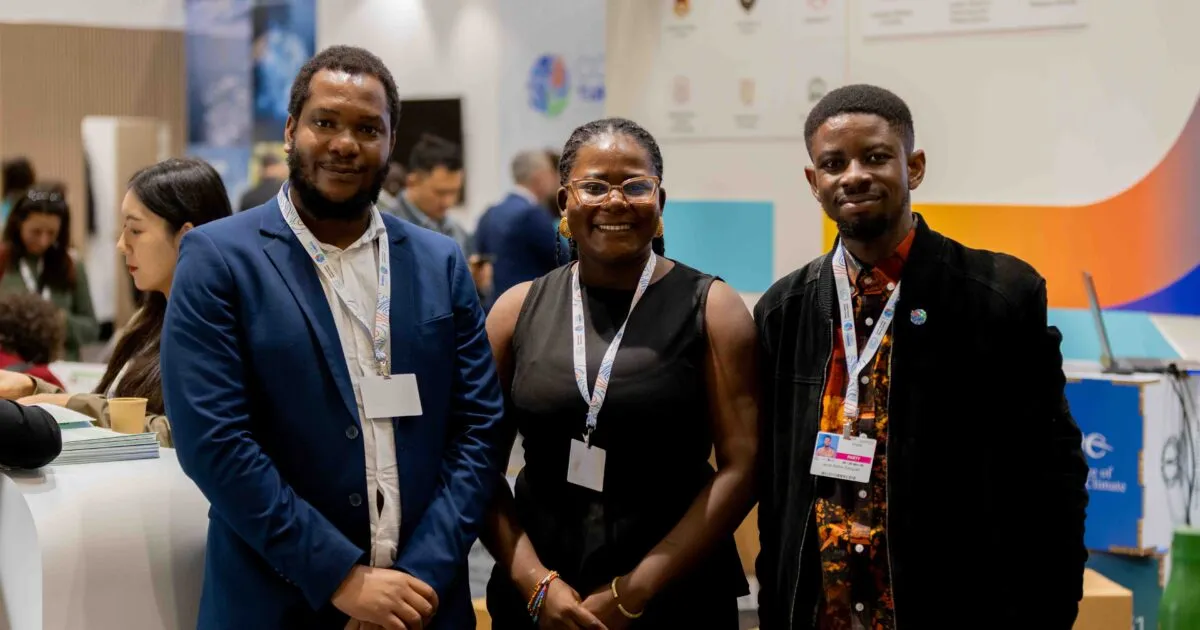
COP31: CDKN and BTS place climate knowledge and institutional partnerships at the centre of engagement – The role of young people in shaping global climate policy is receiving renewed attention at COP31, as the conference seeks to move youth participation beyond symbolic representation towards greater influence in climate decision-making.
At the 31st United Nations Climate Change Conference in Antalya, Türkiye, the COP31 Presidency is using its Youth and Education Action Agenda to strengthen youth participation in negotiations, advance climate education and expand opportunities for young people in the green economy.
The initiative comes as an estimated 1.8 billion people worldwide are aged between 10 and 24, making young people a significant constituency in discussions about the future of climate action.
Under the leadership of COP31 President Murat Kurum, the agenda sets out an ambition to integrate climate change into education curricula by 2030 and build stronger climate awareness across society by 2035.
It also seeks to give young people more meaningful opportunities to contribute to formal climate negotiations and the development of climate solutions.
The ambition is reflected in engagements during the opening days of the conference, where youth negotiators are preparing to take part in negotiations, exchange ideas and explore ways to translate knowledge into practical climate responses.
The need for stronger youth representation has also featured in discussions involving African climate representatives.
In an engagement reported by MyJoyOnline, the Chair of the African Group of Negotiators on Climate Change (AGN), Nana Dr Antwi-Boasiako Amoah, pledged support for strengthening the participation of children and young people in international climate negotiations.
He identified the Just Transition Work Programme and Action for Climate Empowerment (ACE) as potential avenues for bringing their concerns into the global climate process.
Such participation could help ensure that decisions made at the international level take account of the experiences of communities already confronting the effects of climate change.
Local observations, community experiences and lessons from regional projects can provide valuable insights into emerging environmental challenges and possible responses.
Scientific evidence remains essential for understanding climate systems, assessing risks and identifying effective interventions. However, communities also possess knowledge developed through generations of interaction with their environments and experience adapting to changing conditions.
Partnerships to connect knowledge and policy
Beyond negotiations and youth-focused commitments, COP31 is providing opportunities for climate-focused institutions and organisations to strengthen collaboration, exchange knowledge and build relationships that can support action beyond the conference.
The Climate and Development Knowledge Network (CDKN) and Beyond the Science (BTS) are seeking to advance these priorities through an approach that connects climate negotiations, development knowledge, research, policy engagement and public communication.
Their engagement at COP31 is intended to contribute to wider discussions on climate and development priorities while strengthening the exchange of knowledge and perspectives that can inform international climate action.
For CDKN and BTS, this also means ensuring that climate knowledge does not remain confined to research institutions, technical discussions and international conference platforms.
Their participation offers an opportunity to strengthen existing relationships, explore new areas of cooperation and amplify discussions that could influence climate responses at national, regional and community levels.
The COP31 Youth and Education Action Agenda provides a broader framework for turning these ambitions into long-term opportunities.
Its five priority areas include strengthening climate literacy through education, promoting international cooperation among youth networks, equipping young people with skills for the green economy and establishing high-level dialogue platforms where youth leaders can engage directly with decision-makers.
Together, these priorities seek to connect climate education with practical opportunities for young people to participate in policy discussions, develop relevant skills and contribute to climate solutions.
The opening engagements at COP31 have brought together several dimensions of climate action, including youth participation, scientific research, local experiences, education, institutional partnerships and policy engagement.
From preparing young negotiators for formal discussions to exploring how local knowledge can complement scientific evidence, the activities highlight the importance of connecting different voices and sources of knowledge in addressing the climate crisis.
As negotiations continue in Antalya, the measure of progress will extend beyond the number of young people attending sessions or the commitments announced at the conference.
It will depend on whether young people gain genuine opportunities to influence decisions, climate education reaches more communities, institutions establish meaningful partnerships and knowledge generated through research and lived experiences informs solutions on the ground.
COP31 presents an opportunity to bring these efforts together, connecting climate science with policy, strengthening cooperation through partnerships and ensuring that young people and affected communities have a meaningful role in shaping decisions about the future.