


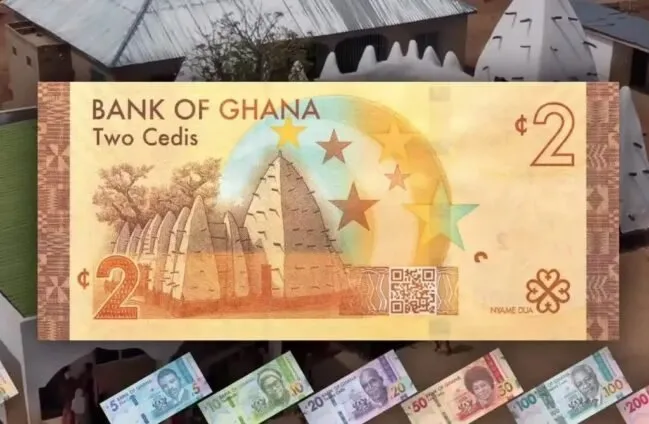
Christian group calls for removal of Larabanga Mosque from new GH¢2 note – The Alliance of Christian Apologists, Ghana, has urged the Government and the Bank of Ghana to remove the image of the historic Larabanga Mosque from the reverse of the new GH¢2 banknote before the Heritage Series notes enter circulation on 1 December 2026.
In a press statement dated 16 November 2026, the group said it does not oppose Islam or the preservation of Ghana’s Islamic heritage.
It recognises the Larabanga Mosque, widely regarded as one of the oldest surviving mosques in West Africa, as an important historical and cultural site.
Its objection centres on the decision to present the mosque as a national symbol of religious tolerance and diversity.
The new GH¢2 note carries the theme of religious freedom. The front features Cardinal Peter Poreku Dery, the late Catholic Archbishop of Tamale and Ghana’s first cardinal from the north. The reverse depicts the Larabanga Mosque, paired with the Adinkra symbol Nyame Dua (tree of God).
Official descriptions present the pairing as a representation of Ghana’s interfaith heritage and peaceful coexistence.
The Alliance argues that religious heritage is not the same as religious tolerance.
It cites public reports, including coverage by the Daily Graphic, in which Larabanga community leaders stated that churches and traditional shrines have historically not been permitted to operate within the community, a practice they attributed to the customs of their forefathers.
“How can a community known for restricting the establishment of other faiths’ places of worship be presented on Ghana’s national currency as a symbol of religious tolerance and diversity?” the statement asked.
The group maintains that placing the mosque on the note under a narrative of tolerance risks rewarding religious exclusivity with national recognition and sends the wrong message to future generations.
National currency, the Alliance said, is more than money. It is a representation of national identity and the values a country chooses to celebrate.
The group therefore called on the authorities to look beyond religious monuments and give greater recognition to individuals and institutions—Ghanaian and non-Ghanaian—whose contributions advanced education, healthcare, vocational and technical skills training, constitutional development, and democracy.
Its three specific demands include a call for the removal of the Larabanga Mosque from the proposed currency before the notes enter circulation in December; review the criteria used to select monuments and personalities for national currency and give greater consideration to those whose contributions demonstrably advanced education, healthcare, skills development, freedom and democracy in Ghana.
The Alliance stressed that its position is not an attack on Muslims or Islam.
“It is a call for historical honesty and consistency,” the statement said.
If the mosque is presented simply as an Islamic heritage monument, the group said it would have no objection. Presenting it as a symbol of religious tolerance and diversity, however, requires serious reconsideration.
“Ghana should not place a symbol of religious exclusivity and intolerance on its currency and call it religious tolerance,” the statement concluded.