


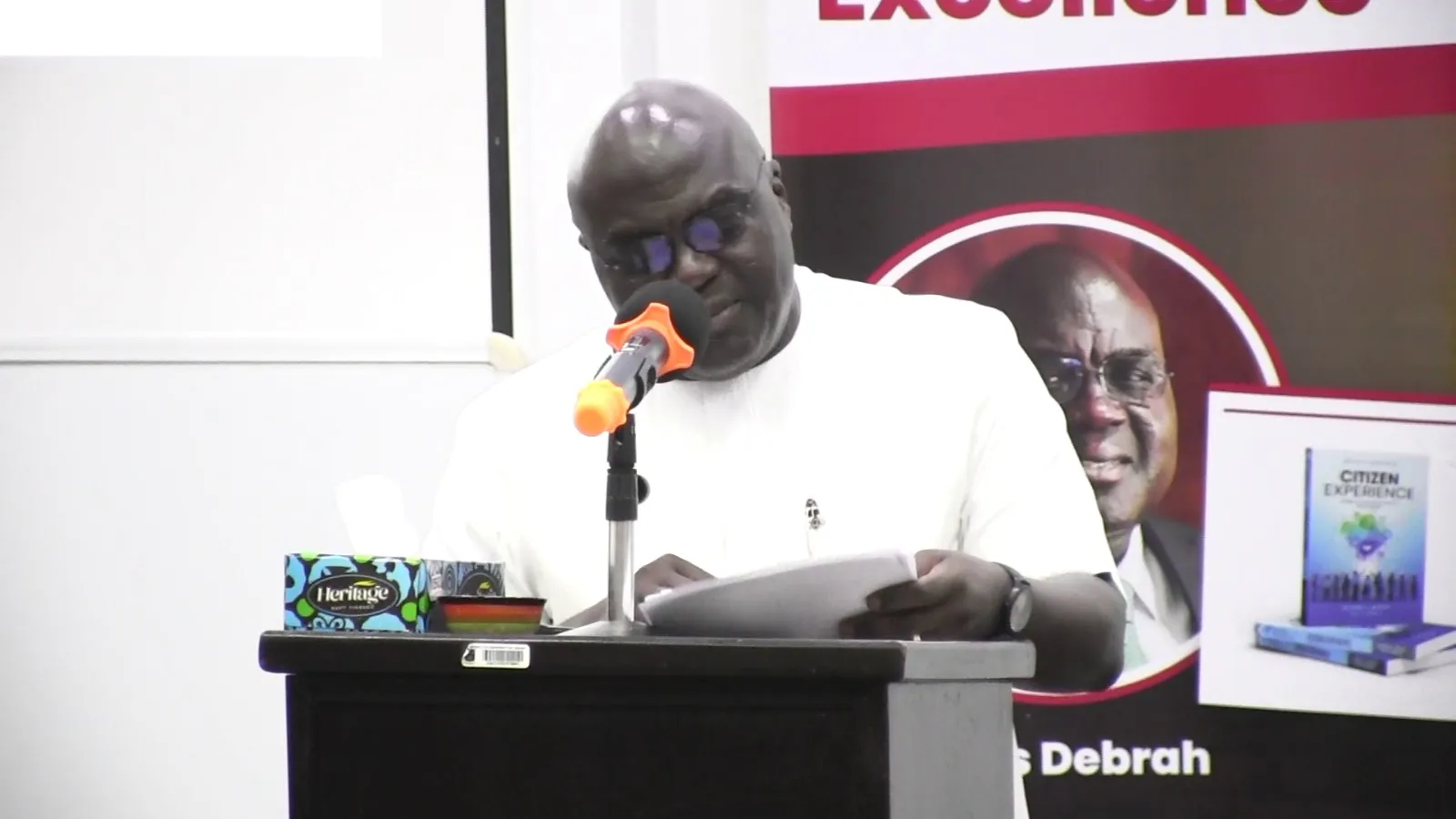
Chief of Staff advocates citizen-centred reforms in public service delivery – Chief of Staff Dr. Julius Debrah has challenged public institutions to prioritise citizens’ needs in service delivery, calling for reforms to eliminate bureaucratic delays, improve institutional coordination and strengthen accountability.
He said the effectiveness of public institutions should be measured by how well they respond to citizens rather than merely by their adherence to administrative procedures.
Speaking at the second Citizen Experience Workshop on Friday, November 27, 2026, at the China Europe International Business School (CEIBS) in Accra, Dr Debrah said the Civil Service existed primarily to improve people’s lives and urged institutions to make clear service commitments backed by adequate resources.
“Look at your institution’s plan and see if you can find a citizen in it. Who have you promised to serve and what have you promised them?” he asked.
He also called for a review of administrative processes to eliminate unnecessary steps and repeated requests for information, which often force citizens to make multiple visits to public offices.
Renowned marketing scholar Professor Robert Ebo Hinson challenged public institutions without customer or citizen experience strategies to develop and implement them before 2027.
He said institutions that understand their stakeholders, identify what they value and deliver on those expectations would be better positioned to distinguish themselves from others.
“Perfect customer experiences will separate the goat from the sheep,” Professor Hinson said.
He urged institutions without customer experience or citizen experience strategies to begin developing them, warning that service quality would increasingly determine institutional performance.
The Head of the Civil Service, Dr Evans Aggrey-Darkoh, said public office was a position of trust, with public servants exercising authority and managing state resources on behalf of citizens.
“Public authority is a public trust,” Dr Aggrey-Darkoh said, adding that institutions must recognise that they exercise their powers and use public resources on behalf of the people.
He stressed that accountability required public officials to explain and justify their decisions, disclose relevant information and respond to scrutiny. He said oversight and answerability were necessary to deter corruption, favouritism, negligence and the misuse of public resources.
The Vice Chairperson of the Public Services Commission, Dr Irene Stella Agyenim-Boateng, said citizens often formed their perception of entire public institutions based on their interactions with a few frontline officers.
She warned that one negative encounter could damage an institution’s reputation, regardless of the quality of service provided by other employees.
“Just one weak link in that whole value chain” could be enough for a community to conclude that an institution was disrespectful, she said.
Dr Agyenim-Boateng urged public servants to respect the authority entrusted to them by citizens and ensure that people seeking services were treated with dignity.
She also called on institutions to improve access, simplify procedures and provide clear information about the services citizens request and their expected outcomes.