


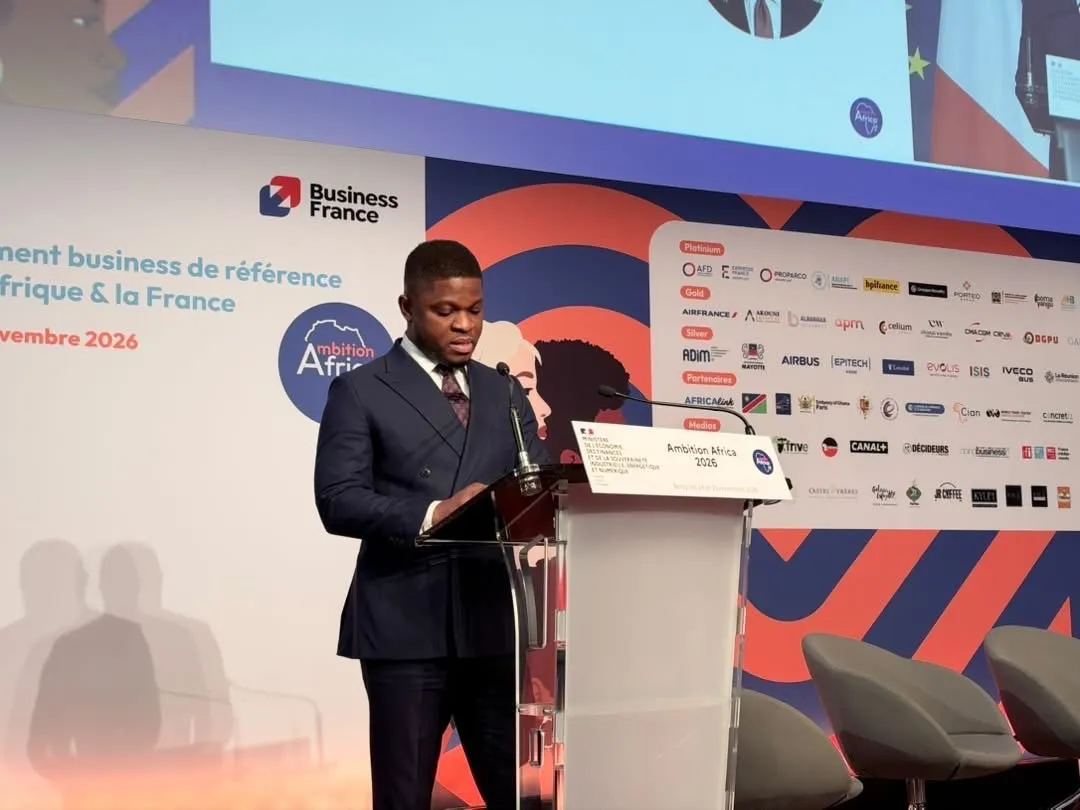
Ambition Africa Forum: GoldBod CEO courts European investors for gold refining, jewellery industry – Chief Executive Officer of the Ghana Gold Board (GoldBod), Sammy Gyamfi, has called on European investors to partner with Ghana to develop its gold industry through investments in local refining, jewellery manufacturing, responsible mining and other value-addition activities.
He said strategic partnerships between Ghana and European investors would help transform the country’s gold industry, create employment opportunities and ensure that more economic benefits from its mineral resources were retained locally.
Speaking at the Ambition Africa Forum in Paris, France, on the theme, “Africa’s Minerals, Africa’s Future – A New Pact for Investment, Economic Transformation and Shared Prosperity,” Mr Gyamfi said Africa must move beyond exporting raw minerals and invest in productive industries capable of generating jobs and sustainable economic growth.
He described the proposed investment partnership as “Fair Return for Fair Value”, explaining that while investors deserved competitive returns, African countries must also secure greater economic value from their natural resources.
According to him, Africa’s mineral wealth could play a significant role in addressing the continent’s development challenges, particularly youth unemployment.
He noted that between 10 and 12 million young Africans entered the labour market annually, while only about three million formal jobs were created, arguing that the continent’s challenge was compounded by limited industrial capacity, inadequate value addition and insufficient investment in productive sectors.
Mr Gyamfi cited Ghana’s establishment of the GoldBod as a strategic intervention to address gold smuggling, formalise artisanal and small-scale mining (ASM) activities and maximise the country’s earnings from gold exports.
He disclosed that official artisanal and small-scale gold exports increased from 63 tonnes in 2024 to 104 tonnes in 2025, generating approximately US$10.8 billion in export revenue.
He further revealed that between January and October 20, 2026, GoldBod had facilitated the export of 85.4 tonnes of artisanal and small-scale gold, valued at approximately US$11.6 billion.
The GoldBod CEO explained that the increase in official exports reflected the recovery of gold previously lost to the informal economy through smuggling rather than a corresponding increase in new gold production.
To illustrate the scale of the challenge, he referenced a SWISSAID analysis which identified a 229-tonne discrepancy, valued at approximately US$11.4 billion, between Ghana’s reported gold exports and imports declared by its trading partners between 2019 and 2023.
He said the GoldBod reforms were helping to address such discrepancies while strengthening Ghana’s foreign exchange earnings and supporting the country’s broader economic recovery.
On value addition, Mr Gyamfi disclosed that approximately 27 tonnes of artisanal and small-scale mining gold had been refined locally in Ghana in 2026, while reforms undertaken by the Board had created about 5,000 direct jobs.
He also highlighted the Ghana Gold Souk initiative as a key component of GoldBod’s industrialisation agenda, describing it as an initiative aimed at establishing an industrial hub for jewellery manufacturing and gold fabrication.
He invited international investors to explore opportunities under the initiative, indicating that investment opportunities were expected to commence in 2027.
Beyond jewellery manufacturing, he identified responsible mining, mercury-free gold processing, refining, gold fabrication and trading as other areas open to strategic investment and technical partnerships.
Mr Gyamfi stressed that such partnerships must go beyond financial commitments to facilitate technology transfer, develop local expertise, create sustainable employment and strengthen Ghana’s domestic productive capacity.
He also called for a more balanced economic relationship between Africa and Europe, arguing that cooperation should move beyond the traditional arrangement in which African countries export raw materials while higher-value processing and manufacturing take place elsewhere.
He maintained that European capital and technology, combined with Africa’s natural resources, human capital and entrepreneurial potential, could support mutually beneficial value chains and accelerate economic transformation.
“History will judge us not only by the tonnes we extracted or the huge profit we recorded on our books or in our bank accounts. History will judge us by what we built with them: the industries, the opportunities, the enterprises and the communities,” he stated.
Mr Gyamfi reaffirmed Ghana’s readiness to work with international investors to build a competitive and sustainable gold industry, urging them to regard the country not merely as a source of raw materials but as a strategic investment destination for mineral processing and manufacturing.
He concluded by urging African governments and international investors to work together to invest, produce, process and add value to the continent’s mineral resources in pursuit of shared prosperity.