


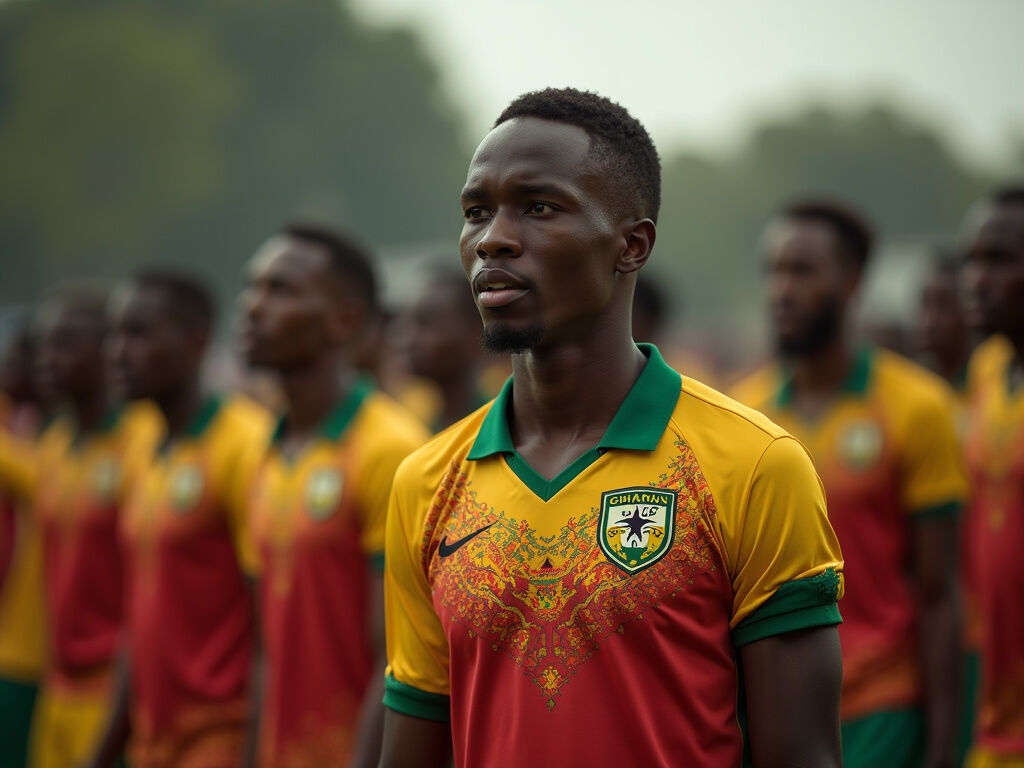
For decades, Ghana’s national football team, affectionately known as the Black Stars, has been a beacon of hope and pride across the West African nation. However, recent revelations surrounding age cheating in the country’s youth football system have cast a long shadow over the team’s legacy, particularly as preparations for the 2026 FIFA World Cup intensify. The scandal, which has surfaced in multiple high-profile cases, threatens not only Ghana’s sporting integrity but also its chances of qualifying for the prestigious tournament.
The Age Cheating Crisis: A Growing Concern
Age cheating—where players falsify their birth certificates to appear younger than they are—has long been a contentious issue in global football. However, Ghana’s case has gained particular attention due to the frequency of such incidents and their direct impact on the national team’s development. In recent years, several young players have been exposed for lying about their ages, allowing them to compete in leagues and tournaments where they were not legally eligible.
One of the most high-profile cases involved a former Ghanaian youth international who was later found to have misrepresented his age by several years. The revelation came after a birth certificate verification process by FIFA, which has become stricter in recent years. Such cases are not isolated; reports suggest that dozens of players across Ghana’s football pyramid have been caught in similar scandals, with some even playing at the U-17, U-20, and senior levels simultaneously.
The Ripple Effects on Ghana’s World Cup Bid
Ghana’s journey to the 2026 World Cup in the United States, Canada, and Mexico is already fraught with challenges. The team must navigate stiff competition in the CAF (Confederation of African Football) qualifiers, where nations like Senegal, Nigeria, and Egypt are also vying for limited spots. The age cheating scandal adds another layer of complexity, raising questions about player eligibility, fairness, and the long-term sustainability of Ghana’s football development.
FIFA’s strict enforcement of age verification protocols means that any player found guilty of age fraud faces suspension, fines, or even a lifetime ban. For Ghana, this could mean losing key talents prematurely, weakening the squad’s depth, and undermining the trust of fans and sponsors. The Ghana Football Association (GFA) has been under pressure to overhaul its registration system to prevent further incidents, but critics argue that loopholes persist, allowing unscrupulous players and coaches to exploit the system.
Root Causes of the Problem
The age cheating phenomenon in Ghana is driven by a combination of financial incentives, pressure to perform, and systemic weaknesses in football administration. Many young players are lured by lucrative contracts in Europe or domestic leagues, where age verification is often lax. Coaches and scouts, desperate to build competitive teams, may overlook or facilitate the falsification of documents to secure younger, more physically developed players.
Additionally, corruption within football associations has been cited as a major factor. Some officials allegedly turn a blind eye to age fraud in exchange for bribes or personal gains. Without transparency and accountability, the problem is likely to persist, stifling genuine talent development and fostering a culture of dishonesty.
Recent Exposures and FIFA’s Response
In the past year, multiple Ghanaian players have been caught in age-related controversies. One notable case involved a promising young midfielder who was stripped of his U-20 eligibility after FIFA’s investigation confirmed he was over the age limit. The player, who had been a standout in the 2023 U-20 World Cup, was subsequently relegated to Ghana’s senior team, where he struggled to adapt due to the physical and tactical demands of the higher level.
FIFA’s zero-tolerance policy on age fraud has led to stricter document checks, including biometric verification and direct communication with birth registrars. However, some Ghanaian players and officials have questioned the fairness of these measures, arguing that bureaucratic hurdles disproportionately affect players from less privileged backgrounds.
The Path Forward: Reform and Restoring Trust
To mitigate the damage and ensure Ghana’s football future remains strong, several key reforms must be implemented:
- Stricter Birth Certificate Verification
- The GFA must collaborate with Ghana’s National Identification Authority (NIA) to digitize and secure birth records, making it nearly impossible for players to forge documents.
-
Random DNA testing could be introduced for high-profile players, similar to doping controls in sports.
-
Transparency in Player Registrations
- All youth and senior team registrations should be publicly audited, with independent oversight to prevent corruption.
-
Whistleblower protections should be established to encourage insiders to report fraudulent activities.
-
Investment in Grassroots Development
- Instead of relying on age manipulation, Ghana should strengthen its youth academies and provide better training facilities to naturally develop talent.
-
Scholarships and mentorship programs could help young players avoid the financial temptations that drive age fraud.
-
Harsher Penalties for Offenders
- The GFA must enforce FIFA’s sanctions without leniency, ensuring that players, coaches, and officials involved in age cheating face long-term bans.
- Financial penalties could be imposed on clubs and associations that knowingly register ineligible players.
The Psychological Toll on Ghana’s Football Culture
Beyond the sporting and logistical consequences, age cheating has eroded public trust in Ghana’s football system. Fans, who once saw the Black Stars as underdogs with heart, now question whether the team’s successes are built on integrity or deceit. The psychological impact on young players is also significant—many may feel pressured to cheat to survive in a cutthroat environment, perpetuating a cycle of dishonesty.
Looking Ahead: Can Ghana Reclaim Its Reputation?
Ghana’s 2026 World Cup aspirations hinge on more than just age verification reforms—they require a cultural shift within the football community. The nation must prioritize honesty, transparency, and sustainable development over short-term gains. If the GFA succeeds in rooting out age fraud, Ghana could not only qualify for the World Cup but also restore its reputation as a nation that values fair play and excellence.
For now, the shadow of age cheating looms large, but with determined action, Ghana’s football family can turn the page and build a future where talent, not deception, defines the Black Stars’ legacy.
(A graphic depicting Ghana’s football players in action, with a focus on youth development and age verification challenges.)