


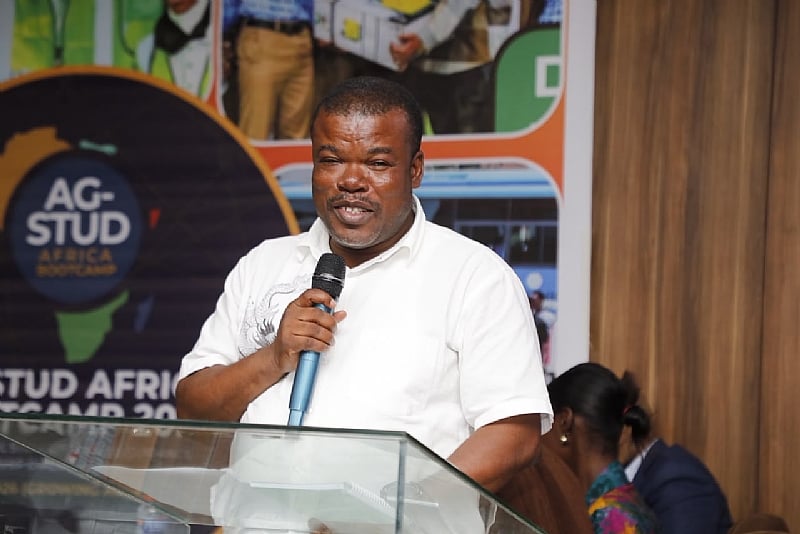
Ghana’s agricultural transformation is set to receive a significant boost as the first batch of 11 Farmer Service Centres (FSCs) under the Feed Ghana Programme nears completion, with an official launch expected by October 2024. According to Mr. Peter Nuhu, Coordinator of the FSC Initiative, these centres—currently under construction across key agricultural districts—will revolutionise service delivery for smallholder farmers by providing mechanisation, agricultural inputs, financial services, market linkages, climate-smart solutions, and capacity-building programmes.
Speaking at the ninth Agricultural Students Career Guidance and Mentorship Dialogue Bootcamp (Ag-Stud Africa Bootcamp 2026) in Accra, Mr. Nuhu emphasised the government’s commitment to accelerating rural development through this flagship initiative.  The centres, managed by the Ministry of Food and Agriculture (MoFA), are designed to address critical gaps in farmer support, particularly for smallholder producers who form the backbone of Ghana’s agricultural sector.
A Strategic Rollout Across Key Food-Producing Regions
The government has strategically distributed the first phase of FSCs in high-potential agricultural districts, including Afram Plains, West Gonja, Savelugu, and Ejura. These locations were selected based on their food production capacity, farmer density, and economic significance, ensuring that the most vulnerable and productive regions benefit first.
Mr. Nuhu explained that the centres will operate as one-stop-shop hubs, offering:
– Mechanisation services (e.g., access to tractors, harvesters, and irrigation equipment)
– Agricultural inputs (seeds, fertilisers, pesticides, and soil amendments)
– Extension services (technical advice, training, and research support)
– Financial services (microloans, insurance, and savings schemes)
– Market linkages (direct access to buyers, price stabilisation, and export facilitation)
– Climate-smart agriculture (drought-resistant crops, sustainable farming techniques)
– Capacity-building programmes (training in agribusiness, post-harvest handling, and digital farming)
“These centres are not just buildings—they are transformative platforms that will empower farmers to increase productivity, reduce post-harvest losses, and improve livelihoods,” Mr. Nuhu stated.
Over 1.2 Million Farmers Already Registered Through Cooperatives
A key innovation of the Feed Ghana Programme is its community-based cooperative model, which has already registered over 1.2 million farmers across Ghana. These cooperatives, organised by commodity groups (e.g., maize, rice, cassava, and vegetable producers), enhance accountability, sustainability, and efficient service delivery.
Mr. Nuhu highlighted that farmers in these cooperatives will be priority beneficiaries of the FSCs once operational. “By working through cooperatives, we ensure that services reach the grassroots level with minimal bureaucracy. These farmers have been organised into structured groups, making it easier to deliver tailored support,” he explained.
The cooperative approach also aligns with the government’s broader strategy to reduce middlemen exploitation and increase farmer incomes by ensuring fair pricing and direct market access.
Addressing Youth Engagement and the Ageing Farmer Population
One of the most pressing challenges in Ghana’s agriculture sector is the declining youth participation, with an ageing farmer population limiting innovation and productivity. Recognising this, the Feed Ghana Programme is actively recruiting and training young professionals to fill critical gaps in agricultural extension services.
Mr. Nuhu announced plans to deploy agricultural students as interns to support extension activities in farming communities. Additionally, over 4,000 national service personnel have already been engaged under rolling contracts to assist with field demonstrations, training, and advisory services.
“Youth must be at the forefront of agricultural transformation,” Mr. Nuhu stressed. “The future of farming depends on their innovation, digital literacy, and entrepreneurial spirit. This bootcamp is a step toward bridging the gap between academia and rural development.”
Ag-Stud Africa Bootcamp: A Platform for Youth-Led Solutions
The Ag-Stud Africa Bootcamp 2026, organised by the Agrihouse Foundation in partnership with MoFA, brought together 18 agricultural colleges and universities from all 16 regions of Ghana. The event focused on sustaining the Feed Ghana Programme and the FSC Initiative through youth-driven solutions.
Participants conducted research on agricultural challenges and presented practical recommendations to policymakers. 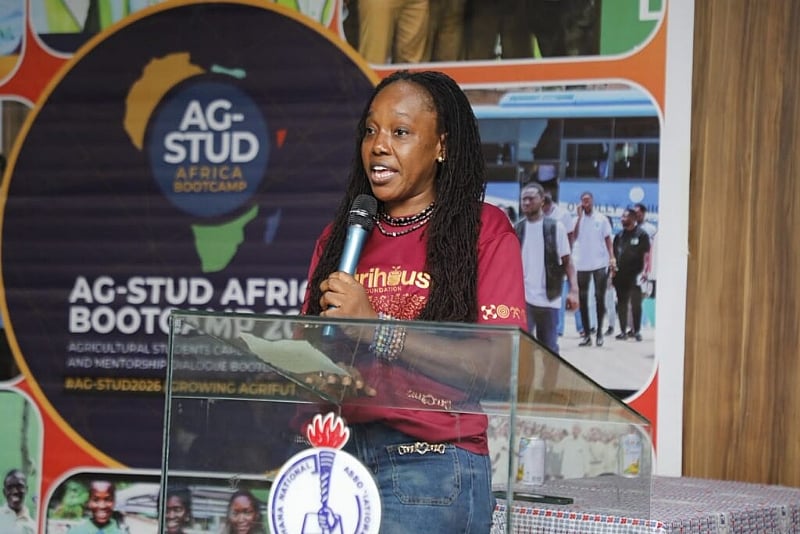 Ms. Alberta Naa Akyaa Akosa, Team Lead of the Agrihouse Foundation, noted that the bootcamp was designed to foster innovation and inclusivity in agricultural policy.
“This year’s bootcamp was not just about awareness—it was about action. Students presented data-backed proposals on how to improve farmer access to technology, enhance youth employment in agribusiness, and integrate digital tools into extension services,” she said.
The Foundation will compile a five-page report summarising the students’ findings and follow up on implementation, ensuring that youth perspectives shape future agricultural policies.
Feed Ghana’s Vision: A Resilient and Youth-Driven Agricultural Sector
Mr. Bright Demordzi, National Coordinator of the Feed Ghana Programme, underscored the strategic alignment between the initiative and Ghana’s Agricultural Transformation Agenda. He emphasised that the programme aims to:
– Increase food production through modern farming techniques
– Improve market access for smallholder farmers
– Promote value addition (e.g., processing, packaging, and export readiness)
– Create employment opportunities, particularly for youth and women
“Youth-focused interventions are non-negotiable for sustainable agriculture,” Mr. Demordzi stated. “We need to attract young people to agribusiness, whether through farming, agri-entrepreneurship, or digital agriculture. The FSCs will serve as incubators for innovation, where young farmers can access mentorship, funding, and market connections.”
He assured stakeholders that MoFA remains committed to collaborating with development partners, including the Agrihouse Foundation, to strengthen youth participation and drive technological adoption in agriculture.
What’s Next for the Farmer Service Centres?
With the first 11 FSCs set to launch by October 2024, the government is also expanding the initiative to include additional centres in subsequent phases. 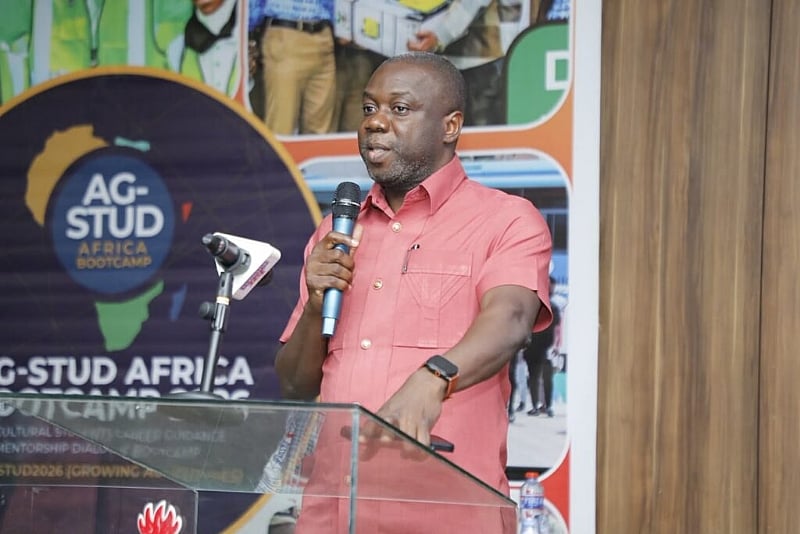 The long-term goal is to cover all major agricultural zones in Ghana, ensuring that no farmer is left behind in the digital and economic transformation of the sector.
Mr. Nuhu concluded by urging stakeholders to stay engaged with the programme, noting that the success of the FSCs depends on farmer participation, youth involvement, and continuous innovation.
“This is not just about building centres—it’s about building a new agricultural ecosystem where technology, youth, and tradition converge for food security and economic growth**,” he said.
As Ghana accelerates its Feed Ghana Programme, the Farmer Service Centres stand as a beacon of hope for smallholder farmers, offering unprecedented access to resources, knowledge, and market opportunities.  With youth at the helm of this transformation, the future of Ghana’s agriculture looks more productive, inclusive, and resilient than ever before.