


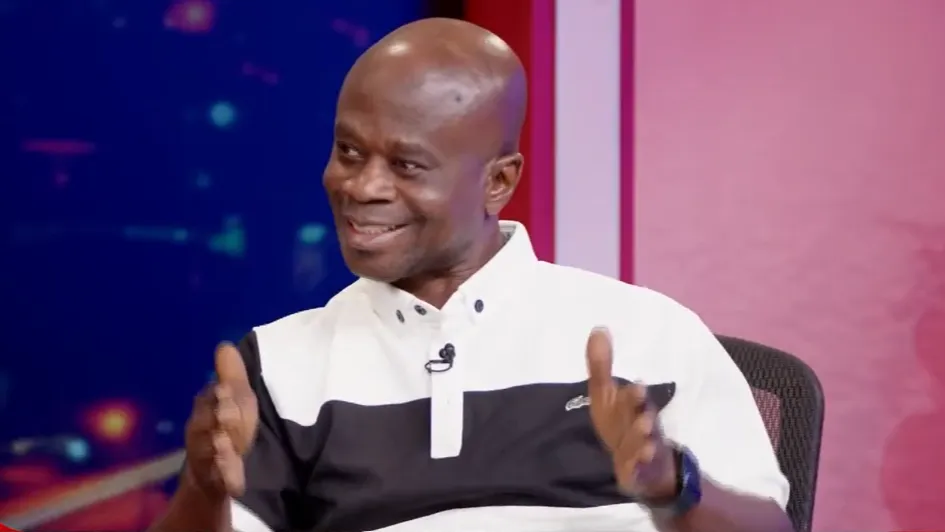
Ghana’s climate negotiator challenges rich nations over ‘hypocrisy’ on fossil fuels – Ghana’s lead climate negotiator, Dr Nana Antwi-Boasiako Amoah, has accused developed countries of double standards in the global campaign to move away from fossil fuels, saying some continue to explore oil and revive coal mines even as they pressure developing nations to abandon their natural resources.
He said the contradiction was undermining confidence in the climate change negotiations and raised questions about the sincerity of countries championing the transition.
“The Global North, they are not being straightforward. And I’m saying this on camera because, at one point, they are talking about transitioning away. At the same time, they are exploring oils. They are depending on oil. So where is the hypocrisy? One country I will not mention on camera, as they were making noise, and it’s a EU country, as they were making noise on transitioning; they were actually negotiating with another oil-producing country for oil,” he stated.
He continued: “So people are not being truthful. And this is where the hypocrisy is. And when I speak, they don’t like it, because I will say it the way it is. If it is not good, let’s discuss it plainly so that you run away from those hypocrisies. Because you are talking about it, but you’re depending on it.”
Dr Amoah made the remarks on The Probe on JoyNews on Sunday, November 29, where he challenged developed countries to be more transparent about their energy policies and the demands they were making of poorer nations.
The Ghanaian negotiator, who is also the Acting Director of Climate Vulnerability and Adaptation at the Environmental Protection Agency (EPA), cited the reopening of coal mines by some countries following the Russia-Ukraine conflict as evidence of what he described as inconsistent positions on fossil fuel use.
He argued that while developing countries were being urged to phase out fossil fuels, some wealthy nations had resorted to coal and other conventional energy sources when their own energy security came under pressure.
Dr Amoah said the global energy transition should not become a process in which developing countries were compelled to make economic sacrifices while developed nations continued to exploit fossil fuel resources whenever it suited their interests.
He stressed, however, that Ghana and other African countries were not opposed to moving away from fossil fuels but wanted the process to be fair, just and equitable.
“It’s not a transition that is the problem. No, we are for transition. But I want it to be done in a more equitable and more sustainable manner,” he said.
Ghana, like several other African countries, has an economy that relies partly on oil revenues, while some countries on the continent have only recently discovered commercially viable petroleum resources.
Dr Amoah said such countries needed clear and realistic timelines for the transition, rather than being expected to follow the same timetable as industrialised economies that had benefited from decades of fossil fuel exploitation.
He called for an agreed roadmap that recognised the different levels of development and economic dependence among countries, arguing that the circumstances of developed nations could not be equated with those of countries still building basic infrastructure and expanding access to essential services.
“If all of us are going to transition, which there’s no problem, give us a proper road map that party A, which is a developed country, has this number of years to transition. These countries that have just found oil and they are developing must also have this road map,” he said.
Beyond the question of timelines, Dr Amoah raised concerns about the process through which proposals on the transition were being advanced within the international climate negotiations.
He said the African Group of Negotiators (AGN) was uncomfortable with efforts to push forward discussions outside the formal United Nations Framework Convention on Climate Change (UNFCCC) process.
He referred to engagements held between COP30 in Belém, Brazil, and COP31 in Antalya, Türkiye, including a meeting in Colombia which, he said, took place outside the UNFCCC-led process.
He maintained that decisions on the transition should emerge from an inclusive process in which all parties had an opportunity to participate and reach consensus.
“The engagement process must be involving, it has to be inclusive, nobody should be left away or should be left out,” he said.
Dr Amoah cautioned against initiatives developed by selected groups being presented to the wider international community for adoption without adequate consultation, saying the proposals might have merit but the process could still be inequitable.
He also raised the issue of compensation for countries that might be required to leave oil, gold and other valuable natural resources underground as part of efforts to protect the climate.
Describing the risk as “asset trapping”, he questioned how developing countries would recover the economic value of resources they were being encouraged not to exploit.
He said countries making such sacrifices should receive clear assurances that the financial burden would not fall disproportionately on them.
The negotiator insisted that Africa was prepared to contribute to global climate action but would continue to demand transparency, fairness and shared responsibility from all parties.