


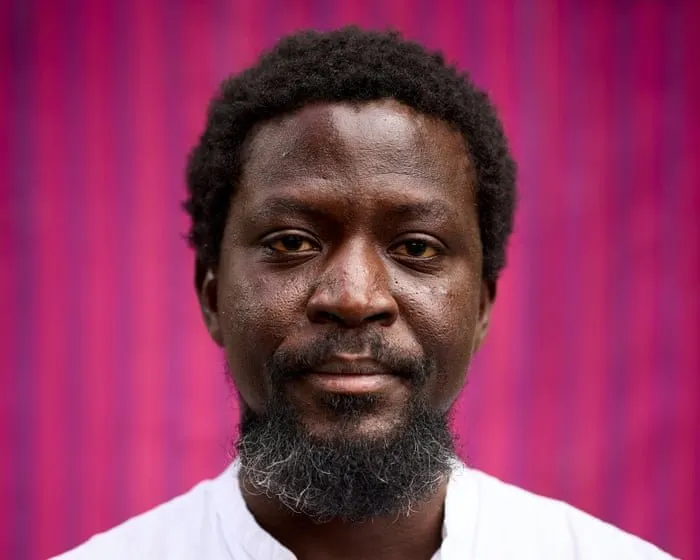
Ibrahim Mahama: I paid $1.7m to acquire abandoned aircraft at Kotoka – Ghanaian artist Ibrahim Mahama has disclosed the financial and logistical challenges involved in acquiring abandoned aircraft at Kotoka International Airport for his cultural project in Tamale, including an outstanding debt of about $1.7 million owed to the airport company by the aircraft owners.
Speaking on StarrChat with Bola Ray on Starr FM on Thursday, November 26, Mr. Mahama said he bought some of the aircraft for as little as $5,000 and $10,000, with the most expensive costing about $30,000.
However, he said the acquisition process became complicated after airport authorities informed him that the owners had outstanding financial obligations to the airport company.
“The airport company at the time, they were telling us that the owners of the aircraft were owing the airport company some previous money and we had to pay that money. And it was a lot of money, just like 1.7 million dollars,” he said.
Mr. Mahama said the amount was considerably higher than the prices he had paid for the aircraft themselves.
“Meanwhile, I had bought these aircraft, some for 5,000, some for 10,000. Dollars? Yes. So the most expensive one at the time was like 30,000,” he recounted.
He said the aircraft included three Starbo planes and the original CityLink aircraft, with some having been left unused at the airport while others were being sold as scrap.
Mr. Mahama explained that his initial interest was in acquiring railway trains for his artistic project, but delays in securing them prompted him to pursue the aircraft instead.
He credited a man from Tamale, Dr. Muhsin, with helping to facilitate discussions with the airport company to secure the release of the aircraft.
The artist said he deliberately retained the aircraft’s original appearance, including their marks and signs of wear, rather than refurbish them or turn them into conventional art installations.
“I don’t clean anything. The scars, the oil, everything, we left everything in it as it was on the outside, just like the jute bag,” he said.
For Mr. Mahama, preserving those traces is central to the project because the aircraft carry histories that should be passed on to future generations.
“It’s something that we’re going to pass on to several generations. So they need to inherit the worth of the history that comes with it,” he said.
The aircraft form part of the collection at Red Clay, Mr. Mahama’s cultural complex in Tamale, where decommissioned planes have been repurposed as spaces for learning and creative engagement.
The project has attracted attention for turning abandoned transport infrastructure into educational and cultural resources, allowing visitors, particularly young people, to encounter objects that would otherwise have been left unused or dismantled.