


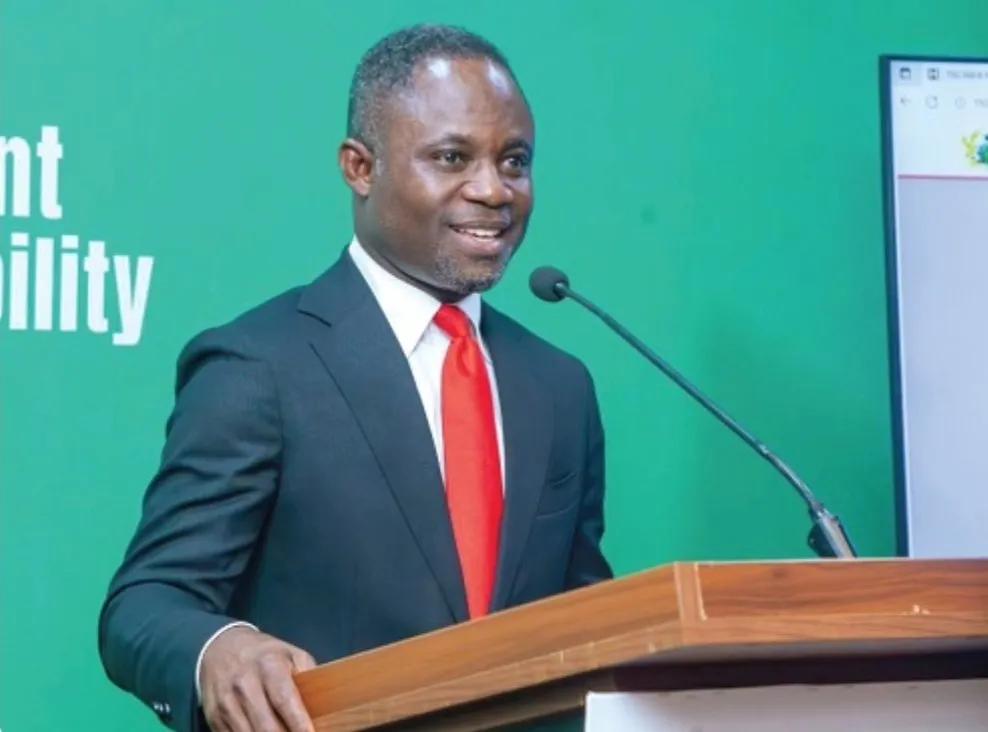
Government touts over 100% increase in health sector allocation – Mintah Akandoh – Minister for Health, Kwabena Mintah Akandoh says the health sector’s allocation in the 2027 Budget has more than doubled to GH¢47.4 billion from GH¢22.4 billion in 2024, describing it as a significant investment in healthcare delivery and infrastructure expansion.
Speaking on the floor of Parliament in Accra, Mr Akandoh said the increased allocation reflects government’s commitment to prioritising the health sector, with capital expenditure also rising significantly to support infrastructure development.
He said capital expenditure has increased from approximately GH¢700 million in 2024 to more than GH¢9 billion in 2027, arguing that the increase would provide greater room for expansion and development within the sector.
“Many a times, when compensations and goods and services are taken from their allocation, very little is left for expansion of the sector,” he said.
Mr Akandoh stressed that the increased capital allocation marks a departure from a situation where much of the health sector’s budget was absorbed by compensation and goods and services, leaving limited funding for infrastructure investment.
“In 2024, CapEx was around 700 million Ghana cedis. In 2027, budget Capital Expenditure ( Capex) is more than 9 billion Ghana cedis. Mr. Speaker, this is what we are talking about,” he added.
He said the increased funding also supports government’s broader interventions in the health sector, including the rollout of free primary healthcare, which he described as essential to achieving universal health coverage.
According to the him, primary healthcare accounts for about 80 percent of the country’s healthcare needs, making investment in the area critical to improving access to medical services and easing pressure on other levels of healthcare delivery.
“Any country who is seeking to achieve universal health coverage make that decisive effort to invest in what we call primary health care,” he told Parliament.
Mr Akandoh further disclosed that government had procured more than 25,000 pieces of equipment for distribution to primary healthcare facilities across the country as part of the free primary healthcare initiative.
He said the programme, initially targeted at 150 districts, had so far been rolled out in approximately 132 districts and 4,500 health facilities nationwide.
He maintained that the increased allocation, alongside the expansion of primary healthcare interventions, demonstrates government’s efforts to strengthen the health sector and improve access to essential healthcare services.