


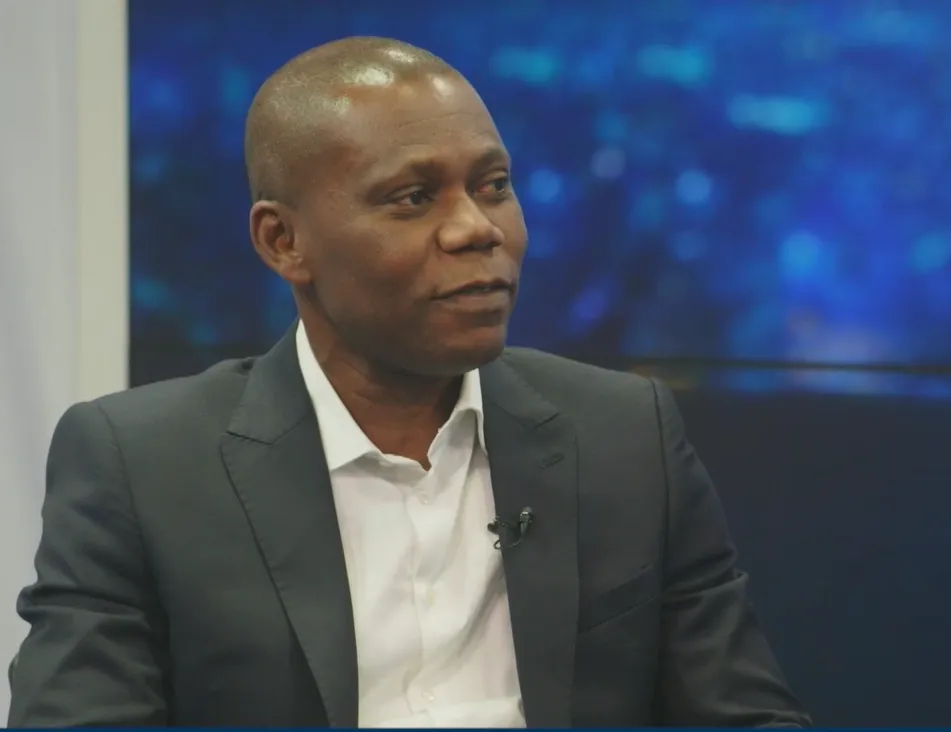
Gold Fields brought to Ghana in 1992 to revive ailing mining industry – MD – Gold Fields Ghana Limited was brought into Ghana in 1992 to help revive the country’s struggling mining industry, its Senior Vice President and Managing Director, Elliot Twum, has recounted.
He said the company was selected as a preferred partner to take over the then Tarkwa Gold Mine, a state-owned underground operation producing about 12,000 ounces of gold annually at the time.
Speaking on Channel One TV’s The Point of View with Bernard Avle on Monday, November 23, Mr Twum said Gold Fields initially invested in the underground mine before undertaking extensive exploration that led to the development of a large-scale surface operation in 1998.
“Gold Fields was invited into Ghana in 1992 by the then administration to try and resuscitate the dying mining industry in Ghana. Gold Fields was appointed as a preferred partner to take over the then Tarkwa Gold Mine, which was one of the operations of the state’s gold mining corporation. It was a small underground operation producing up to about 12,000 ounces a year,” he said.
He explained that the company made an initial payment of $3 million for the underground operation and subsequently invested in its rehabilitation, while also meeting contractual milestones, including payments to access geological data for further exploration.
Mr Twum said Gold Fields spent about five years operating the underground mine while conducting surface prospecting, drilling and resource definition studies, which culminated in the establishment of its first heap-leach operation in 1998.
He said the company invested more than $50 million in developing the surface operation, which marked a major shift in the scale of mining at Tarkwa.
The five leases issued in 1997 for the heap-leach operation are the same leases Gold Fields is seeking to renew ahead of their expiration in April 2027, he added.
Mr Twum said Gold Fields subsequently expanded its operations, acquiring the northern tenement of the then Teberebie Gold Mine in 2000 and the Aboso Mine, now known as Damang, from Australian company Rangers in 2002.
In 2004, the company established a carbon-in-leach (CIL) plant, which uses a different processing method from heap leaching, and upgraded it in 2008. Subsequent upgrades have expanded the facility’s capacity to process about 15 million tonnes of material.
Mr Twum said Tarkwa’s relatively low-grade but consistent gold deposit requires the movement of large volumes of material to sustain production.
“We do have an ore body which is low-grade. Very consistent, but it’s low-grade and very high strength. So Tarkwa is built on volumes. We move about 100 million tonnes of material every year. Just about 10 million tonnes of that is ore. The 90 million tonnes goes to waste,” he said.
He contrasted Tarkwa’s deposit with that of Damang, which he described as a hydrothermal deposit with higher grades and requiring closer-spaced drilling to define the ore body.
Mr Twum said the transformation of Tarkwa from the underground operation Gold Fields inherited was driven by investments in infrastructure, equipment and technology, following operational challenges that had required government support to sustain the mine.
“When Gold Fields took over in Tarkwa, government had to supplement and be able to pay salaries, suppliers and contractors, and buy reagents to continue to treat. What Gold Fields did was to refurbish the winding machinery, the shaft infrastructure and brought in some new technology to try and stretch that, push that,” he said.
Gold Fields currently produces an average of about 500,000 ounces of gold annually at Tarkwa and is seeking renewal of its mine leases, which expire in April 2027.