


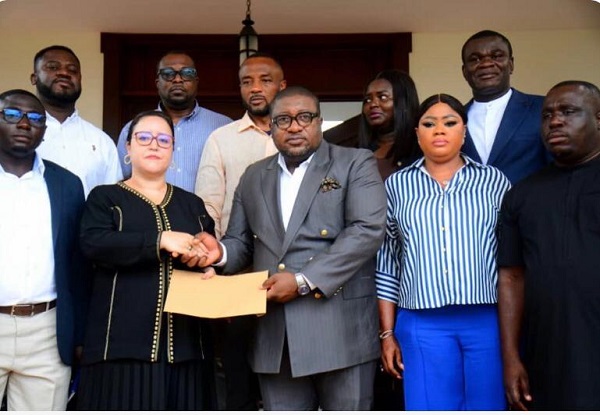
The New Patriotic Party (NPP) has formally escalated its concerns over alleged political persecution, suppression of dissent, and erosion of democratic institutions in Ghana, issuing a detailed petition to members of the diplomatic corps stationed in the country. In a strongly worded statement released in Accra, the opposition party accused President John Dramani Mahama’s administration of systematically targeting political opponents, journalists, and critics through arbitrary arrests, prosecutions, and intimidation tactics.
The petition, which marks a significant escalation in tensions between the ruling National Democratic Congress (NDC) and the opposition, warns that Ghana’s hard-won democratic credentials are under severe threat. The NPP argues that the government’s actions have normalised a “culture of silence,” where citizens increasingly fear exercising their constitutional rights to free speech and political participation.
Systematic Targeting of Dissenters and the Weaponisation of State Institutions
Central to the NPP’s allegations is the claim that state institutions—including the judiciary, police, and intelligence agencies—are being weaponised to suppress opposition. The party asserts that political opponents are routinely subjected to dramatic arrests, prolonged detentions, and unfair prosecutions, while those aligned with the ruling party often face selective immunity from legal consequences.
One of the most high-profile cases cited is that of Kwame Baffoe (popularly known as “Abronye DC”), the NPP’s Northern Regional Chairman. According to the petition, Baffoe was arrested and charged after making public remarks critical of a judge, a move the NPP describes as a deliberate attempt to criminalise dissent. The party further alleges that Baffoe was denied bail, reinforcing concerns about judicial bias and the misuse of legal processes to silence critics.
The NPP’s statement reiterates a broader pattern of selective justice, where opposition figures are swiftly investigated and prosecuted, while similar actions by government-aligned individuals rarely result in accountability. This, the party argues, undermines the rule of law and erodes public trust in Ghana’s justice system.
The Repeal of Criminal Libel and the Rise of Alternative Legal Tactics
Ghana’s 2001 repeal of criminal libel laws under former President John Agyekum Kufuor was hailed as a landmark reform that strengthened press freedom and democratic expression. However, the NPP claims that the current administration has circumvented this progress by employing alternative legal mechanisms to penalise political speech.
The party warns that while journalists and opposition figures face harassment, prosecution, and even imprisonment for their reporting or commentary, government-aligned media outlets and officials often operate with impunity. This double standard, the NPP argues, undermines Ghana’s commitment to press freedom and democratic accountability.
Concerns Over Judicial Independence and State Security Agencies
A major area of concern raised in the petition is the role of state security agencies, including the police and intelligence services, in politically motivated arrests and detentions. The NPP alleges that these agencies are increasingly used for partisan purposes, with opposition figures subjected to “dramatic operations”—often involving sudden raids, prolonged detentions, and harsh interrogation methods.
The party also criticises the removal of Chief Justice Gertrude Sackey Torkornoo, arguing that this high-profile judicial shake-up has further undermined public confidence in the independence of the judiciary. The NPP warns that politically sensitive cases are now more likely to be influenced by external pressures, raising fears of a judicial system that is no longer impartial.
A Call for International Scrutiny and Intervention
In light of these deepening concerns, the NPP has urged the diplomatic community, development partners, and human rights organisations to closely monitor developments in Ghana. The party demands greater international scrutiny of the government’s actions, particularly in relation to:
- The criminalisation of free speech through selective prosecutions and intimidation tactics.
- The weaponisation of state institutions—including the police, intelligence services, and judiciary—to target political opponents.
- The erosion of democratic norms, including selective law enforcement, judicial bias, and the suppression of dissent.
The NPP’s petition highlights a growing crisis of governance, where democratic backsliding appears to be accelerating under the Mahama administration. By seeking diplomatic intervention, the opposition party is escalating its challenge to what it describes as a systematic campaign to silence dissent and consolidate power.
As Ghana’s international reputation as a stable democracy hangs in the balance, the NPP’s allegations raise urgent questions about the future of political freedoms in the country. The diplomatic corps’ response to this petition will likely determine whether Ghana’s democratic trajectory continues to decline—or whether corrective measures are taken to restore accountability and fairness.